Lawn Care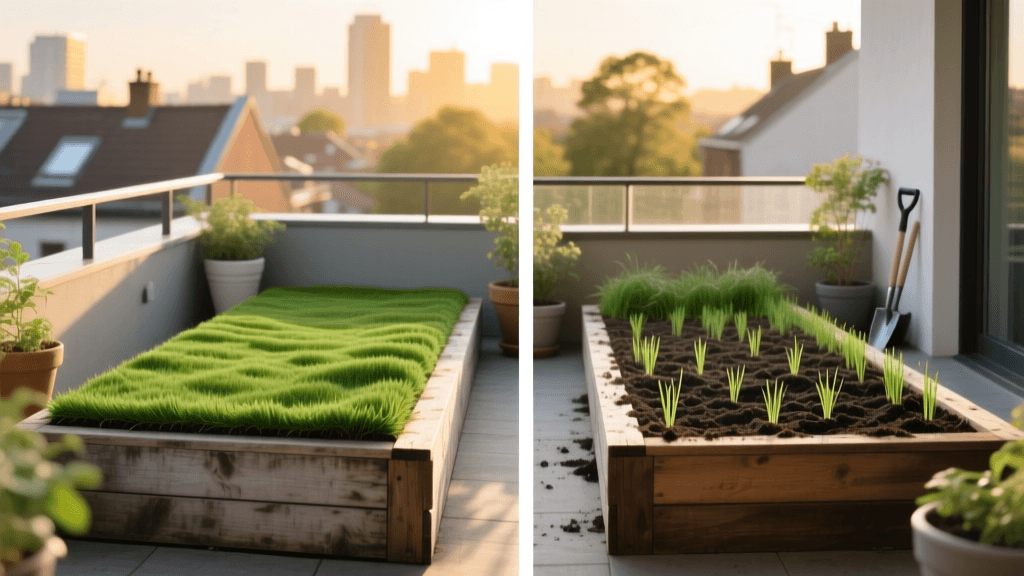
Sod vs Hydroseeding for Container Lawns: 2026 Cost Guide
The Rise of the Container Lawn in 2026
As urban living spaces continue to evolve and rooftop gardens become mainstream in 2026, the traditional concept of the sprawling backyard lawn has transformed. Today, homeowners and urban gardeners are increasingly turning to container gardening, oversized patio pots, and modular raised beds to cultivate micro-lawns. Whether you are designing a pet-friendly potty patch on a balcony, growing ornamental turfgrass in Corten steel planters, or establishing a lush green rooftop retreat, the desire for real, living grass in confined spaces is higher than ever.
When it comes to establishing turf in containers and raised beds, gardeners generally face two primary options: cutting and laying traditional sod, or utilizing small-scale hydroseeding kits. While both methods are staples of broad-acre landscaping, applying them to the unique microclimates of pots and raised beds requires a specialized approach. Below, we break down the 2026 costs, timelines, and practical challenges of sod installation versus hydroseeding specifically for container and pot gardening.
Sod Installation for Pots and Raised Beds
The Process
Installing sod in a container involves purchasing standard rolls or pallets of turfgrass and cutting them to fit the precise dimensions of your raised bed or oversized pot. Because containers require excellent drainage, the base of your planter must be prepared with a lightweight, well-draining potting mix before the sod is laid. The sod pieces are pressed firmly into the soil, ensuring the roots make direct contact with the growing medium. Edges are trimmed with a sharp utility knife to fit curved pots or circular planters.
2026 Cost Breakdown
In 2026, the cost of premium turfgrass sod has stabilized but remains a premium investment for small-space gardeners. Depending on your region and the grass variety (such as drought-tolerant Zeon Zoysia or RTF Tall Fescue), sod costs between $0.90 and $1.40 per square foot. However, the hidden cost for container gardeners is delivery and minimum order requirements. Many local sod farms in 2026 enforce minimum delivery fees of $75 to $120, even if you only need 50 square feet to fill a few raised beds. Consequently, the effective cost for small container projects can easily exceed $2.50 per square foot when factoring in delivery and specialized lightweight potting soils.
Timeline to Establishment
The primary advantage of sod is instant gratification. Once laid in your raised bed, the container lawn is immediately green and functional. According to the University of Minnesota Turfgrass Science program, sod typically takes 2 to 3 weeks to firmly root into the underlying soil. In a container environment, where soil temperatures can fluctuate more rapidly than in the ground, consistent daily watering is critical during this 21-day window to prevent the sod edges from shrinking and pulling away from the pot walls.
Hydroseeding for Small-Space and Container Lawns
The Process
Hydroseeding involves spraying a slurry of grass seed, water, mulch, and a binding agent (tackifier) onto prepared soil. For container gardeners, this is typically done using consumer-grade, hose-end hydroseeding kits (such as Hydro Mousse or Pennington One Step) or by mixing DIY batches in a bucket and applying them with a pump sprayer. The tackifier is crucial in pots, as it glues the seed and mulch to the soil surface, preventing the seeds from washing out of the container during heavy watering or rainstorms.
2026 Cost Breakdown
Hydroseeding is exceptionally cost-effective for small spaces. In 2026, a standard consumer hydroseeding kit covering 250 to 500 square feet retails for $45 to $85. This translates to roughly $0.15 to $0.25 per square foot. Because you are only treating the surface area of your raised beds or pots, a single kit is often enough to seed multiple large containers. You will still need to factor in the cost of high-quality container soil, but you avoid the heavy delivery fees associated with sod.
Timeline to Establishment
Hydroseeding requires patience. As noted by Penn State Extension, hydroseeded lawns generally begin to germinate within 7 to 14 days, provided the mulch mat remains consistently moist. However, achieving a dense, walkable turf in a raised bed takes 4 to 8 weeks. During this time, the container must be kept in a stable environment; excessive wind can dry out the hydroseed mulch, while heavy downpours can overwhelm the pot's drainage and wash the slurry over the sides of the container.
Head-to-Head Comparison: Sod vs. Hydroseeding in Containers
| Feature | Sod Installation (Containers) | Hydroseeding (Containers) |
|---|---|---|
| Material Cost (per sq ft) | $0.90 - $1.40 | $0.15 - $0.25 |
| Hidden Costs | High (Delivery minimums, heavy soil) | Low (Pump sprayer, extra tackifier) |
| Time to Green | Instant | 7 - 14 Days |
| Time to Full Establishment | 2 - 3 Weeks | 4 - 8 Weeks |
| Weight Load on Planter | Very Heavy (Sod includes clay soil) | Lightweight (Seed and paper/cellulose mulch) |
| Best Container Use Case | Rooftop pet patches, instant curb appeal | Intricate raised bed shapes, budget projects |
Unique Challenges for Container Turfgrass
Weight and Structural Limits
One of the most overlooked factors in container lawn care is weight. Traditional sod is harvested with about half an inch of heavy clay or topsoil attached to the root zone. When you place this dense sod into a large raised bed already filled with moist earth, the structural load on balconies, decks, or rooftop membranes can be immense. Hydroseeding, by contrast, adds virtually no weight to your container setup, making it the undisputed winner for rooftop gardens and elevated wooden planters where weight restrictions are strictly enforced in 2026 building codes.
The "Perched Water Table" Effect
Container gardening relies on soilless potting mixes (often containing peat moss, coir, and perlite) to ensure drainage. Sod, however, brings its own dense soil layer. When water moves from the fine-textured clay of the sod into the coarse-textured potting mix below, it can stall, creating a "perched water table" that rots the grass roots. If you choose sod for your pots, you must aggressively aerate the sod's soil layer before laying it, or carefully shave off the clay backing with a flat shovel to ensure the roots directly contact your container's potting mix.
Hydrophobic Soil and Tackifier Binding
If you opt to hydroseed your pots, you must pre-moisten your container soil. Many modern potting mixes contain peat moss or coconut coir, which become highly hydrophobic (water-repellent) when completely dry. If you spray a hydroseed slurry onto dry potting mix, the tackifier will fail to bind, and the seed mat will crack and blow away in the wind. Always water your raised beds thoroughly 24 hours before applying your hydroseed mixture to ensure the soil surface is tacky and receptive.
Step-by-Step: Preparing Your Container for Turf
- Step 1: Select the Right Planter. Ensure your pot or raised bed has adequate drainage holes. Turfgrass roots will rot quickly in standing water. For large containers, use a drainage layer of expanded shale or pumice at the bottom to reduce weight and improve flow.
- Step 2: Choose a Lightweight Soil Mix. Avoid heavy garden topsoil. Use a premium raised-bed mix amended with perlite or pumice. In 2026, many commercial mixes include slow-release organic fertilizers that support initial turf establishment.
- Step 3: Level and Firm the Surface. Whether laying sod or spraying hydroseed, the soil surface must be level and lightly compacted. Use a hand tamper to create a firm base, leaving about one inch of space below the rim of the pot to allow for watering without overflow.
- Step 4: Apply Your Turf Method. Lay and trim your sod, pressing edges tightly together, OR spray your hydroseed slurry evenly across the moist soil surface.
- Step 5: Establish a Watering Routine. Containers dry out much faster than in-ground lawns. Plan to water lightly 2 to 3 times a day for the first two weeks to keep the root zone or seed mat consistently damp.
Final Verdict for 2026
Choosing between sod and hydroseeding for your container lawn ultimately depends on your budget, structural constraints, and timeline. If you need an instant, durable surface for a rooftop pet run or a high-visibility courtyard planter, and you are willing to pay the premium for delivery and manage the heavy weight, sod installation is the superior choice. However, if you are filling multiple raised beds, working within strict weight limits, or cultivating ornamental grasses on a budget, hydroseeding offers an incredibly efficient, lightweight, and cost-effective alternative. By understanding the unique drainage and soil dynamics of container gardening, you can successfully establish a thriving micro-lawn that brings the beauty of the outdoors to any small space.