Lawn Care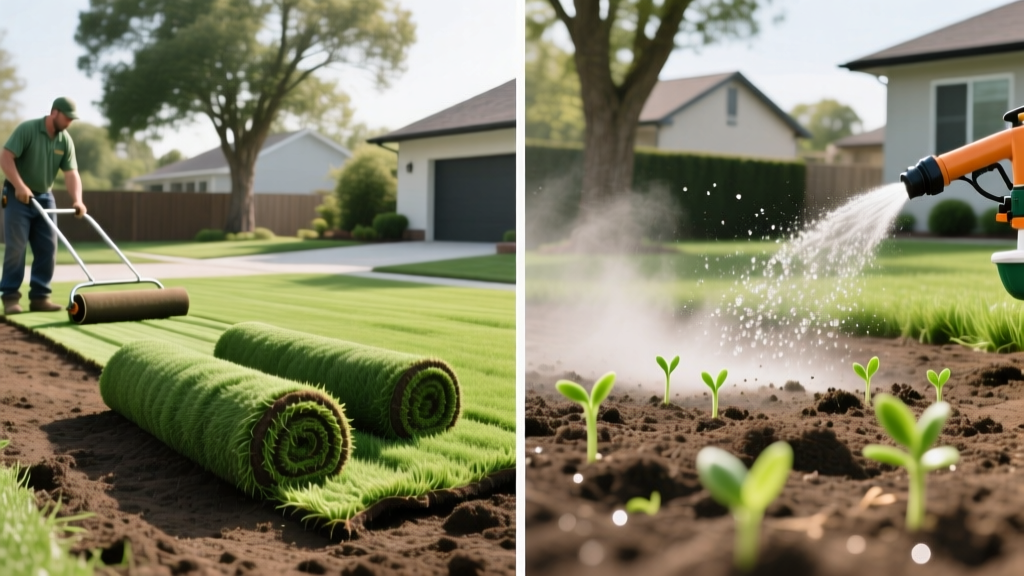
Sod vs Hydroseeding: 2026 Cost & Timeline Compared
Lisa ThompsonPublished
Introduction: The 2026 Lawn Establishment Dilemma
As we navigate the 2026 landscaping season, homeowners are facing a unique set of challenges when establishing new turf. While inflation has largely stabilized compared to the early 2020s, material costs for sod, seed, and hydroseed tackifiers remain at a premium due to ongoing agricultural shifts and fuel surcharges. When deciding between laying sod and hydroseeding, most traditional landscaping guides focus solely on budget, sun exposure, and soil pH. However, as a specialist who frequently bridges the gap between turf management and Tree Web Worm Control, I evaluate lawn establishment through a completely different lens: biological resilience.
If your property features mature deciduous trees like pecan, cherry, ash, or walnut, your new lawn is not just fighting weeds and drought. It is fighting the gravitational fallout of canopy pests. The decision to sod or hydroseed in 2026 must account for how quickly the turf can establish a root system capable of surviving the debris, frass, and silk webbing dropped by tree-dwelling insects. In this comprehensive guide, we will break down the exact costs, timelines, and pest-resilience factors of sod versus hydroseeding for the 2026 season.
The Canopy Threat: Why Tree Webworms Matter for New Turf
Before comparing installation methods, we must understand the environment created by mature trees. The fall webworm (Hyphantria cunea) is a notorious defoliator that builds massive, unsightly silken tents in the branches of over 100 species of deciduous trees. According to the University of Minnesota Extension, these caterpillars are most active from late summer through early fall. While they primarily consume tree leaves, their impact on the lawn below is severe and often overlooked by general landscapers.
As webworms feed, they drop copious amounts of frass (caterpillar droppings) and shed silk webbing. When this debris lands on a newly seeded or hydroseeded lawn, it creates a micro-environment that traps moisture, blocks vital sunlight, and encourages fungal diseases like damping-off. Furthermore, the high nitrogen content of the frass can chemically burn delicate, newly germinated grass blades. A mature sod lawn, however, possesses the structural integrity to withstand this debris, allowing homeowners to simply rake or blow the webbing away without uprooting the turf.
Sod Installation in 2026: Costs, Timeline, and Resilience
Sod installation remains the premium choice for homeowners seeking an instant lawn and immediate erosion control. In 2026, the turfgrass industry has seen a shift toward drought-tolerant, deep-rooted sod varieties, such as improved Tall Fescue blends and hybrid Bermuda grasses, which are pre-grown on specialized farms.
2026 Sod Cost Breakdown
- Material Cost: $0.65 to $0.95 per square foot, depending on the grass cultivar and regional farm availability.
- Labor and Installation: $0.90 to $1.45 per square foot.
- Total Installed Cost: Expect to pay between $1.55 and $2.40 per square foot. For a standard 5,000-square-foot yard, the total investment ranges from $7,750 to $12,000.
Timeline to Establishment
Sod provides instant gratification. Once laid and properly watered, the turf is visually complete on day one. Root establishment into your native topsoil typically takes 14 to 21 days under optimal 2026 spring or early-fall conditions. Full structural maturity, where the lawn can handle heavy foot traffic and aggressive raking, is achieved in about 4 to 6 weeks.
The Pest Control Perspective
From a Tree Web Worm Control standpoint, sod is vastly superior for properties with heavy tree canopies. Because the grass blades are already mature and the root mat is dense, falling webworm silk and frass sit on the surface. You can safely use a commercial leaf blower or a flexible lawn rake to remove pest debris without damaging the grass crown. According to Penn State Turfgrass Science, pre-established sod also outcompetes the weed seeds that often blow in alongside tree debris, giving your lawn a massive defensive advantage.
Hydroseeding in 2026: Costs, Timeline, and Vulnerabilities
Hydroseeding involves spraying a slurry of premium grass seed, water, wood-fiber mulch, and binding tackifiers onto prepared soil. It is highly effective for large properties, steep slopes, and irregular terrain where laying sod would be prohibitively expensive or physically exhausting.
2026 Hydroseeding Cost Breakdown
- Material and Slurry Cost: $0.12 to $0.18 per square foot.
- Labor and Equipment: $0.10 to $0.20 per square foot.
- Total Installed Cost: Expect to pay between $0.22 and $0.38 per square foot. For a 5,000-square-foot yard, the total investment ranges from $1,100 to $1,900.
Timeline to Establishment
Hydroseeding requires patience. The wood-fiber mulch helps retain moisture, and you will typically see the first green shoots of germination within 5 to 10 days. However, the lawn will not be ready for light foot traffic for 6 to 8 weeks, and full root establishment takes 10 to 12 weeks. During this critical 60-day window, the turf is incredibly fragile.
The Pest Control Perspective
This is where the hydroseeding method reveals its fatal flaw for tree-heavy properties. If you hydroseed in late summer to prepare for a fall lawn, your fragile seedlings will emerge right as the fall webworm reaches peak activity. The falling silk tents can physically smother the young grass, bending the shoots and blocking photosynthesis. Attempting to rake or blow the webbing off a 3-week-old hydroseeded lawn will rip the shallow, immature roots straight out of the soil, ruining months of work and wasting your investment.
2026 Head-to-Head Comparison Table
| Feature | Sod Installation (2026) | Hydroseeding (2026) |
|---|---|---|
| Average Cost per Sq. Ft. | $1.55 - $2.40 | $0.22 - $0.38 |
| Visual Results | Instant (Day 1) | 5 - 10 Days |
| Foot Traffic Ready | 3 - 4 Weeks | 8 - 10 Weeks |
| Erosion Control | Immediate | Moderate (Relies on Tackifier) |
| Resilience to Tree Debris | High (Can be raked/blown) | Low (Smothering/Root-tearing risk) |
| Best Installation Season | Spring or Early Fall | Spring (Avoid Late Summer) |
Canopy Management: Protecting Your New Lawn Investment
Regardless of whether you choose sod or hydroseeding, managing the tree canopy above is a non-negotiable step for long-term lawn health. As a pest management professional, I always recommend an Integrated Pest Management (IPM) approach before a single square foot of turf is laid.
First, schedule a dormant oil application for your deciduous trees in late winter. This suffocates overwintering insect eggs, drastically reducing the population of spring and summer defoliators. Second, if you notice the early formation of fall webworm tents in August, do not wait for them to expand. Use a targeted biological insecticide containing Bacillus thuringiensis var. kurstaki (Btk). The National Pesticide Information Center notes that Btk is highly effective against young caterpillars and is completely safe for the soil microbiome, meaning it will not harm the beneficial bacteria your new hydroseed or sod needs to thrive.
Finally, consider selective canopy pruning. Removing lower, overhanging branches not only reduces the surface area available for webworms to build tents but also increases the amount of direct sunlight reaching your new turf. Cool-season grasses like Kentucky Bluegrass and Tall Fescue require at least four to six hours of filtered sunlight to outcompete the moss and shade-weeds that thrive under dense canopies.
Final Verdict: Which Method Should You Choose?
The choice between sod and hydroseeding in 2026 ultimately comes down to your budget, your timeline, and your property's specific ecological challenges. If you are working with a strict budget, have a large or sloped property, and your yard is relatively free of mature, pest-prone trees, hydroseeding is an incredibly cost-effective and viable option. Just be sure to time your application for early spring to avoid the late-summer webworm fallout.
However, if your yard is surrounded by mature pecan, cherry, or ash trees, the premium cost of sod is a necessary insurance policy. The immediate structural integrity of sod allows you to maintain a clean, healthy turf surface even when the canopy above is under siege by webworms and other defoliators. By investing in sod and pairing it with proactive canopy pest management, you ensure that your lawn remains a lush, resilient carpet for decades to come.