Lawn Care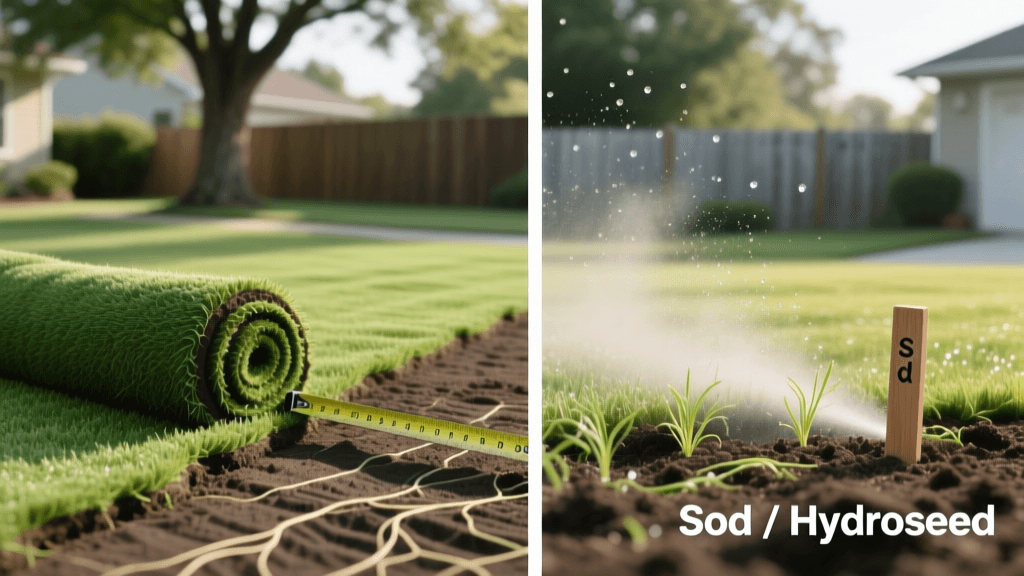
Sod vs Hydroseeding 2026: Cost, Timeline & First Mow
The 2026 Lawn Establishment Dilemma: Instant Gratification vs. Long-Term Mowing Health
When planning a new lawn in 2026, homeowners and landscaping professionals are faced with a critical decision: roll out instant sod or opt for the cost-effective, spray-on magic of hydroseeding. While most comparisons focus purely on upfront pricing and curb appeal, a crucial factor is often overlooked by turf enthusiasts: how does your chosen establishment method impact your mowing schedule, root resilience, and ability to create pristine lawn striping patterns? As a senior writer for Lawns Guide, I have analyzed the 2026 market data, turfgrass science, and mowing mechanics to bring you a comprehensive comparison of sod installation versus hydroseeding from the perspective of long-term lawn care and mowing techniques.
2026 Cost Breakdown: Sod Installation vs. Hydroseeding
Material and labor costs have shifted in 2026 due to changes in agricultural fuel prices and water conservation regulations. Understanding the financial investment is the first step in planning your lawn care calendar.
Sod Installation Costs in 2026
Sod remains the premium choice for those who want an immediate green canvas. In 2026, the average cost for professional sod installation ranges from $1.75 to $2.80 per square foot, depending on the grass variety (such as Kentucky Bluegrass or premium Tall Fescue blends) and regional availability. For a standard 5,000-square-foot lawn, you are looking at an investment between $8,750 and $14,000. The high cost reflects the intensive farming, harvesting, and rapid transportation required to keep the sod alive before installation.
Hydroseeding Costs in 2026
Hydroseeding—a slurry of seed, mulch, fertilizer, and biostimulants sprayed over prepared soil—continues to be the budget-friendly champion. In 2026, professional hydroseeding costs average between $0.45 and $0.90 per square foot. That same 5,000-square-foot lawn will cost between $2,250 and $4,500. The lower price point allows homeowners to allocate more of their budget toward high-end mowing equipment, such as commercial-grade zero-turn mowers and heavy roller striping kits, which are essential for advanced pattern creation.
The Establishment Timeline: Waiting for the First Cut
The timeline from installation to the first mow is where the agronomic differences between sod and hydroseed drastically alter your lawn care routine. Mowing too early is the number one cause of turf failure in new lawns, as the shear force of the mower blades and the weight of the wheels can destroy fragile root systems.
Sod: The Fast Track to Mowing (With a Catch)
Sod provides an instant lawn, but it is essentially a carpet of grass resting on top of the soil. It typically takes 14 to 21 days for the shallow roots to "knit" into the underlying topsoil. According to the University of Minnesota Extension Lawn Care guidelines, you should only perform the first mow when the sod is firmly anchored and reaches about 3.5 inches in height. If you mow before the roots have knit, the mower's vacuum effect and wheel traction will literally rip the sod sheets off the soil, ruining your investment and creating an uneven surface that makes future mowing patterns impossible to execute cleanly.
Hydroseeding: The Slow Burn for Deeper Roots
Hydroseeded lawns require immense patience. While you will see green germination in 7 to 14 days, the turf is nowhere near ready for a mower. The first mow on a hydroseeded lawn typically cannot occur until 45 to 60 days post-application. However, this waiting period yields a massive advantage for mowing enthusiasts: seed-grown grass develops deep, robust taproots from day one. By the time you make your first cut, the root structure is deeply anchored, making it highly resistant to the tearing and pulling forces of a mower deck.
The Physics of Striping: How Establishment Affects Mowing Patterns
For those passionate about mowing techniques and creating checkerboard or diamond striping patterns, the establishment method dictates when and how you can use a striping kit. Striping works by bending the grass blades in opposite directions, which reflects light differently. This requires the grass to have enough lignin (structural rigidity) to hold the bend, and a root system strong enough to withstand the downward pressure of a striping roller.
- Sod and Early Striping Risks: Because sod roots are initially shallow and horizontally spread, applying the weight of a steel or heavy rubber striping roller within the first two months can cause severe soil compaction and root shearing. You must wait at least 8 to 10 weeks before attempting complex mowing patterns on a newly sodded lawn to avoid creating permanent wheel ruts that will distort your patterns.
- Hydroseed and Pattern Resilience: Hydroseeded grass, having grown in place, develops a dense, interlocking vertical root matrix. By the time the lawn is ready for its first mow at the 60-day mark, the turf is already resilient enough to handle light striping. By year two, a hydroseeded lawn will often hold a crisper, longer-lasting stripe than a sodded lawn because the individual grass plants are thicker and more deeply anchored, allowing them to snap back and hold the bent position required for high-contrast patterns.
2026 Comparison Chart: Sod vs. Hydroseeding for Lawn Care
| Feature | Sod Installation (2026) | Hydroseeding (2026) |
|---|---|---|
| Average Cost (per sq. ft.) | $1.75 - $2.80 | $0.45 - $0.90 |
| Visual Establishment | Instant (Day 1) | 7 - 14 Days (Germination) |
| Timeline to First Mow | 14 - 21 Days | 45 - 60 Days |
| Root Structure Type | Shallow, Horizontal Mat | Deep, Vertical Taproots |
| Safe to Use Striping Kit | 8 - 10 Weeks | 10 - 12 Weeks (But holds patterns better long-term) |
| Mower Wheel Rut Risk | High (if mowed before day 21) | Low (once established) |
Best Mowing Practices for Newly Established Lawns
Whether you chose the instant gratification of sod or the deep-rooted resilience of hydroseed, adhering to strict mowing techniques during the first year is non-negotiable. The experts at the Penn State Turfgrass Science program emphasize that improper mowing is the leading cause of turf decline in newly established lawns.
1. The One-Third Rule is Absolute
Never remove more than one-third of the grass blade height in a single mowing session. For a new lawn, this means you may be mowing more frequently but with a higher deck setting. If your target height is 3 inches, you must mow when the grass reaches 4.5 inches. Cutting too much at once shocks the plant, halts root growth, and leaves the turf vulnerable to drought stress and weed invasion.
2. Keep Your Blades Razor Sharp
A dull mower blade does not cut; it tears. In a newly established lawn, the tearing motion of a dull blade will pull shallow sod roots completely out of the ground and shred the delicate tips of hydroseeded grass, leading to a brown, diseased appearance. Sharpen or replace your mower blades after every 20 hours of use, and consider doing so immediately before your very first mow on a new lawn.
3. Alternate Your Mowing Patterns
Soil compaction is the enemy of deep roots and vibrant striping. If you mow in the exact same direction every week, the weight of the mower wheels will create compacted trenches in the soil, and the grass blades will develop a permanent "lean" in one direction, making it impossible to achieve high-contrast stripes later. Alternate between horizontal, vertical, and diagonal patterns every single time you mow. This technique forces the grass to grow upright, ensures even sunlight distribution across the leaf surface, and prevents the formation of ruts that disrupt the smooth canvas required for advanced lawn art.
4. Manage Clippings Carefully
During the first few mows, consider bagging your clippings. While the EPA's guidelines on lawn and garden care generally recommend mulching clippings to return nutrients to the soil, a brand-new lawn may have uneven growth patches or exposed soil. Bagging the first two or three cuts prevents heavy clumps of wet grass from smothering young, vulnerable seedlings and blocking sunlight from reaching the developing turf matrix.
Final Verdict for the Mowing Enthusiast
If your primary goal in 2026 is to host backyard events immediately and you are willing to delay your striping ambitions for a few months, sod is the undeniable choice. However, if you are a dedicated lawn care enthusiast who views mowing as a craft, and you want a deeply rooted, resilient turf that will eventually hold the crispest, most dramatic mowing patterns possible while saving thousands of dollars upfront, hydroseeding is the superior long-term investment. Patience during the establishment phase yields a turf canopy that responds beautifully to the precise mechanics of modern mowing techniques.