Pest Control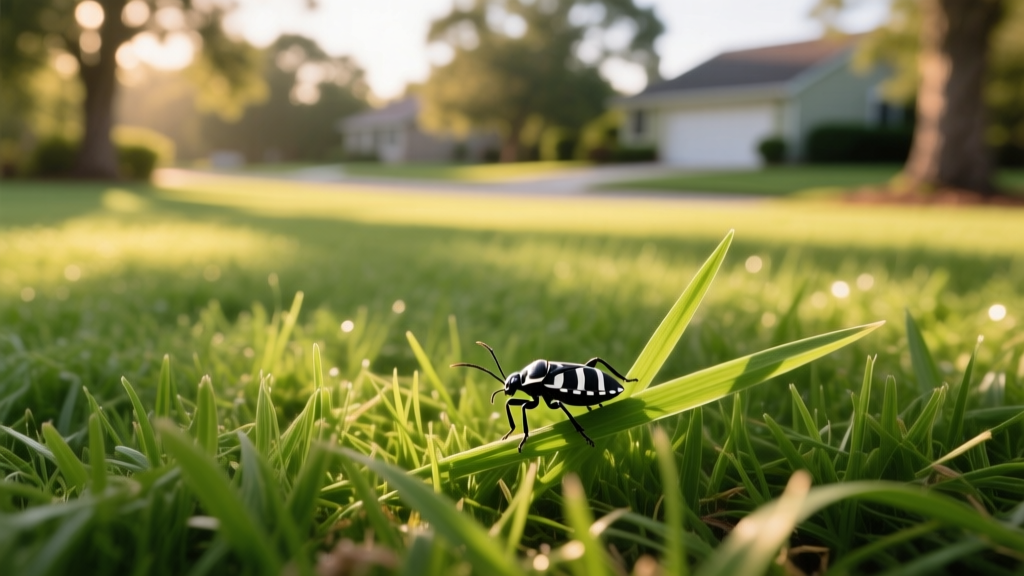
Southern Lawn Chinch Bug Control: A Climate-Specific Guide
Anna KowalskiPublished
The Southern Climate Threat: Why Chinch Bugs Thrive
For homeowners across the Sunbelt, from the humid coasts of South Florida to the sprawling suburbs of Texas, the southern chinch bug (Blissus insularis) represents one of the most destructive threats to warm-season turfgrasses. Unlike pests that require specific seasonal triggers, chinch bugs are uniquely adapted to thrive in the hot, dry microclimates that frequently occur within the broader humid subtropical zones of the American South. They are particularly devastating to St. Augustinegrass, but will also readily attack Zoysia, Centipede, and Bermudagrass when populations explode.
The southern climate creates a perfect storm for these pests. While the Southeast and Gulf Coast are known for high humidity and heavy rainfall, localized dry spells combined with intense solar radiation create the ideal breeding ground for chinch bugs. Furthermore, the modern Southern landscape is heavily paved. Driveways, sidewalks, and patios act as "heat sinks," absorbing solar radiation and baking the adjacent soil. These edges dry out faster than the rest of the lawn, creating a microclimate where chinch bugs congregate, feed, and multiply at an accelerated rate.
According to the University of Florida IFAS, the number of chinch bug generations per year is directly tied to regional temperatures. In North Carolina and the upper South, you might see two to three generations annually. However, in Central and South Florida, the extended heat allows for seven to nine overlapping generations per year, meaning infestations can reach catastrophic levels in a matter of weeks if left unchecked.
Identifying Chinch Bug Damage in Warm-Season Grasses
One of the greatest challenges in regional pest control is distinguishing chinch bug damage from environmental drought stress or fungal diseases like Take-All Root Rot, which are also prevalent in the South. Chinch bugs damage the grass by piercing the plant's vascular tissue with their needle-like mouthparts and sucking out the sap. As they feed, they inject a salivary toxin that disrupts the plant's ability to transport water, causing the grass to yellow, then turn brown, and eventually die.
Damage typically begins as irregular, yellowing patches in the sunniest, driest areas of the lawn—especially near concrete edges. As the colony expands, these patches merge into large, dead zones. To confirm an infestation, turf professionals rely on the "Coffee Can Flotation Test."
The Coffee Can Flotation Test
- Take a large metal coffee can (or a 1-gallon plastic nursery pot) and cut out both the top and bottom.
- Push the can 2 to 3 inches deep into the soil at the margin of the damaged area (where healthy and dead grass meet).
- Fill the can with water and wait for 5 to 10 minutes.
- Count the nymphs (immature bugs) and adults that float to the surface.
Action Threshold: If you count 20 to 25 chinch bugs per square foot (or roughly 4 to 5 per can), treatment is immediately required to prevent widespread turf death.
Climate-Specific Treatment Timelines
Because the Southern climate varies significantly from the deep tropical zones of South Florida to the transitional zones of the Carolinas, your treatment timeline must be adjusted to your specific latitude and soil temperature. The following table outlines the optimal monitoring and treatment windows based on regional climate data.
| Region | Primary Active Months | Peak Generations | First Treatment Window | Key Environmental Trigger |
|---|---|---|---|---|
| South Florida (Zones 10-11) | March through November | June - September | Early March | Soil temps consistently above 70°F |
| Gulf Coast / TX (Zones 8-9) | May through October | July - August | Late April / Early May | Onset of dry spells & 80°F+ air temps |
| Carolinas / GA (Zones 7-8) | June through September | July - August | Late May / Early June | Summer drought stress periods |
Integrated Pest Management (IPM) for the Sunbelt
Relying solely on chemical sprays is a failing strategy in the South, primarily due to the rapid reproductive cycles of chinch bugs and their documented resistance to several classes of insecticides. A robust Integrated Pest Management (IPM) approach is essential for long-term control.
Cultural Controls: Beating the Heat and Humidity
Cultural practices dictate the microclimate of your turf. By altering how you maintain your lawn, you can make it inherently hostile to chinch bugs.
- Mowing Height: Never scalp a St. Augustine lawn. Maintain a mowing height of 3.5 to 4.0 inches. Taller grass shades the soil, reducing surface temperatures and retaining soil moisture, which discourages chinch bug nesting and egg survival.
- Thatch Management: Chinch bugs thrive in thick thatch layers, which protect them from predators and chemical sprays. Keep thatch below 0.5 inches. In heavy clay soils common in Texas and the Carolinas, annual core aeration is vital. In the sandy soils of Florida, dethatching or top-dressing with compost may be required every two years.
- Irrigation Strategy: Chinch bugs flourish in dry soil. Implement a "deep and infrequent" watering schedule. Apply 0.5 to 0.75 inches of water per irrigation cycle, forcing roots to grow deeper. Avoid light, daily sprinklings which keep the surface dry and warm while promoting shallow roots.
Biological Controls: Leveraging Regional Ecology
The Southern ecosystem is rich in natural predators that can keep chinch bug populations in check if broad-spectrum pesticides are avoided.
- Big-Eyed Bugs (Geocoris species): These beneficial insects are voracious predators of chinch bug eggs and nymphs. They are native to the South and can be encouraged by planting diverse flowering borders near turf areas.
- Parasitic Wasps: Tiny, non-stinging wasps naturally parasitize chinch bug eggs.
- Entomopathogenic Fungi: The fungus Beauveria bassiana naturally infects and kills chinch bugs. This fungus thrives in the high humidity of the Southeast. Overuse of fungicides or harsh chemical insecticides will wipe out this natural biological control, leading to worse pest outbreaks.
Chemical Controls: Products, Measurements, and Costs
When populations cross the action threshold, targeted chemical intervention is necessary. However, resistance management is critical. The Texas A&M AgriLife Extension strongly recommends rotating insecticide classes (Mode of Action) to prevent surviving bugs from breeding resistant offspring.
1. Pyrethroids (Fast Knockdown)
- Active Ingredient: Bifenthrin or Lambda-cyhalothrin.
- Product Examples: Bifen I/T, Talstar P, or Scotts Bug-B-Gon.
- Application Rate: 0.5 to 1.0 fluid ounces of Bifen I/T per 1,000 square feet. Mix with 1 to 2 gallons of water to ensure penetration through the thatch layer.
- Estimated Cost: $35 to $50 for a 32 oz bottle, which treats up to 15,000+ sq ft. Highly cost-effective for large Southern properties.
- Note: Pyrethroids kill on contact but have a shorter residual effect. They are highly toxic to bees; apply in the early evening when bees are not foraging.
2. Neonicotinoids (Systemic Prevention)
- Active Ingredient: Imidacloprid or Clothianidin.
- Product Examples: Merit Granules, Arena, or BioAdvanced 24 Hour Lawn Insect Killer.
- Application Rate: 1.4 to 1.8 lbs of 0.5% Imidacloprid granules per 1,000 square feet.
- Estimated Cost: $40 to $60 for a 10 lb bag treating roughly 5,000 sq ft.
- Note: Systemics are absorbed by the grass roots. When chinch bugs feed, they ingest the toxin. These are best applied preventatively in early spring before the summer heat triggers explosive breeding.
"Repeated use of pyrethroids in South Florida has led to widespread chinch bug resistance. Homeowners and professionals must rotate to neonicotinoids or diamides (like Chlorantraniliprole) to maintain efficacy." - Clemson University HGIC
Preventative Care for Hot, Humid Zones
Prevention in the South starts with how you feed your lawn. Chinch bugs are highly attracted to turfgrass that has been pumped full of fast-release, water-soluble nitrogen. The rapid, lush growth produced by cheap synthetic fertilizers results in thinner plant cell walls and higher amino acid concentrations in the sap, making the grass a highly nutritious target for pests.
Transition to slow-release, organic, or polymer-coated nitrogen fertilizers. Products utilizing sulfur-coated urea or methylene urea provide a steady, even feeding over 8 to 10 weeks. This promotes dense, resilient root systems and thicker cell walls that are naturally more resistant to piercing-sucking insects. Additionally, maintaining a soil pH between 6.0 and 6.5 ensures the grass can efficiently uptake nutrients, reducing the overall stress that makes warm-season lawns vulnerable to regional pests.
By understanding the unique intersection of Southern heat, soil types, and pest biology, homeowners can shift from a reactive, chemical-heavy approach to a proactive, climate-smart IPM strategy that keeps St. Augustine and Zoysia lawns lush, green, and pest-free year-round.