Pest Control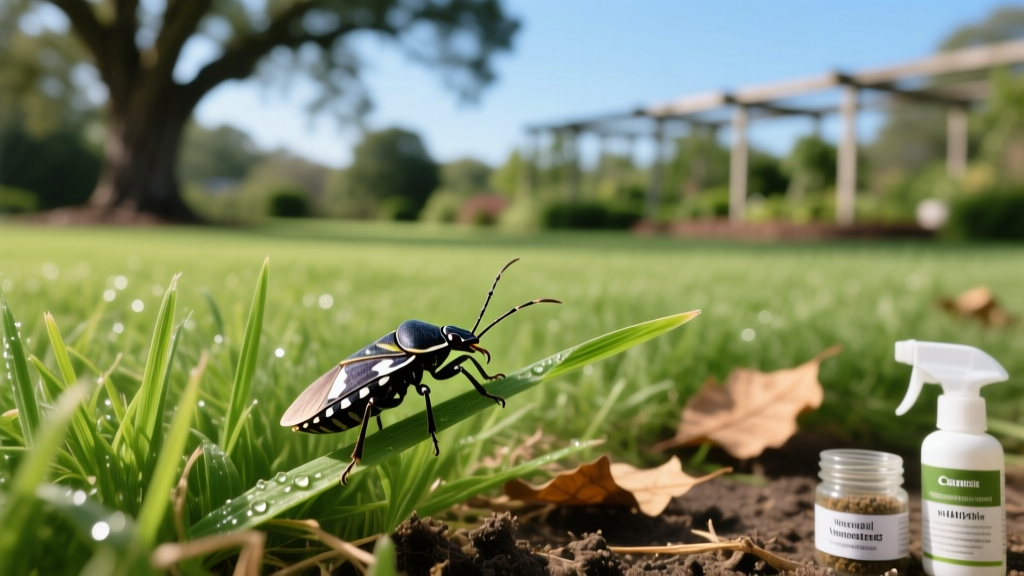
Southern Lawn Chinch Bug Control: A Climate-Specific Guide
Robert HayesPublished
The Southern Climate: A Haven for Chinch Bugs
For homeowners across the Southern and Southeastern United States, maintaining a lush, green lawn is a year-round battle against heat, humidity, and a relentless roster of pests. Among the most destructive of these is the Southern Chinch Bug (Blissus insularis). Unlike cooler regions where insect populations are naturally checked by freezing winter temperatures, the warm, humid climate of the Gulf Coast, Florida, and the Deep South creates an ideal breeding ground for these sap-sucking insects.
While cool-season grasses in the North might face occasional pest pressure, warm-season grasses like St. Augustine, Bermuda, and Zoysia are the primary food sources for chinch bugs. St. Augustine grass, the most popular turf in the South, is particularly vulnerable. In cooler climates, chinch bugs might produce two generations a year. However, according to the University of Florida IFAS Extension, the extended heat of the Southern summer allows for five to seven overlapping generations annually. This rapid life cycle means that a minor infestation in May can explode into a lawn-killing plague by August if left unchecked.
Identifying the Enemy: Damage vs. Drought Stress
One of the greatest challenges in Southern lawn care is distinguishing chinch bug damage from environmental stress. Both drought and chinch bugs cause the grass to yellow, wilt, and eventually turn brown. Because chinch bugs thrive in hot, dry, sunny areas—often near driveways, sidewalks, and patios where the soil dries out fastest and heat radiates from concrete—their damage is frequently misdiagnosed as simple underwatering.
Chinch bugs damage the grass by piercing the plant's vascular tissue with their needle-like mouthparts, sucking out the sap, and injecting a toxic saliva that clogs the plant's water-conducting vessels. This causes the turf to wilt and die, even if the soil is moist. If you notice irregular brown patches that continue to expand despite adequate irrigation, you are likely dealing with chinch bugs rather than a fungal disease or drought.
The Tin Can Flotation Test
To confirm an infestation, the Texas A&M AgriLife Extension recommends the highly effective 'Tin Can Flotation Test'. This simple, zero-cost diagnostic tool takes the guesswork out of pest identification.
- Take a standard metal coffee can and use a heavy knife or can opener to cut out both the top and bottom, creating a hollow metal cylinder.
- Push the can about two inches into the soil at the margin of a damaged area (where the healthy green grass meets the dying brown grass).
- Fill the can with water and wait for three to five minutes.
- Count the number of chinch bugs that float to the surface. They are small—about 1/8 to 1/5 of an inch long—with black bodies and white wings folded flat on their backs.
- Repeat this test in three or four different areas of the lawn.
The Threshold: If you count 20 to 25 chinch bugs per square foot (or roughly 4 to 5 bugs per can), treatment is immediately necessary to prevent severe turf loss.
Integrated Pest Management (IPM) for Southern Lawns
Effective pest control in the South requires an Integrated Pest Management (IPM) approach. Relying solely on chemical sprays often leads to resistance and secondary pest outbreaks. By combining cultural, biological, and targeted chemical controls, you can protect your lawn sustainably.
Cultural Controls: Making Your Lawn Less Hospitable
- Proper Irrigation: Chinch bugs love drought-stressed turf. Provide your lawn with 1 to 1.5 inches of water per week, applied in deep, infrequent sessions (e.g., 0.5 inches twice a week) to encourage deep root growth. Avoid shallow, daily watering, which keeps the thatch layer moist and invites fungal diseases.
- Mowing Height: Never scalp a Southern lawn. Set your mower deck to 3.5 to 4 inches for St. Augustine grass, and 1.5 to 2.5 inches for Zoysia. Taller grass shades the soil, conserves moisture, and creates a cooler microclimate that is less favorable to chinch bug reproduction.
- Thatch Management: Chinch bugs hide and lay eggs in the thatch layer. If your thatch exceeds 0.5 inches, perform a core aeration or use a vertical mower (dethatcher) in the late spring to break it up. Top-dressing with a thin layer of compost can also accelerate thatch decomposition.
- Fertilization: Avoid high-nitrogen, quick-release synthetic fertilizers during the peak heat of summer (July and August). Excessive nitrogen promotes rapid, succulent leaf growth that is highly attractive to sap-sucking insects. Use slow-release, organic-based fertilizers instead.
Biological Controls: Enlisting Nature's Army
Before reaching for the sprayer, recognize that your lawn is home to beneficial predators. The Big-Eyed Bug (Geocoris species), predatory earwigs, and lacewings are natural enemies of the chinch bug. The Big-Eyed Bug is frequently mistaken for a chinch bug due to its similar size and coloration, but it has noticeably larger, protruding eyes and lacks the white wing markings. Preserving these beneficial insects by avoiding broad-spectrum insecticides early in the season is a cornerstone of regional IPM.
Chemical Control: Products, Rates, and Timing
When cultural and biological controls are insufficient and the tin can test confirms a population above the economic threshold, targeted chemical intervention is required. In the South, timing is everything. The most vulnerable stage of the chinch bug life cycle is the early nymph stage, which typically emerges in late April to early May for the first generation, and again in late July for the summer peak.
Granular insecticides are generally preferred for Southern lawns because they penetrate the thatch layer more effectively than liquid sprays when watered in immediately after application. Expect to spend between $15 and $30 for a bag of granular Bifenthrin covering 5,000 square feet, while systemic liquid treatments like Imidacloprid may cost $30 to $45 for a hose-end sprayer covering up to 10,000 square feet.
Recommended Insecticides for Southern Turf
| Active Ingredient | Product Example | Application Rate | Target Stage | Best Regional Timing |
|---|---|---|---|---|
| Imidacloprid | Bayer Advanced 24 Hour Lawn Insect Killer | As per label (usually 1.5 oz per 1,000 sq ft) | Nymphs & Adults (Systemic) | Early Spring (April) |
| Bifenthrin | Talstar P or Bifen I/T | 1 oz per 1,000 sq ft (Liquid) or 2.3 lbs per 1,000 sq ft (Granular) | Nymphs & Adults (Contact) | Late Spring to Early Summer |
| Clothianidin | Arena 50 WDG | 0.84 oz per 1,000 sq ft | Nymphs (Systemic) | Early Summer (Preventative) |
| Carbaryl | Sevin Lawn Insect Granules | 2 to 3 lbs per 1,000 sq ft | Nymphs & Adults (Contact) | Mid-Summer (Curative) |
Note: Always read and follow the manufacturer's label instructions. Water granular products into the soil immediately with 0.25 inches of irrigation to activate the active ingredient and wash it off the grass blades to protect foraging bees.
The Pyrethroid Resistance Problem in the Deep South
A critical factor in Southern pest management is insecticide resistance. Decades of repeated use of pyrethroid-based insecticides (like Bifenthrin and Lambda-cyhalothrin) have led to highly resistant chinch bug populations, particularly in South Florida and parts of coastal Texas. The Clemson University Home & Garden Information Center notes that rotating chemical classes is no longer just a recommendation; it is a necessity for lawn survival.
To combat resistance, you must rotate the Insecticide Resistance Action Committee (IRAC) mode of action groups. If you use a pyrethroid (IRAC Group 3A) like Bifenthrin for your spring treatment, you must switch to a neonicotinoid (IRAC Group 4A) like Imidacloprid or Clothianidin, or a diamide (IRAC Group 28) like Chlorantraniliprole for your mid-summer follow-up. Never apply the same chemical class twice in a single season.
Regional Prevention Calendar for the Deep South
- March - April (Early Spring): Perform the tin can test as soil temperatures consistently reach 70°F. Apply a preventative systemic insecticide like Imidacloprid if your lawn has a history of severe infestations. Core aerate to reduce thatch.
- May - June (Late Spring): Monitor hot, dry areas near concrete. Raise your mower blade to the maximum recommended height for your grass type. Apply a contact granular insecticide like Bifenthrin if nymphs are detected.
- July - August (Peak Summer): Ensure the lawn receives 1.5 inches of water weekly. Avoid high-nitrogen fertilizers. If a second generation emerges, treat with an alternative IRAC group chemical, such as Clothianidin or Carbaryl.
- September - October (Fall): As temperatures cool, chinch bug activity slows. Focus on lawn recovery by overseeding thin areas (if applicable to your grass type) or applying a fall winterizer fertilizer to help the turf recover from summer damage.
By understanding the unique pressures of the Southern climate and employing a strategic, multi-tiered IPM approach, you can defend your St. Augustine or Bermuda lawn against chinch bugs without relying exclusively on harsh chemicals. Consistent monitoring, proper watering, and intelligent chemical rotation are the keys to a resilient, pest-free Southern landscape.