Pest Control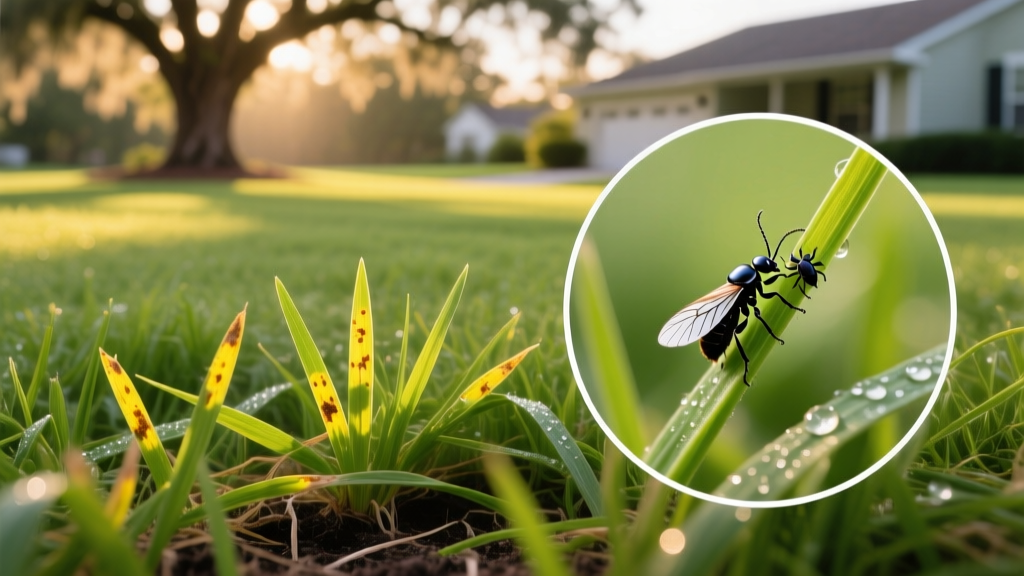
Managing Chinch Bugs in Southern and Gulf Coast Lawns
Mike RodriguezPublished
The Southern Chinch Bug: A Warm-Climate Menace
The Southern chinch bug (Blissus insularis) is arguably the most destructive insect pest of warm-season turfgrasses in the United States. For homeowners in Florida, Texas, and the broader Gulf Coast region, managing this pest is not a matter of "if," but "when." Thriving in the intense heat and humidity of USDA Hardiness Zones 8 through 11, these tiny insects can decimate a pristine St. Augustinegrass lawn in a matter of weeks. According to the University of Florida IFAS Extension, chinch bugs cause millions of dollars in turf damage annually, primarily by injecting a salivary toxin into the grass blades that halts water transport, leading to rapid desiccation and death.
Identifying Chinch Bug Damage in St. Augustinegrass
Identifying a chinch bug infestation early is critical, especially in Southern climates where summer drought stress can easily mimic pest damage. The initial symptoms appear as localized, irregular patches of yellowing grass that quickly turn brown and die. Unlike fungal diseases, which often present with distinct lesions or powdery mildew, chinch bug damage typically begins in sunny, heat-stressed areas near sidewalks, driveways, or south-facing walls. The insects themselves are minuscule—adults measure only about 1/8 to 1/5 of an inch long. They feature black bodies with white wings folded flat over their backs, marked by a distinctive dark triangle. Nymphs are wingless, ranging from bright orange to dark red, eventually turning black as they mature.
The Coffee Can Flotation Test
Because chinch bugs are incredibly small and fast-moving, visual inspection of the grass blades is often insufficient. The gold standard for scouting is the "coffee can flotation test." To perform this, remove both ends of a standard metal coffee can. Push one end about two to three inches deep into the soil at the margin of a damaged and healthy patch of grass. Fill the can with water and wait for about five minutes. If chinch bugs are present, they will float to the surface. Finding 20 to 25 chinch bugs per square foot (or roughly 4 to 5 in a standard 6-inch diameter can) indicates an infestation severe enough to warrant chemical intervention, as noted by Texas A&M AgriLife Extension.
How Southern Climates Fuel Infestations
The Southern climate is a double-edged sword for turfgrass. While warm-season grasses like St. Augustine, Zoysia, and Bermudagrass thrive in the heat, the chinch bug's life cycle is also directly accelerated by high temperatures. In cooler northern climates, chinch bugs might produce two generations per year. However, in the deep South and Gulf Coast, the extended warm season allows for five to seven overlapping generations annually. Furthermore, the region's frequent summer droughts and water restrictions induce turf stress, weakening the grass's natural defenses and making it highly susceptible to the salivary toxins injected by feeding bugs. Heavy thatch buildup—a common issue in rapidly growing Southern St. Augustinegrass—provides an ideal, insulated microhabitat for nymphs to hide from predators and surface-level insecticides.
Integrated Pest Management (IPM) for Southern Lawns
Cultural Controls: Building Resilience
Effective management requires an Integrated Pest Management (IPM) approach tailored to regional conditions. Cultural controls form the foundation of this strategy. First, manage your thatch layer. St. Augustinegrass should be dethatched when the layer exceeds 0.5 inches, typically done in late spring using a vertical mower or power rake. Second, optimize your irrigation. While Southern heat demands water, overwatering promotes thatch and fungal issues, while underwatering stresses the turf. Aim for 1 to 1.5 inches of water per week, applied deeply and infrequently to encourage deep root growth. Finally, consider planting resistant cultivars. While the once-resistant 'Floratam' St. Augustinegrass has seen diminished efficacy due to biotype adaptation, newer varieties like 'Palmetto' and 'Provista' offer improved tolerance to chinch bug feeding.
Biological Controls: Enlisting Beneficial Insects
Nature provides its own pest control agents, and preserving these beneficial insects is vital in Southern ecosystems. Big-eyed bugs (Geocoris species), lacewings, and predatory earwigs are natural predators of the chinch bug. Unfortunately, broad-spectrum insecticides often kill these beneficial insects, leading to secondary pest outbreaks. To encourage biological control, avoid preventative calendar-based spraying and only apply chemicals when scouting confirms threshold levels. You can also inoculate your lawn by purchasing and releasing beneficial nematodes (specifically Steinernema carpocapsae), which parasitize chinch bug nymphs in the soil and thatch layer. Apply nematodes in the late afternoon or early evening to protect them from UV degradation, ensuring the soil is moist before and after application.
Chemical Controls: Targeted Interventions
When populations exceed the economic threshold, targeted chemical intervention becomes necessary. The timing of application is crucial; target the active nymph stages in late spring or early summer before populations explode in late August. Rotate active ingredients to prevent genetic resistance, a massive problem in Florida and Texas chinch bug populations. Pyrethroids like bifenthrin and lambda-cyhalothrin offer rapid knockdown and are highly effective as contact killers. However, for longer-lasting systemic control, neonicotinoids like imidacloprid or clothianidin are preferred. These are absorbed by the grass roots and kill insects as they feed, providing up to eight weeks of residual control. Always follow label instructions regarding pollinator protection, avoiding applications when the turf or adjacent weeds are in bloom.
Chinch Bug Treatment Comparison Chart
| Active Ingredient | Product Example | Type | Application Rate (per 1,000 sq ft) | Estimated DIY Cost | Best Timing & Notes |
|---|---|---|---|---|---|
| Bifenthrin (0.1% - 0.2%) | Talstar P, Hi-Yield Bug Blaster | Contact Pyrethroid | 1.5 - 2.0 oz (liquid) or 2.3 lbs (granular) | $4.00 - $8.00 | Early summer. Fast knockdown. Water in granular forms immediately. |
| Imidacloprid (0.5%) | Merit Granules, Bayer Advanced | Systemic Neonicotinoid | 1.4 - 1.8 lbs (granular) | $6.00 - $10.00 | Spring preventative or early nymph stage. Long residual. Water in deeply. |
| Carbaryl (5.0%) | Sevin Dust / Granules | Contact Carbamate | 2.0 - 3.0 lbs (granular) | $5.00 - $9.00 | Spot treatment for active outbreaks. Toxic to bees; apply at dusk. |
| Beneficial Nematodes | Scanmask, Nemasect | Biological Control | 1 million nematodes | $15.00 - $25.00 | Spring/Fall. Requires moist soil and evening application to avoid UV damage. |
Seasonal Prevention Calendar for the Gulf Coast
- March - April (Spring Green-Up): Begin scouting near hardscapes. Apply preventative systemic granules (Imidacloprid) if your lawn has a history of severe infestations. Core aerate to reduce soil compaction and thatch.
- May - June (Early Summer): Peak nymph emergence. Perform weekly coffee can tests. Spot-treat active margins with a liquid pyrethroid (Bifenthrin) to halt spread. Ensure irrigation provides 1 inch of water weekly.
- July - August (Peak Heat): Highest risk period. Generations overlap. Avoid broad-spectrum sprays that kill beneficial big-eyed bugs. Raise mowing height to 3.5 - 4 inches to shade the soil and reduce turf stress.
- September - October (Fall Cool-Down): Populations decline. Focus on turf recovery. Apply a low-nitrogen, high-potassium winterizer fertilizer to strengthen grass cell walls against overwintering pests.
- November - February (Winter Dormancy): Chinch bugs overwinter as adults in the thatch and protected base of the grass. Maintain a clean lawn by removing excessive leaf litter and debris that harbor overwintering adults.
Conclusion
Managing chinch bugs in the South requires vigilance, an understanding of regional microclimates, and a commitment to holistic lawn care. By combining proper irrigation, thatch management, and targeted, science-backed chemical interventions, homeowners can protect their St. Augustinegrass and maintain a lush, resilient landscape year-round. For localized advice and the latest resistance management protocols, always consult your county extension office or resources like the Clemson University Home & Garden Information Center.