Home & Garden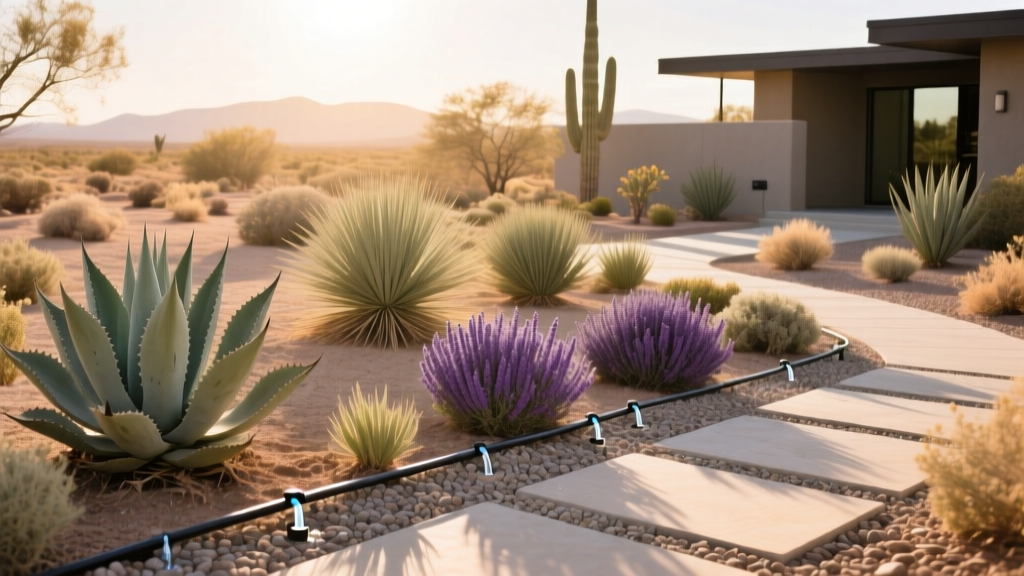
Southwest Xeriscaping: Smart Irrigation & Drought Design
Robert HayesPublished
Embracing the Desert: The Shift to Xeriscaping
For homeowners in the American Southwest, maintaining a traditional turf lawn is an ongoing battle against extreme heat, persistent drought, and stringent municipal water restrictions. Bridging the gap between sustainable outdoor living and modern home efficiency requires a fundamental shift in how we view our landscapes. Xeriscaping—a landscaping philosophy that reduces or eliminates the need for supplemental water from irrigation—is no longer just a niche trend; it is a regional necessity. When paired with smart home irrigation technology, xeriscaping transforms barren, water-wasting yards into vibrant, energy-efficient outdoor living spaces that thrive in USDA Hardiness Zones 8 through 10.
According to the U.S. Department of Energy, strategic energy-efficient landscaping, including the use of drought-tolerant shade trees and heat-reflecting hardscapes, can reduce local air temperatures and cut home cooling costs by up to 25%. This guide will walk you through the actionable steps of designing a desert-resilient yard, amending hostile soils, and integrating smart irrigation systems to create a stunning, low-maintenance Southwest oasis.
Conquering Caliche: Soil Preparation in Arid Zones
The foundation of any successful garden is its soil, but the Southwest is notorious for 'caliche'—a shallow, cement-like layer of calcium carbonate that restricts root growth and causes severe drainage issues. Before planting a single shrub, you must address the soil profile.
Testing and Amending
First, perform a percolation test. Dig a hole 12 inches deep and 12 inches wide, fill it with water, and let it drain. Refill it and measure the drainage rate. If the water drops less than 1 inch per hour, you have heavy clay or caliche. To amend planting holes for non-cacti desert plants, experts at the University of Arizona Cooperative Extension recommend a mix of 70% native soil and 30% high-quality organic compost. Avoid adding sand to clay, as this creates a concrete-like texture. For cacti and succulents, skip the compost entirely and use a 50/50 mix of native soil and pumice or crushed granite to ensure rapid drainage.
The Southwest Plant Palette: Beauty Without the Thirst
Selecting the right flora is critical. Desert-adapted plants utilize specialized physiological mechanisms, such as Crassulacean Acid Metabolism (CAM), to minimize water loss. Here are top-tier, low-water selections for the Southwest landscape:
- Texas Ranger (Leucophyllum frutescens): Known as the 'barometer bush,' this evergreen shrub erupts in vibrant purple blooms whenever humidity spikes. It requires full sun, reaches 5-8 feet in maturity, and needs virtually no supplemental water once established.
- Desert Spoon (Dasylirion wheeleri): A striking architectural succulent with silvery-blue, serrated leaves radiating from a central trunk. Perfect as a focal point in rock gardens. Requires zero maintenance and thrives in reflected heat.
- Regal Mist Muhly Grass (Muhlenbergia capillaris 'Lenca'): A clumping ornamental grass that produces a massive cloud of pinkish-red plumes in the fall. Plant in masses of three or five, spacing them 3 feet apart for a dramatic, flowing effect that softens harsh hardscaping.
- Lantana (Lantana camara): A relentless bloomer that attracts pollinators. Choose trailing varieties for groundcover or bushy types for borders. Prune back by one-third in early spring to encourage dense, new growth.
- Ironwood (Olneya tesota): A slow-growing, long-living desert tree that provides dappled shade, creating a microclimate that protects more sensitive understory plants from the brutal afternoon sun.
Hardscaping for Heat Reduction and Drainage
Hardscaping reduces the irrigable footprint of your yard while providing functional outdoor living areas. In the Southwest, material selection dictates how much heat is radiated back at your home.
Installing Decomposed Granite (DG)
Decomposed granite is the premier Southwest groundcover. It allows water to permeate into the soil while suppressing weeds. To install a durable DG patio or pathway:
- Excavate: Dig down 4 inches below the desired finish grade.
- Base Layer: Lay down a 2-inch base of 3/4-inch minus crushed rock and compact it with a plate compactor.
- Weed Barrier: Install a heavy-duty, permeable geotextile landscape fabric (avoid solid plastic, which causes pooling).
- Surface Layer: Apply 2 inches of 3/8-inch minus DG mixed with a liquid landscape stabilizer (approximately 3 oz per square foot). This binds the particles together, creating a surface as firm as asphalt but still permeable.
Smart Irrigation: The Brain of the Desert Garden
Even drought-tolerant plants require precise watering during their first two years of establishment, and occasional deep watering during peak summer heat. Traditional timer-based sprinkler systems are highly inefficient, often watering during rainstorms or high-wind events. Upgrading to a smart irrigation system is the most impactful technological integration you can make for your outdoor space.
According to the EPA WaterSense program, upgrading to a smart irrigation controller can save the average home nearly 7,600 gallons of water annually. Smart controllers, such as the Rachio 3 or Hunter Hydrawise, connect to your home Wi-Fi and utilize local weather station data to calculate Evapotranspiration (ET) rates. They automatically adjust watering schedules based on real-time temperature, humidity, wind, and solar radiation.
Designing the Drip Zone
Overhead spraying is banned or heavily restricted in many Southwest municipalities due to high evaporation rates. Instead, convert your zones to sub-surface or surface drip irrigation.
- Mainline: Use 1/2-inch blank poly tubing as the main artery, securing it with 6-inch landscape staples every 3 feet.
- Emitters: For shrubs and trees, punch in 1 GPH (gallon per hour) pressure-compensating (PC) emitters. Place two emitters per shrub, spaced 12 inches from the trunk, to encourage wide root growth.
- Inline Drip Grids: For groundcovers or dense perennial beds, use 1/2-inch inline drip tubing with emitters pre-installed every 12 inches, laid out in a grid pattern 18 inches apart.
- Automation: Install a Wi-Fi-enabled smart valve manifold. Connect the controller's common wire and zone wires using waterproof gel-filled wire connectors to prevent corrosion in alkaline soils.
Cost and Resource Comparison: Turf vs. Xeriscape
While the upfront investment for a xeriscape conversion is higher than laying sod, the return on investment (ROI) through water savings, reduced maintenance, and municipal rebate programs is substantial. Many Southwest cities offer turf-removal rebates ranging from $1.00 to $3.00 per square foot.
| Feature | Traditional Bermuda Lawn | Xeriscape + Smart Drip System |
|---|---|---|
| Installation Cost (per sq ft) | $1.50 - $2.50 | $4.50 - $8.50 |
| Annual Water Cost (1,000 sq ft) | $450 - $750 | $75 - $150 |
| Weekly Maintenance Time | 2-3 hours (mowing, edging, blowing) | 30 mins (pruning, weeding, checking emitters) |
| Fertilizer Requirements | High (4-6 applications yearly) | Low (1 application of slow-release in spring) |
| Smart Home Integration | Limited (basic timers) | High (ET-based weather APIs, flow sensors) |
Seasonal Maintenance Calendar for the Southwest
Desert landscapes are not 'no-maintenance'; they are 'low-maintenance.' Adapting your chores to the desert seasons ensures plant longevity and irrigation efficiency.
Spring (March - April)
This is the prime planting window before the brutal heat sets in. Apply a 2-inch layer of organic mulch or a 1-inch layer of 3/4-inch river rock around plants to insulate roots and suppress weeds. Flush your drip irrigation lines by opening the end caps and letting water run for 60 seconds to clear out mineral deposits and debris.
Summer (May - August)
Avoid pruning during the summer, as exposed branches can suffer severe sunscald. Monitor your smart controller's seasonal shift settings; ensure it is scaling back watering frequency but increasing duration to encourage deep root growth. Water trees deeply once a month using a slow-flowing soaker hose placed at the drip line.
Fall (September - November)
Fall is the second planting window, ideal for installing trees and large shrubs. As temperatures drop, manually override your smart controller to reduce watering schedules by 30-50%. Plant wildflower seeds (like the Arizona Desert Wildflower Mix) in October, keeping the top inch of soil moist until germination.
Winter (December - February)
Protect tender succulents (like Aloe vera or certain Agave species) from rare frost events by covering them with frost cloth—never plastic, which traps moisture and causes rot. Perform structural pruning on deciduous desert trees like the Palo Verde while they are dormant.
Conclusion
Transitioning to a Southwest xeriscape with smart irrigation is a powerful way to align your outdoor living space with the realities of the desert climate. By embracing native flora, installing permeable hardscapes, and leveraging Wi-Fi-enabled irrigation technology, you create a landscape that is not only visually stunning but also ecologically responsible and economically sound. The desert has its own unique, rugged beauty; with the right design and technology, your yard can reflect that brilliance while seamlessly integrating with your modern, energy-efficient home.
