Home & Garden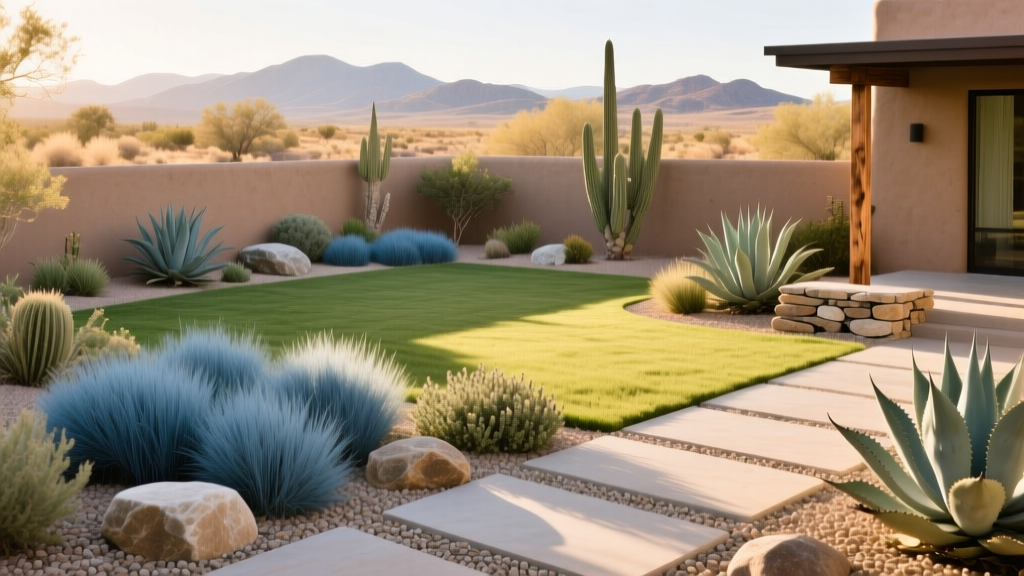
Southwest Xeriscaping: Drought-Tolerant Lawn Alternatives
James MillerPublished
The Reality of Southwest Landscaping
Homeowners across the American Southwest face a unique set of challenges when it comes to lawn care and landscaping. With soaring summer temperatures frequently exceeding 105°F, minimal annual rainfall, and increasingly strict municipal water restrictions, maintaining a traditional Kentucky Bluegrass or Tall Fescue lawn is not only environmentally unsustainable but financially draining. The arid climates of Arizona, New Mexico, Southern California, and Nevada demand a paradigm shift in how we view our outdoor living spaces.
Enter xeriscaping—a landscaping philosophy specifically designed to reduce or eliminate the need for supplemental water from irrigation. Contrary to popular belief, xeriscaping does not mean replacing your entire yard with barren gravel and a single cactus. Modern xeriscaping bridges the gap between lush, functional outdoor living areas and extreme water conservation. By integrating drought-tolerant lawn alternatives, smart irrigation technology, and region-specific soil management, you can create a vibrant, usable yard that thrives in USDA Hardiness Zones 7 through 9.
Top Drought-Tolerant Lawn Alternatives
Transitioning away from traditional turfgrass is the single most impactful step a Southwest homeowner can take to reduce outdoor water usage. According to the EPA WaterSense program, outdoor water use accounts for nearly 30% of total household water consumption, with traditional lawns being the primary culprit. Below is a comparison of the top living lawn alternatives suited for the arid Southwest.
| Groundcover / Turf | Water Needs | Foot Traffic Tolerance | Est. Cost per Sq. Ft. | Establishment Time |
|---|---|---|---|---|
| Buffalograss | Low | High | $0.50 - $1.00 | 6 - 12 Months |
| Kurapia (Lippia) | Very Low | Moderate | $1.00 - $1.50 | 3 - 5 Months |
| Silver Carpet (Dymondia) | Extremely Low | Low (Paths only) | $1.50 - $2.50 | 4 - 6 Months |
| Decomposed Granite (DG) | None | High (Hardscape) | $1.50 - $3.00 | Immediate |
Buffalograss (Bouteloua dactyloides)
Buffalograss is a native North American prairie grass that has been cultivated into an excellent warm-season lawn alternative. It requires roughly 75% less water than traditional fescue lawns. Once established, it survives on just 0.5 to 1 inch of water per week, even during peak summer heat. Research from Texas A&M AgriLife Extension notes that Buffalograss thrives in alkaline soils, which are prevalent throughout the Southwest. Plant 2-inch plugs spaced 12 inches apart in late spring when soil temperatures reach 60°F. Expect to pay around $0.75 per plug. Note that Buffalograss will go dormant and turn brown during the winter months, a natural defense mechanism that saves water and energy.
Kurapia (Lippia nodiflora)
Kurapia is a highly adaptable, sterile cultivar of Lippia that has taken the Southwest landscaping market by storm. It grows low to the ground (reaching only 1 to 3 inches in height), meaning it requires little to no mowing. Its deep taproot system allows it to access subsurface moisture, requiring watering only once every 10 to 14 days during the peak of summer. Kurapia produces small white flowers that attract pollinators but can be mowed off if desired. It is moderately tolerant of foot traffic, making it ideal for front yard aesthetics and low-use backyard areas.
Silver Carpet (Dymondia margaretae)
For areas that receive minimal foot traffic, such as parkways, slopes, and decorative borders, Dymondia is an exceptional choice. Known for its striking silver-green foliage and tiny yellow daisy-like flowers, this South African native is incredibly drought-tolerant. It requires deep, infrequent watering—about once every three weeks in the summer. Because it is not a turfgrass, it does not provide a soft surface for children or pets to play on, but it serves as a stunning, living mulch that keeps soil temperatures down and prevents erosion.
Implementing Smart Irrigation in Arid Zones
Even drought-tolerant plants require supplemental irrigation during their establishment phase and during extreme heatwaves. However, traditional spray-head sprinklers are highly inefficient in the Southwest due to rapid evaporation and wind drift. Regional campaigns like Water – Use It Wisely strongly advocate for the elimination of spray heads in favor of targeted drip irrigation and smart controllers.
Drip Irrigation and Hydrozoning
Drip irrigation delivers water directly to the root zone at a slow, measurable rate, achieving up to 95% water efficiency compared to the 50-60% efficiency of overhead sprinklers. For Southwest landscapes, utilize pressure-compensating inline drip tubing, such as Netafim Techline CV, which prevents drainage at low points and ensures uniform water distribution across sloped yards. Implement 'hydrozoning' by grouping plants with similar water needs on the same irrigation valve. For example, keep your Kurapia on a dedicated valve with shallow, frequent watering, while placing deep-rooted desert trees like the Desert Willow on a separate valve programmed for infrequent, deep soaking.
Smart Controllers
Upgrade your irrigation timer to a Weather-Based Irrigation Controller (WBIC) like the Rachio 3 or the B-hyve Smart Timer. These devices connect to your home Wi-Fi and utilize local Evapotranspiration (ET) data to automatically adjust watering schedules based on real-time weather conditions, soil type, and plant material. If a monsoon storm rolls through Phoenix or Albuquerque, the smart controller will automatically skip the scheduled watering cycle, preventing overwatering and root rot. Expect to invest between $200 and $300 for a high-quality smart controller, a cost that is typically recouped in water savings within the first 18 months.
Soil Preparation: Conquering Caliche and Clay
The native soil in much of the Southwest is characterized by heavy clay, high alkalinity, and a rock-hard subterranean layer known as caliche. Caliche is a cement-like layer of calcium carbonate that prevents water penetration and root growth. Before planting any lawn alternative, proper soil preparation is non-negotiable.
- Core Aeration and Deep Tilling: Rent a heavy-duty rototiller to break up the top 8 to 12 inches of soil. If you hit caliche, use a pickaxe or a jackhammer to fracture the layer, ensuring adequate drainage.
- Gypsum Application: To combat high sodium levels and alkaline clay, apply agricultural gypsum (calcium sulfate) at a rate of 40 lbs per 1,000 square feet. Gypsum helps to flocculate clay particles, improving water infiltration without altering the soil pH drastically.
- Organic Matter Integration: Mix 2 to 3 inches of high-quality, composted organic matter into the top 6 inches of the native soil. This increases the soil's water-holding capacity and provides a slow-release source of nutrients for your new drought-tolerant plants.
- Mulching Strategy: In the Southwest, organic wood mulch can blow away in high winds and degrade rapidly under intense UV exposure. Instead, use inorganic mulches like 3/8-inch crushed decomposed granite (DG) or river rock for groundcovers. Apply a 2 to 3-inch layer of DG around plants, keeping it 3 inches away from the main stems to prevent collar rot.
Seasonal Maintenance Calendar for the Southwest
Maintaining a xeriscaped yard requires a different rhythm than traditional lawn care. Follow this regional calendar to keep your landscape thriving year-round.
Spring (March - May)
This is the prime planting window for warm-season alternatives like Buffalograss and Kurapia. Apply a pre-emergent herbicide in early March to prevent summer weeds like puncturevine and spurge. Prune back any frost-damaged growth on native shrubs and perennials once the threat of the final frost has passed.
Summer (June - August)
Focus on irrigation management. As temperatures peak, increase the duration of your drip irrigation cycles rather than the frequency. Deep watering encourages roots to grow downward into cooler soil layers. Avoid fertilizing during the extreme heat of July and August, as this forces tender new growth that will easily scorch.
Fall (September - November)
While some homeowners choose to overseed their dormant warm-season grasses with perennial ryegrass for winter color, this practice is heavily discouraged in modern xeriscaping due to the immense water waste required to keep the winter grass alive. Instead, embrace the golden-brown dormancy of your Buffalograss. Fall is the ideal time to plant native trees and large shrubs, allowing their roots to establish in the cooler soil before the next summer.
Winter (December - February)
Reduce irrigation significantly. Native and desert-adapted plants may only need one deep watering per month during the winter. Clean and inspect your drip irrigation lines for clogs or rodent damage, and flush the filters on your drip valves.
"Transitioning to a water-wise landscape is not about sacrificing beauty; it is about working in harmony with your local climate. By selecting region-appropriate plants and utilizing smart technology, Southwest homeowners can save thousands of gallons of water annually while maintaining a stunning outdoor oasis."
Conclusion
Embracing xeriscaping and drought-tolerant lawn alternatives is the ultimate expression of regional, climate-specific lawn care in the American Southwest. By replacing thirsty turfgrass with resilient options like Buffalograss and Kurapia, upgrading to smart drip irrigation, and properly amending caliche-heavy soils, you can drastically reduce your environmental footprint and utility bills. A well-designed xeriscape provides a beautiful, low-maintenance bridge between your indoor and outdoor living spaces, proving that sustainable landscaping and stunning curb appeal can seamlessly coexist.
