Home & Garden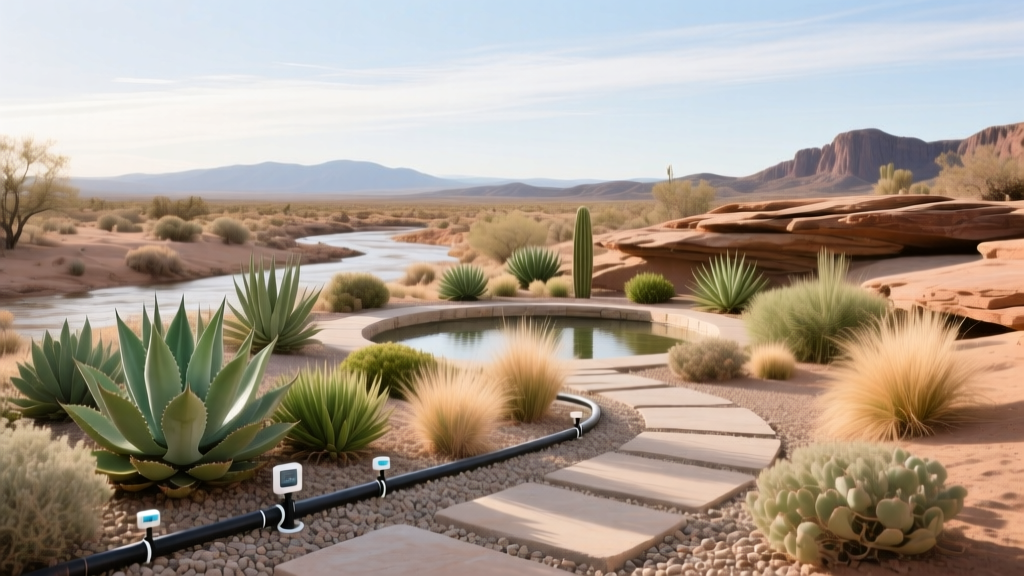
The Southwest Xeriscaping and Smart Irrigation Guide
Robert HayesPublished
Mastering the Desert: Southwest Xeriscaping and Smart Irrigation
The American Southwest is a region defined by its breathtaking desert vistas, intense solar exposure, and stringent water conservation mandates. For homeowners in states like Arizona, New Mexico, Nevada, and West Texas, maintaining a lush, traditional turf lawn is not only an environmental mismatch but a financial drain. Bridging the gap between indoor comfort and outdoor living in arid climates requires a strategic approach to landscape design and water management. By combining the principles of xeriscaping with modern smart home irrigation technology, you can cultivate a stunning, climate-resilient outdoor oasis that conserves water, lowers utility bills, and thrives in extreme heat.
The Core Principles of Southwest Xeriscaping
Xeriscaping is frequently misunderstood as 'zeroscaping'—a barren wasteland of rocks and cacti. In reality, true xeriscaping is a vibrant, layered approach to landscaping that minimizes water use while maximizing ecological benefits and aesthetic appeal. The foundation of a successful desert garden lies in soil preparation and plant selection. Unlike humid regions where soil is naturally rich in organic matter, Southwest soils are often heavy clay or excessively sandy, lacking the nutrients and water-retention capabilities required for robust plant growth.
Soil Amendment and Mulching
Before planting, amend your native soil with a high-quality compost to improve drainage and nutrient density. For arid climates, a 2-to-3-inch layer of inorganic mulch, such as crushed gravel or decomposed granite, is often superior to wood chips. Gravel mulch does not blow away in monsoon winds, reflects harsh sunlight, and prevents the soil from baking. However, if you are establishing a garden-to-table vegetable patch or planting acid-loving desert shrubs, organic wood mulch is preferable to retain moisture and regulate soil temperatures.
Selecting Native and Adapted Flora
Choosing the right plants is the most critical step in regional landscaping. Native and desert-adapted plants have evolved deep taproots and specialized foliage to survive prolonged droughts. Consider integrating the following into your landscape:
- Texas Sage (Leucophyllum frutescens): A drought-tolerant shrub that produces stunning purple blooms after rainfall.
- Red Yucca (Hesperaloe parviflora): Features striking, coral-red flower spikes that attract hummingbirds and require minimal maintenance.
- Desert Willow (Chilopsis linearis): A beautiful, small deciduous tree that provides essential patio shade and orchid-like flowers.
- Agave and Aloe species: Perfect for architectural focal points and container gardening on patios.
Upgrading to Smart Irrigation Controllers
Traditional timer-based irrigation systems are notoriously inefficient, often watering landscapes during rainstorms or in the middle of the day when evaporation rates peak. The integration of smart home technology into outdoor water management has revolutionized desert landscaping. According to the EPA WaterSense program, replacing a standard clock timer with a WaterSense-labeled smart irrigation controller can save the average home nearly 7,600 gallons of water annually.
Top Smart Controllers for Arid Climates
Smart controllers utilize local weather data, soil moisture sensors, and evapotranspiration (ET) rates to automatically adjust watering schedules. Two industry-leading models ideal for Southwest homeowners include:
- Rachio 3 Smart Sprinkler Controller ($229 - $279): Integrates seamlessly with smart home ecosystems like Alexa and Apple HomeKit. It uses hyper-local weather intelligence to skip watering during high winds or impending rain.
- Orbit B-hyve Smart Controller ($99 - $149): A budget-friendly, EPA WaterSense-certified option that offers excellent weather-based adjustments and an intuitive mobile app for managing multiple hydrozones.
Drip Irrigation: The Lifeline of Desert Gardens
Overhead spray sprinklers are highly inefficient in the Southwest, losing up to 50% of their water to wind drift and rapid evaporation. The Texas A&M AgriLife Extension strongly advocates for drip irrigation, noting that these systems deliver water directly to the plant's root zone with up to 90% efficiency. A well-designed drip system utilizes pressure regulators (set to 25 PSI) and 1/2-inch poly tubing with inline emitters.
For established desert shrubs and trees, use adjustable bubblers or 2-GPH (gallons per hour) button emitters placed at the drip line of the canopy. For groundcovers and perennial flower beds, 1-GPH emitters spaced 12 inches apart provide uniform, deep watering that encourages roots to grow downward, away from the scorching surface heat.
Hydrozoning and Smart Watering Schedule
Hydrozoning is the practice of grouping plants with similar water and sunlight requirements together on the same irrigation valve. This prevents overwatering drought-tolerant cacti while trying to meet the needs of a thirsty rose bush. Below is a recommended smart irrigation baseline schedule for a Southwest landscape during the peak summer months (June through August):
| Hydrozone | Plant Type | Emitter Type | Summer Frequency | Runtime per Session |
|---|---|---|---|---|
| Zone 1 (Oasis) | Turf, Tropicals, Vegetables | Micro-sprayers / Drip | 3x per week | 15 - 20 mins |
| Zone 2 (Transition) | Flowering Shrubs, Perennials | 2 GPH Emitters | 2x per week | 30 - 45 mins |
| Zone 3 (Native) | Cacti, Agave, Desert Trees | Bubblers / 4 GPH | 1x every 2 weeks | 60 - 90 mins |
Note: Smart controllers will automatically reduce these runtimes during the cooler winter months (November through February), often cutting water usage by up to 70%.
Garden-to-Table: Growing Food in Extreme Heat
Bridging indoor culinary experiences with outdoor growing is highly rewarding, but the Southwest sun can quickly scorch traditional vegetables. To succeed, utilize 30% to 50% density shade cloth suspended over raised beds to protect crops like tomatoes and peppers from afternoon sun scald. Additionally, incorporate ancient irrigation methods like Ollas (unglazed clay pots). By burying an Olla up to its neck in the soil and filling it with water, the porous clay slowly weeps moisture directly into the surrounding root zone. This method is virtually evaporation-proof and pairs beautifully with modern drip lines used to keep the Olla automatically filled.
Hardscaping for Thermal Comfort
Outdoor living spaces in the Southwest must account for intense thermal mass. Dark concrete pavers and asphalt can reach surface temperatures exceeding 140°F, radiating heat back onto your patio and into your home, thereby increasing indoor cooling costs. Opt for light-colored hardscaping materials such as travertine, pale flagstone, or stabilized decomposed granite (DG). These materials reflect solar radiation and keep outdoor seating areas significantly cooler. Pair these surfaces with a solar-powered smart pergola equipped with automated louvers that track the sun and close during peak UV hours.
Cost Breakdown and ROI
Transitioning to a xeriscape with smart irrigation requires an upfront investment, but the return on investment (ROI) is substantial in regions with tiered water pricing. A professional xeriscape conversion typically costs between $8 and $15 per square foot, while a DIY approach using local utility rebates can drop costs to $3 to $5 per square foot. Many Southwest municipalities, such as the Southern Nevada Water Authority, offer 'Cash for Grass' rebates of up to $3 per square foot for removing water-intensive turf. Combined with the 20% to 40% reduction in monthly water bills provided by smart drip irrigation, most homeowners recoup their investment within three to five years.
As the regional conservation campaign Water Use It Wisely emphasizes, 'Every drop counts in the desert.' Upgrading your landscape is not just a personal property enhancement; it is a vital contribution to the long-term sustainability of the Southwest's precious aquifers.
Conclusion
Embracing the unique challenges of the Southwest climate allows homeowners to create outdoor spaces that are as functional as they are beautiful. By pairing native, drought-tolerant flora with precision smart irrigation technology, you eliminate the guesswork from garden maintenance. The result is a sustainable, garden-to-table ready outdoor living space that honors the natural desert environment while providing a serene, energy-efficient extension of your home.
