Home & Garden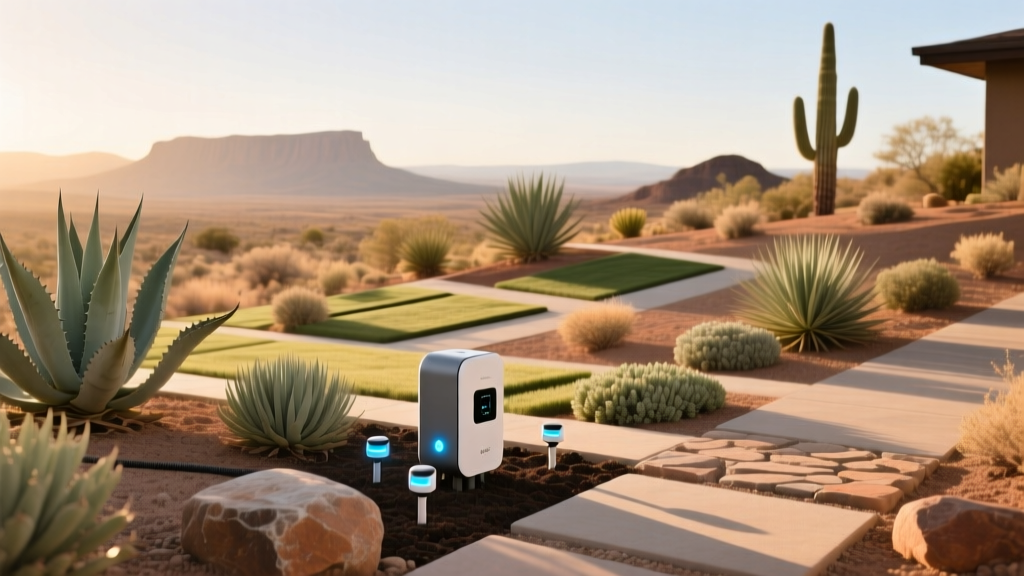
Southwest Xeriscaping: Smart Irrigation & Drought-Tolerant Design
David ParkPublished
Embracing the Arid Climate: Why Xeriscaping is Essential in the Southwest
Landscaping in the American Southwest—encompassing regions like Arizona, Nevada, Southern California, and New Mexico—presents a unique set of challenges. With USDA hardiness zones typically ranging from 8 to 10, summer temperatures frequently exceed 110°F, and annual rainfall often falls below 10 inches. Maintaining a traditional Kentucky Bluegrass or Bermuda turf lawn in this environment is not only an ecological mismatch but a massive financial drain. This is where xeriscaping, combined with modern smart home irrigation, becomes the ultimate solution for regional and climate-specific yard care.
Xeriscaping is often misunderstood as merely replacing grass with barren gravel and a single cactus. In reality, it is a comprehensive, seven-principle landscaping philosophy designed to minimize water use while maximizing aesthetic appeal and biodiversity. By integrating drought-tolerant native plants, improving regional soils, and leveraging smart home technology, homeowners can create lush, vibrant outdoor living spaces that thrive in extreme heat without draining municipal water reserves or their wallets.
Understanding Southwest Soil: The Caliche Challenge
Before selecting plants or installing irrigation, you must address the foundation of your garden: the soil. Much of the Southwest is plagued by caliche, a hard, cement-like layer of calcium carbonate that binds soil particles together. Caliche prevents water penetration, restricts root growth, and locks up essential nutrients, leading to iron chlorosis (yellowing leaves) in many non-native plants.
To combat caliche, physical and chemical amendments are required. For planting trees and large shrubs, dig holes twice as wide as the root ball but no deeper, and use a pickaxe or digging bar to fracture the caliche layer at the bottom to ensure proper drainage. For general bed preparation, incorporate 2 to 3 inches of high-quality organic compost and apply agricultural gypsum at a rate of 40 pounds per 1,000 square feet. Gypsum helps to flocculate clay particles and displace sodium, gradually softening the soil structure. Expect to spend between $50 and $100 per cubic yard for premium desert-blended compost, a necessary investment for long-term plant health.
Smart Home Irrigation: The Brain of Your Desert Oasis
The most critical component of a modern Southwest landscape is how water is delivered. Traditional sprinkler systems on mechanical timers are incredibly inefficient in arid climates, often losing up to 50% of water to wind drift and high evaporation rates. According to the EPA WaterSense program, upgrading to a weather-based smart irrigation controller can save the average home nearly 7,600 gallons of water annually while keeping landscapes healthier.
Smart controllers, such as the Rachio 3 or the B-hyve Smart Indoor/Outdoor Sprinkler Controller (retailing between $150 and $230), connect to your home Wi-Fi and utilize local Evapotranspiration (ET) data. ET measures the rate at which water evaporates from the soil and transpires from plants. If a monsoon storm rolls through Phoenix or a heatwave hits Las Vegas, the smart controller automatically adjusts or skips watering schedules. Furthermore, integrating a Toro Precision Soil Moisture Sensor (around $120) directly into the root zone of your hydrozones ensures that the system only waters when the soil volumetric water content drops below a specific threshold, typically 20% for desert-adapted plants.
For delivery, abandon spray heads entirely in favor of subsurface or point-source drip irrigation. Netafim Techline CV drip tubing, which features built-in pressure-compensating emitters with check valves to prevent drainage, is the gold standard. Drip systems deliver water directly to the root zone at a slow rate (typically 0.9 to 1.0 Gallons Per Hour), achieving up to 95% efficiency compared to the 60% efficiency of overhead spray.
Hydrozoning: Grouping Plants by Water Needs
Hydrozoning is the practice of clustering plants with similar water, sunlight, and soil requirements into distinct irrigation zones. This prevents the common mistake of overwatering drought-tolerant agaves just to keep a nearby hibiscus alive. The Water Use It Wisely campaign strongly advocates for hydrozoning as a foundational step in desert landscape design.
- Zone 1 (Oasis Zone): Located near patios, entryways, or shaded courtyards. Features higher-water-use plants like citrus trees, bougainvillea, and bird of paradise. Watered more frequently to create a cool, lush microclimate.
- Zone 2 (Transition Zone): The middle ground. Features moderate-water plants like Texas Ranger (Leucophyllum frutescens), lantana, and desert willow. Watered deeply but infrequently to encourage deep root growth.
- Zone 3 (Desert Native Zone): The perimeter of the property. Features highly drought-tolerant natives like Agave, Ocotillo, Palo Verde trees, and prickly pear. Relies primarily on natural rainfall once established, requiring only occasional deep soaking during extreme summer droughts.
Regional Plant & Irrigation Comparison Chart
Use the table below to configure your smart irrigation controller settings based on your specific hydrozones during the peak summer months (June through August). Always schedule watering between 4:00 AM and 6:00 AM to minimize evaporation and wind interference.
| Hydrozone | Plant Examples | Summer Watering Frequency | Smart Controller Soil Moisture Target | Drip Emitter Rate & Duration |
|---|---|---|---|---|
| Zone 1 (Oasis) | Citrus, Hibiscus, Bougainvillea | 2 to 3 times per week | 30% - 40% | 1.0 GPH / 45-60 mins |
| Zone 2 (Transition) | Texas Ranger, Lantana, Desert Willow | 1 time per week | 15% - 20% | 0.9 GPH / 90 mins |
| Zone 3 (Native) | Agave, Ocotillo, Palo Verde | 1 to 2 times per month | 5% - 10% (or rain delay) | 2.0 GPH / 120 mins (deep soak) |
Hardscaping and Mulching for Moisture Retention
In the Southwest, what you put on top of the soil is just as important as what you plant in it. Bare soil bakes in the sun, creating a crust that repels water and cooks shallow roots. Mulching is mandatory, but the type of mulch matters.
While organic wood chips are great for the Oasis zone to feed the soil as they break down, they decompose rapidly in extreme UV and heat, requiring annual replacement. For the Transition and Native zones, inorganic mulches like Decomposed Granite (DG) or river rock are superior. A 2-to-3-inch layer of 3/8-inch minus DG costs approximately $40 to $60 per ton and provides excellent moisture retention, suppresses weeds, and allows rainwater to permeate unlike solid concrete or pavers. Furthermore, DG reflects light beautifully at night when paired with smart, low-voltage LED uplighting, bridging the gap between daytime garden care and nighttime outdoor living.
Seasonal Maintenance Calendar for the Desert Southwest
Desert landscaping is not a 'set it and forget it' endeavor; it requires seasonal awareness.
- Spring (March - April): Prune away winter frost damage from perennials only after the last frost date. Apply a slow-release, low-nitrogen fertilizer (like a 16-8-8 blend with micronutrients) to Oasis and Transition zones. Flush drip lines to clear winter sediment.
- Summer (May - August): Monitor for heat stress. Do not prune trees in summer, as the canopy provides vital shade to the trunk and root zone. Adjust smart controllers to account for the July/August monsoon season, utilizing rain-skip features to prevent root rot.
- Fall (September - November): This is the prime planting season in the Southwest. The soil is still warm, encouraging root establishment, but the air is cooling, reducing transplant shock. Aerate compacted caliche beds and top-dress with compost.
- Winter (December - February): Reduce irrigation runtime by 60% to 80%. Protect tender Zone 1 plants from occasional freezing nights using frost cloth (never plastic). Prune deciduous desert trees like the Palo Verde or Mesquite to shape their canopy before the spring bloom.
The Financial ROI of Xeriscaping
While the upfront cost of converting a turf lawn to a xeriscape can range from $8 to $15 per square foot (including demolition, soil amendment, hardscaping, and smart irrigation installation), the return on investment is substantial. Research from the University of Arizona Cooperative Extension indicates that converting from turf to xeriscape can reduce outdoor water use by up to 50% or more. In municipalities with tiered water pricing or drought surcharges, homeowners frequently see their summer water bills drop by $50 to $150 per month. Additionally, many local water districts offer rebates of up to $3.00 per square foot for turf removal and smart controller purchases, significantly offsetting the initial installation costs and ensuring your outdoor space is both economically and environmentally sustainable for decades to come.
