Home & Garden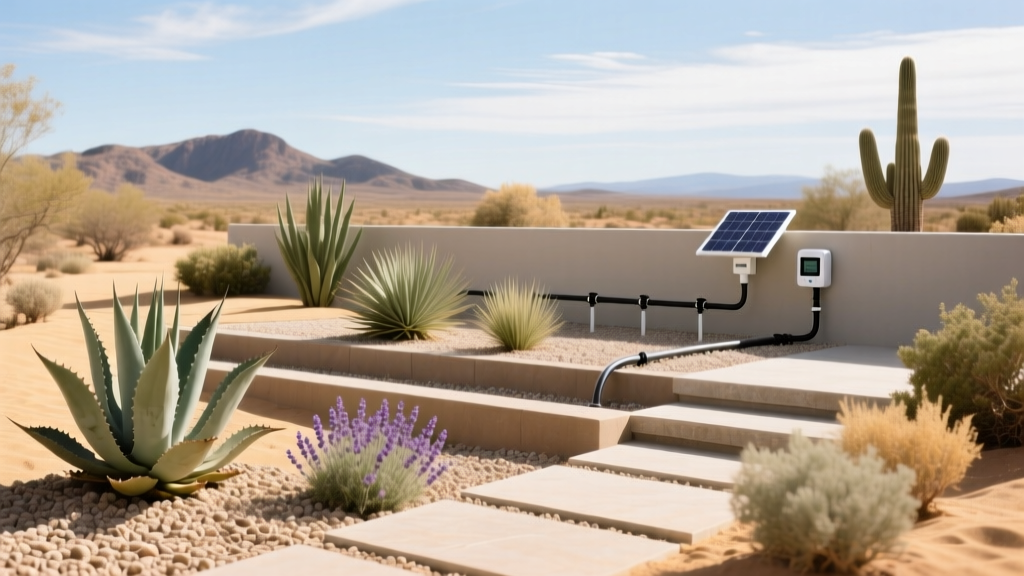
Arid Southwest Landscaping: Smart Irrigation & Xeriscaping
Sarah ChenPublished
Mastering the Arid Southwest: Xeriscaping and Smart Irrigation
Landscaping in the arid Southwest—encompassing regions of Arizona, Nevada, New Mexico, and Southern California—presents a unique set of challenges and opportunities for homeowners. With summer temperatures routinely exceeding 105°F, low annual rainfall, and high evaporation rates, maintaining a traditional turf lawn is both ecologically and financially unsustainable. However, bridging the gap between indoor comfort and outdoor living is entirely possible through the strategic application of xeriscaping principles and smart home irrigation technology. By embracing the natural desert aesthetic and leveraging modern water-management systems, you can cultivate a stunning, low-maintenance oasis that thrives in USDA Hardiness Zones 8 through 10. This comprehensive guide explores the nuances of regional, climate-specific care for the arid Southwest, providing actionable advice on soil amendment, native plant selection, hardscaping, and seasonal maintenance.
Understanding Desert Soil and Microclimates
Unlike the loamy, organic-rich soils of the Pacific Northwest or the Southeast, Southwest soil is notoriously alkaline, rocky, and often plagued by a hardpan layer known as caliche. Caliche is a shallow layer of soil in which the particles have been cemented together by calcium carbonate, effectively creating a concrete-like barrier that prevents water penetration and root growth. Before planting, it is crucial to perform a percolation test. Dig a hole roughly one foot deep and fill it with water. If the water does not drain within a few hours, you have encountered caliche or heavy clay.
To combat this, avoid widespread tilling, which can bring dormant weed seeds to the surface and disrupt the fragile desert soil crust. Instead, dig individual planting holes that are twice as wide as the root ball but no deeper, allowing the plant's root crown to sit slightly above grade to prevent rot. Amending the backfill with a modest amount of organic compost—no more than 10 to 15 percent by volume—helps retain moisture without creating a "bathtub effect" where water pools in the loose soil and drowns the roots. For expansive garden beds, applying a three-inch layer of organic mulch or inorganic decomposed granite regulates soil temperature, significantly reducing surface evaporation.
The Art of Hydrozoning
Hydrozoning is the practice of grouping plants with similar water and sunlight requirements together. In the arid Southwest, this is the golden rule of water-efficient landscaping. Your oasis should be divided into distinct irrigation zones. The "Oasis Zone" is located closest to your home's patio or outdoor living area, where you might cultivate higher-water-use plants like citrus trees, bougainvillea, or a small patch of drought-tolerant hybrid Bermuda grass for pets and children. This area benefits from the shade of the house and runoff from the roof.
The "Transition Zone" sits just beyond the oasis, featuring moderate-water-use shrubs and perennials that provide visual depth and attract local pollinators. Finally, the "Natural Zone" encompasses the perimeter of your property, relying almost entirely on natural rainfall once established. By separating your irrigation valves according to these zones, you ensure that deep-rooted native agaves are not overwatered simply because they share a valve with a thirsty lemon tree.
Strategic Plant Selection: The Backbone of Xeriscaping
Xeriscaping does not equate to a barren yard of rocks and lonely cacti. The Southwest boasts a vibrant palette of flowering shrubs, architectural succulents, and shade-providing trees. When selecting flora, prioritize plants native to the Sonoran, Mojave, or Chihuahuan deserts. According to the Lady Bird Johnson Wildflower Center, selecting region-specific native cultivars ensures better resistance to local pests, extreme heat, and alkaline soils.
Below is a curated selection of high-performing, drought-tolerant plants ideal for Southwest landscapes:
| Common Name | Botanical Name | Water Needs | Sun Exposure | Mature Size |
|---|---|---|---|---|
| Desert Willow | Chilopsis linearis | Low | Full Sun | 15-25 ft tall |
| Texas Ranger | Leucophyllum frutescens | Very Low | Full Sun | 5-8 ft tall |
| Parry's Agave | Agave parryi | Extremely Low | Full to Partial | 2-3 ft wide |
| Red Yucca | Hesperaloe parviflora | Low | Full Sun | 3-4 ft tall |
| Lantana | Lantana camara | Low to Moderate | Full Sun | 3-5 ft wide |
The Desert Willow provides dappled shade perfect for understory plantings, while the Texas Ranger (often called the Texas Sage) erupts in vibrant purple blooms following summer monsoon rains. Red Yucca and Agave provide striking architectural contrast against softer, mounding shrubs like Lantana, which offers continuous color from spring through late fall.
Smart Irrigation: Hydrating the Desert Efficiently
Water is the most precious resource in the Southwest, and traditional spray-head sprinkler systems are highly inefficient, losing massive amounts of water to wind drift and evaporation. Upgrading to a Weather-Based Irrigation Controller (WBIC) is a fundamental step for modern desert homeowners. As noted by EPA WaterSense, smart controllers automatically adjust watering schedules based on real-time local weather data, soil moisture levels, and evapotranspiration rates. Brands like Rachio and Hunter Hydrawise integrate directly with your home's Wi-Fi, allowing you to monitor water usage and receive leak alerts via your smartphone.
For the landscape beds, drip irrigation is non-negotiable. Drip systems deliver water directly to the root zone at a slow, measurable rate, virtually eliminating evaporation. Use pressure-compensating emitters (typically 1.0 or 2.0 gallons per hour) to ensure that a plant at the end of a 100-foot run receives the exact same volume of water as a plant near the valve. As plants mature, their root zones expand; remember to move and add emitters outward to match the dripline of the growing canopy.
Hardscaping and Outdoor Living in Extreme Heat
Bridging indoor and outdoor living in a climate where summer afternoons are unbearably hot requires thoughtful hardscaping and shade design. Avoid large expanses of dark-colored concrete or artificial turf, which absorb and radiate intense heat, effectively turning your patio into an oven. Instead, utilize light-colored, permeable materials such as travertine pavers, decomposed granite, or natural flagstone. These materials reflect sunlight and allow rainwater to percolate into the soil.
To extend the usability of your outdoor living space, invest in permanent shade structures. A pergola draped with UV-blocking shade sails or trained with a deciduous native vine like the Lady Bank's Rose provides essential relief from the sun while allowing cooling breezes to pass through. Incorporating a smart-home-integrated misting system can drop the ambient temperature of a covered patio by up to 20 degrees, making outdoor entertaining viable even in July. Furthermore, strategically placing large boulders and raised masonry planters creates thermal mass, which absorbs heat during the day and slowly releases it during the cool desert evenings, stabilizing the microclimate around your seating areas.
Seasonal Maintenance Calendar for the Southwest
Desert landscaping requires a different rhythm of care compared to temperate climates. Following a region-specific calendar ensures your landscape remains resilient and beautiful year-round.
- Spring (March - April): This is the season for aggressive growth. Apply a slow-release, low-nitrogen fertilizer formulated for desert soils. Prune winter-damaged tips from shrubs and plant frost-tender species like bougainvillea and lantana only after the last historical frost date. Install pre-emergent herbicides to prevent summer weeds like puncturevine.
- Summer (May - August): Shift your focus to monitoring and deep watering. Never water during the heat of the day. Program your smart controller to run drip zones in the early pre-dawn hours. Avoid heavy pruning, as the exposed inner branches can suffer from severe sunburn. Allow your landscape to rest.
- Fall (September - November): Fall is the premier planting season in the Southwest. The soil is still warm, encouraging rapid root establishment before the winter chill. Aerate any turf areas and overseed with perennial ryegrass if you desire a winter-green lawn. Reduce irrigation run times as temperatures drop and daylight hours shorten.
- Winter (December - February): Protect frost-tender succulents and citrus trees by covering them with breathable frost cloth during cold snaps. Do not use plastic, which can trap moisture and freeze. Prune deciduous trees like the Desert Willow while they are dormant to establish a strong structural canopy for the following year.
For detailed, city-specific watering schedules and conservation rebates, homeowners should regularly consult regional authorities like Water Use It Wisely, a comprehensive resource supported by Southwest water agencies.
Conclusion
Embracing the arid Southwest climate does not mean sacrificing a lush, inviting outdoor living space. By respecting the native soil, implementing intelligent hydrozoning, selecting resilient native plants, and automating your irrigation with smart technology, you can create a breathtaking desert oasis. This climate-specific approach not only conserves vital water resources and reduces your monthly utility bills but also provides a vibrant, ecologically balanced sanctuary that seamlessly bridges the comfort of your indoor home with the rugged beauty of the natural desert landscape.
