Pest Control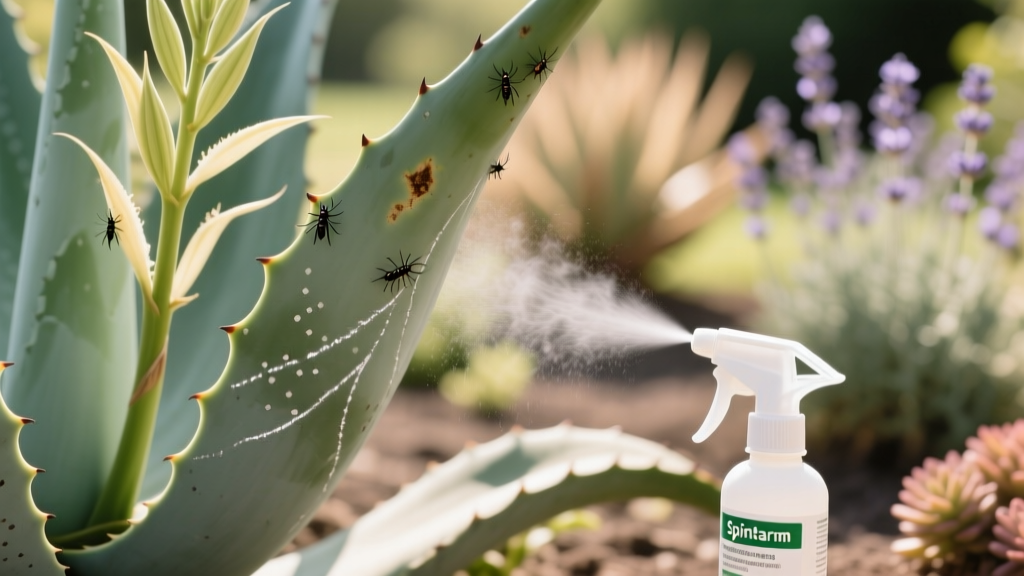
Identify Thrips & Use Spinetoram in Fire-Safe Gardens 2026
Mike RodriguezPublished
The Intersection of Fire-Resistant Landscaping and Pest Pressure
As we navigate the 2026 wildfire season, homeowners in fire-prone regions are increasingly turning to fire-resistant landscaping to protect their properties. Fire-safe gardens prioritize high-moisture, low-resin plants like Ceanothus, rockrose, agave, and yucca. However, a hidden threat can compromise the integrity of your defensible space: thrips. These microscopic, slender insects feed on plant tissues, causing severe desiccation and necrosis. When fire-resistant plants are heavily infested with thrips, their moisture-depleted, dead foliage transforms them from fire-retardant barriers into highly flammable ladder fuels.
Managing thrips in a fire-wise landscape requires a delicate balance. You must eliminate the pest without resorting to treatments that leave flammable residues or harm the beneficial insects that keep your garden ecosystem resilient. In 2026, Spinetoram has emerged as the gold standard for treating thrips in fire-safe gardens. This guide will walk you through identifying thrips damage on drought-tolerant, fire-resistant plants and how to safely and effectively apply Spinetoram treatments.
Identifying Thrips Damage on Fire-Resistant Plants
Thrips are notoriously difficult to spot with the naked eye due to their tiny size (usually under 1/20th of an inch) and their habit of hiding inside flower buds, leaf folds, and dense bracts. According to the University of California Integrated Pest Management (UC IPM) program, early identification is critical before the damage compromises the plant's structural moisture.
Key Visual Indicators of Thrips Infestation
- Silvery Stippling: Thrips scrape the surface of leaves and flowers to feed on the exuding sap. This leaves behind distinct, pale, silvery-white speckles or streaks on the foliage of broadleaf evergreens like rockrose and coyote brush.
- Black Fecal Specks: Often referred to as "thrips tar," these tiny black dots are a definitive sign of an active colony. They are usually found clustered on the undersides of leaves.
- Deformed Buds and Blooms: On flowering fire-safe shrubs like Ceanothus (California Lilac), thrips will invade unopened buds, causing them to distort, turn brown, and drop prematurely.
- Premature Leaf Drop and Desiccation: As the feeding damage compounds, the leaves lose their ability to retain water. The foliage turns crispy and brown, completely negating the fire-resistant qualities of the plant.
The Fire Hazard Connection
The primary goal of fire-resistant landscaping is to maintain plants with high water content and low volatile oils. Thrips directly attack this defense mechanism. By destroying the cellular structure of the leaves, thrips accelerate moisture loss. A heavily infested agave or yucca plant will accumulate a skirt of dead, dry leaves at its base. In a fire event, this dead material acts as a wick, carrying ground flames up into the canopy and potentially toward your home's structure.
Why Spinetoram is the 2026 Standard for Thrips Control
Spinetoram is a synthetic derivative of spinosad, which is naturally produced by the soil-dwelling bacterium Saccharopolyspora spinosa. While spinosad has been used for years, Spinetoram (often found in consumer products like Captain Jack's Deadbug Brew or commercial formulations like Radiant SC) offers superior UV stability and a broader spectrum of control against complex thrips species, including the notorious Western Flower Thrips and Citrus Thrips.
For fire-safe landscaping, Spinetoram is uniquely suited for several reasons:
- Non-Flammable Residue: Unlike horticultural oils or neem oil, which can leave a combustible film on the leaves if applied too heavily, Spinetoram dries clear and leaves no flammable residue.
- Targeted Action: It is highly toxic to thrips and certain caterpillars but has a significantly lower impact on beneficial pollinators and predatory insects once the spray has dried. Preserving beneficials like minute pirate bugs and lacewings is vital for long-term, organic pest suppression in a naturalistic fire-wise garden.
- Rainfast and UV Stable: The 2026 formulations of Spinetoram resist breaking down in intense summer sunlight, meaning fewer re-applications are needed, reducing the overall chemical load on your landscape.
The Environmental Protection Agency (EPA) classifies Spinetoram as a reduced-risk active ingredient due to its favorable environmental profile and low mammalian toxicity, making it a safe choice for residential defensible space maintenance.
Step-by-Step Spinetoram Application Guide
To effectively treat thrips without disrupting your fire-wise garden maintenance schedule, follow these precise application steps.
1. Preparation and Pruning
Before mixing any treatment, grab your pruning shears. Remove all heavily damaged, dead, and desiccated foliage from your fire-resistant plants. This serves a dual purpose: it eliminates the bulk of the thrips hiding in the dead tissue, and it removes the fine, dry "ladder fuels" that pose a fire hazard. Dispose of this material in sealed green waste bags—never leave it piled near your home.
2. Mixing the Solution
For most liquid concentrate formulations of Spinetoram available to homeowners in 2026, the standard mixing rate for thrips control is approximately 2 fluid ounces of concentrate per gallon of water. Always read the specific manufacturer's label on your product. Add the water to your pump sprayer first, then add the Spinetoram concentrate, and agitate gently to mix.
3. Timing the Application
Thrips are most active during the cooler parts of the day. Apply the Spinetoram spray at dusk or very early dawn. This timing minimizes the risk of exposing foraging bees to the wet spray and reduces the chance of rapid evaporation, ensuring the product penetrates the leaf folds where thrips hide.
4. Thorough Coverage
Thrips avoid direct sunlight. You must spray the undersides of the leaves, the inner whorls of agave, and the tight bracts of Ceanothus flowers. Spray until the foliage is thoroughly wet but not dripping excessively.
5. Post-Application Safety
Keep pets and children out of the treated area until the spray has completely dried (usually 1 to 2 hours). Once dry, the Spinetoram is locked into the plant tissue and poses virtually no risk to mammals or pollinators.
Treatment Comparison Chart: Thrips Control in Fire-Safe Zones
Choosing the right treatment is critical when maintaining defensible space. Below is a comparison of common thrips treatments evaluated for their efficacy and compatibility with fire-resistant landscaping principles.
| Treatment Option | Thrips Efficacy | Fire-Safe Compatibility | Impact on Beneficials |
|---|---|---|---|
| Spinetoram | Excellent (Broad spectrum) | High (No flammable residue, preserves plant moisture) | Low (Safe for bees/predators once dry) |
| Horticultural Oils / Neem | Moderate (Requires direct contact) | Low (Oils can be combustible; frequent use damages drought-tolerant plant cuticles) | Moderate (Can smother beneficials) |
| Systemic Neonicotinoids | High | High (No surface residue) | Very High (Toxic to pollinators; restricted in many 2026 fire-zone municipalities) |
| Insecticidal Soaps | Low to Moderate (Short residual) | High (Non-flammable) | Low (Safe once dry) |
Integrating Pest Control with Fire-Wise Maintenance
Treating thrips with Spinetoram is only one part of the equation. To ensure your landscape remains both pest-free and fire-resistant throughout 2026 and beyond, you must integrate pest management with fire-wise cultural practices.
Avoid High-Nitrogen Fertilizers
One of the most common mistakes homeowners make is applying high-nitrogen fertilizers to fire-resistant plants in an attempt to "green up" thrips-damaged foliage. Nitrogen forces rapid, lush, succulent growth. This new growth is highly attractive to thrips, creating a vicious cycle of infestation. Furthermore, lush, nitrogen-fueled growth contains higher levels of cellular nitrogen and lower levels of structural carbon, making the plant tissue more volatile and prone to rapid combustion during a fire event. Stick to slow-release, low-nitrogen organic amendments that promote steady, tough growth.
Maintain Proper Irrigation Schedules
While fire-resistant plants are drought-tolerant, they are not drought-immune. A plant suffering from severe water stress will emit volatile stress hormones (ethylene) that actually attract thrips from miles away. Ensure your deep-watering irrigation system is functioning correctly, delivering moisture directly to the root zone without wetting the foliage, which can invite fungal pathogens that further weaken the plant's fire defenses.
Mulching Safely
Use non-flammable or highly fire-resistant mulches like decomposed granite, river rock, or composted wood chips (which have low volatility compared to fresh bark or pine needles) around the base of your treated plants. Keep mulch at least 5 feet away from any combustible structures. This prevents thrips from overwintering in dry, woody debris while maintaining a defensible space perimeter.
Conclusion
Protecting your home from wildfires requires a landscape that is meticulously maintained, resilient, and free of hidden hazards. Thrips may be tiny, but their ability to desiccate fire-resistant plants turns your garden's best defenses into dangerous liabilities. By accurately identifying thrips damage early and utilizing targeted, reduced-risk treatments like Spinetoram, you can preserve the health, moisture content, and fire-retardant properties of your landscape. Follow the 2026 best practices outlined above to ensure your fire-safe garden remains a beautiful, protective barrier for years to come.