Pest Control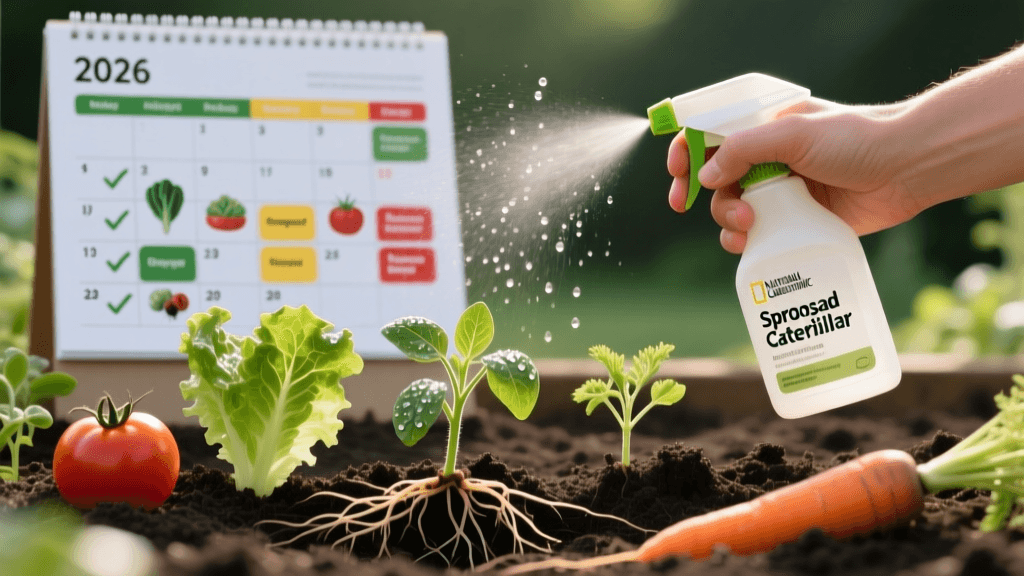
Spinosad Spray & Fertilizer Schedules: Vegetables 2026
The Hidden Link Between Fertilizer Types and Caterpillar Infestations
As we navigate the 2026 growing season, integrated pest management (IPM) for home vegetable gardens has evolved far beyond simply spraying chemicals when bugs appear. Modern horticultural science emphasizes that pest control begins deep in the soil with your fertilization strategy. The type and schedule of your fertilizer applications directly influence the cellular structure of your vegetable plants, which in turn dictates their susceptibility to chewing insects. Understanding this biological relationship is the key to effectively utilizing organic treatments like spinosad spray for caterpillar control.
When gardeners rely heavily on fast-acting, synthetic, high-nitrogen fertilizers (such as urea or ammonium nitrate), it forces plants into a state of rapid cellular expansion. This creates tender, succulent leaf tissue with higher concentrations of free amino acids and soluble sugars. Caterpillars, such as the imported cabbageworm, tomato hornworm, and beet armyworm, are biologically wired to detect and prefer these nitrogen-rich tissues. The lush, dark green flush of growth that follows a heavy synthetic feeding is essentially an all-you-can-eat buffet for Lepidoptera larvae. Conversely, by shifting to slow-release organic fertilizers (like feather meal, composted manure, or alfalfa meal) on a consistent schedule, you provide a steady nutrient stream that builds robust, lignin-rich cell walls, making your vegetables naturally less palatable and harder for early-instar caterpillars to chew.
What is Spinosad and Why is it the 2026 Standard?
Spinosad is a highly effective, naturally derived substance produced through the fermentation of the soil-dwelling bacterium Saccharopolyspora spinosa. It is uniquely toxic to many problematic insects, particularly caterpillars, leafminers, and thrips, while remaining relatively safe for most beneficial predatory insects once it has dried. According to the University of Minnesota Extension, spinosad affects the insect nervous system by binding to specific receptors, causing involuntary muscle contractions, paralysis, and death within one to two days.
It is highly effective when ingested by the feeding caterpillar but also possesses moderate contact activity. For organic vegetable growers in 2026, spinosad remains a cornerstone of the pest control toolkit because it breaks down rapidly in sunlight and soil, leaving minimal environmental residue. However, its efficacy is heavily dependent on proper application timing, particularly regarding how it interacts with your ongoing fertilizer and watering schedules.
Identifying the Culprits: When to Deploy Spinosad
Before integrating spinosad into your garden maintenance routine, it is vital to correctly identify the caterpillars targeting your crops. Spinosad is a targeted solution, and applying it blindly wastes product and disrupts local ecosystems.
- Cabbage Loopers and Imported Cabbageworms: These pale green and velvety white caterpillars devastate brassicas (broccoli, kale, cabbage). They leave behind large, irregular holes in leaves and copious amounts of frass (caterpillar droppings).
- Tomato and Tobacco Hornworms: Massive, bright green caterpillars with diagonal white stripes and a prominent posterior horn. They can strip a tomato or pepper plant of its foliage in a matter of days.
- Beet Armyworms: These dark, striped caterpillars are notorious for attacking a wide variety of vegetables, including peppers, corn, and leafy greens, often boring directly into the fruit.
Monitor your plants weekly. The moment you notice irregular chewing damage or spot early-instar larvae, it is time to consult your fertilizer calendar and prepare your spinosad application.
Integrating Spinosad with Your 2026 Fertilizer Schedule
The most common mistake home gardeners make is applying liquid fertilizers and foliar pest sprays simultaneously or in the wrong sequence. If you apply a liquid fish emulsion or kelp fertilizer and then immediately spray spinosad, the residual oils, particulates, and salts from the organic fertilizer can interfere with the spray's surfactant properties. This leads to uneven coverage, poor leaf adhesion, and reduced pest mortality. Conversely, if you spray spinosad and then fertilize with an overhead liquid application or heavy watering, you will wash the active ingredient off the leaf surface before it has time to dry and bind to the plant tissue.
The 2026 Golden Rule of Sequencing
Always apply your soil drench or granular fertilizer first, water it in at the root zone, and wait for the initial vegetative flush. Monitor the new, tender growth for caterpillar eggs and early instar larvae. Once you spot the pests, apply your spinosad spray in the late evening. Hold off on any overhead watering, foliar feeding, or liquid fertilization for at least 48 hours to allow the spinosad to fully penetrate the leaf cuticle and dry completely.
Sample Spring and Summer Vegetable Care Calendar
To help you visualize this integration, here is a structured schedule demonstrating how to balance plant nutrition with targeted pest control during the peak summer growing months.
| Growth Stage | Fertilizer Action | Pest Monitoring Focus | Spinosad Application Protocol |
|---|---|---|---|
| Week 1-2: Transplanting | Apply balanced organic granular fertilizer (e.g., 4-4-4) into the planting hole. Water deeply. | Check for cutworms at the soil line. Spinosad is less effective here; use collars instead. | None required. Allow plant to establish. |
| Week 3-4: Vegetative Flush | Side-dress with compost or apply a diluted liquid fish emulsion to support rapid leaf growth. | Inspect the undersides of brassica and tomato leaves for clustered eggs and tiny larvae. | If larvae are present, spray spinosad in the evening. Pause liquid fertilizers for 48 hours. |
| Week 5-6: Pre-Flowering | Switch to a lower-nitrogen, higher-phosphorus fertilizer to encourage blooming and fruit set. | Look for hornworms and armyworms. Check for frass on lower leaves and fruit damage. | Apply spinosad if threshold is exceeded. Avoid spraying open flowers to protect pollinators. |
| Week 7-8: Fruiting | Maintain steady potassium levels with kelp meal or sul-po-mag. Avoid excess nitrogen. | Monitor for secondary pest flushes, especially beet armyworms boring into peppers. | Rotate spinosad with Bt (Bacillus thuringiensis) to prevent pest resistance. Spray only at dusk. |
Best Practices for Spinosad Application on Vegetables
To maximize the efficacy of your spinosad treatments while maintaining a healthy garden ecosystem in 2026, adhere to these critical application guidelines:
- Timing is Everything: Spinosad is highly toxic to bees and other pollinators when it is wet. Once it dries (usually within 3 to 4 hours), it poses minimal risk to foraging bees. Therefore, you must always apply spinosad in the late evening or at dusk, after daily pollinator activity has ceased.
- Thorough Coverage: Caterpillars often feed and hide on the undersides of leaves. Use a pump sprayer with an adjustable nozzle to ensure you are coating the bottom of the foliage, not just the top. A fine mist that thoroughly wets the leaf without excessive runoff is ideal.
- Resistance Management: The UC Statewide IPM Program strongly recommends rotating modes of action to prevent pest resistance. Do not use spinosad for more than two consecutive applications. Alternate your treatments with Bacillus thuringiensis (Bt) or neem oil to ensure long-term efficacy throughout the 2026 season.
- Harvest Intervals: Most spinosad products have a short pre-harvest interval (PHI), typically 1 to 3 days for most vegetables. Always read the specific 2026 product label to ensure you are harvesting safely.
Choosing the Right Spinosad Products in 2026
The market for organic pest control continues to expand, and several reliable spinosad formulations are readily available for home gardeners this year. When shopping, look for the OMRI (Organic Materials Review Institute) listed seal to ensure the product complies with organic standards, as outlined by the EPA guidelines on organic pesticides.
- Bonide Captain Jack's Deadbug Brew: A staple in the organic gardening community. In 2026, a 32-ounce ready-to-spray bottle typically retails between $18 and $22. It contains 0.5% spinosad and is excellent for quick, small-scale applications on raised beds and container vegetables.
- Monterey Garden Insect Spray: This is a concentrate that offers better value for larger plots. A 16-ounce bottle of concentrate (containing 0.5% spinosad) costs around $28 to $34 and can make dozens of gallons of finished spray. It is highly favored by serious homesteaders managing extensive brassica and nightshade crops.
- Fertilome Spinosad Landscape and Garden Insecticide: Another reliable concentrate option that mixes well with water and provides excellent adhesion to waxy leaves like cabbage and kale.
Conclusion
Successful caterpillar control on vegetables is not just about having the right spray; it is about understanding the holistic ecology of your garden. By recognizing how high-nitrogen fertilizers attract pests and learning to sequence your organic soil amendments alongside targeted spinosad applications, you can protect your crops without disrupting your plant's nutritional foundation. Stick to your 2026 fertilizer schedules, monitor your plants diligently, and deploy spinosad strategically in the evening hours. This integrated approach will yield healthier, more resilient vegetables and a bountiful, pest-free harvest this season.