Pest Control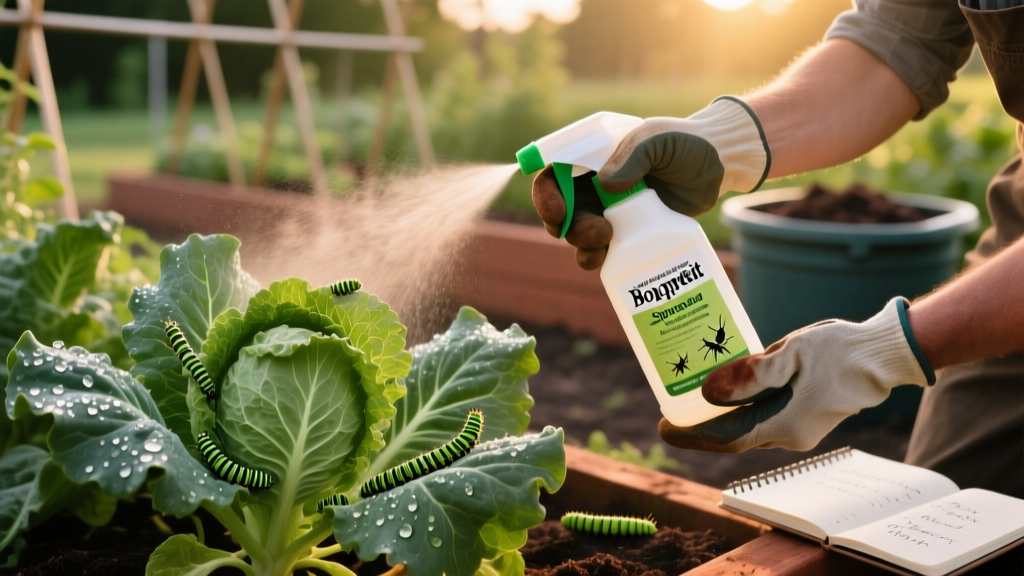
Spinosad Spray For Veggie Caterpillars: 2026 IPM Guide
Sarah ChenPublished
From Tree Canopies to Garden Rows: The Webworm Connection
As a pest management professional who spends the bulk of the spring and summer managing massive fall webworm (Hyphantria cunea) and eastern tent caterpillar infestations in tree canopies, I am frequently asked how to translate those heavy-duty arborist strategies to the backyard vegetable garden. The truth is, the caterpillars devouring your tomatoes, peppers, and brassicas share the exact same biological vulnerabilities as the web-spinning pests in your oak and pecan trees. While vegetable caterpillars may not build the massive, unsightly silk tents that tree webworms do, they employ similar evasion tactics: hiding on the undersides of leaves, rolling themselves into leaf shelters, and developing waxy cuticles that repel standard contact sprays.
In 2026, the undisputed champion for bridging the gap between heavy-duty tree pest management and delicate vegetable garden care is spinosad spray. Originally discovered in the rum of an abandoned Caribbean rum still, this soil-dwelling bacterium (Saccharopolyspora spinosa) has become the cornerstone of modern Integrated Pest Management (IPM) for chewing insects. If you are battling cabbageworms, tomato hornworms, or armyworms this season, here is your comprehensive, arborist-approved guide to using spinosad for caterpillar control on vegetables.
How Spinosad Works: The Ingestion Advantage
When treating tree webworms, arborists know that contact killers often fail because the dense silk webbing acts as a physical shield, causing liquid sprays to bead up and roll off. While vegetable caterpillars like the diamondback moth or cabbage looper do not spin massive communal webs, they are notoriously difficult to hit with direct contact sprays due to their hiding habits and rapid reproduction cycles.
Spinosad bypasses this issue entirely through its unique mode of action. It is primarily an ingestion pesticide, with some secondary contact activity. When you spray spinosad on your vegetable crops, it exhibits translaminar properties—meaning it absorbs into the leaf tissue and creates a reservoir of active ingredient. When a caterpillar takes its first bite of your treated kale or tomato plant, the spinosad binds to its nicotinic acetylcholine receptors. This causes involuntary muscle contractions, paralysis, and cessation of feeding within minutes. The pest typically dies within 24 to 48 hours, but the crucial point is that the crop damage stops almost immediately.
Top Vegetable Caterpillars Targeted by Spinosad in 2026
Based on field reports and extension data from the 2026 growing season, spinosad remains highly effective against a wide spectrum of larval Lepidoptera (moths and butterflies) that plague vegetable gardens. Here are the primary targets:
- Imported Cabbageworm & Cabbage Looper: The bane of brassica growers. Spinosad easily penetrates their hiding spots and halts the shot-hole damage they inflict on cabbage, broccoli, and cauliflower.
- Tomato Hornworm & Tobacco Hornworm: These massive caterpillars can defoliate a tomato plant overnight. A thorough spinosad application ensures that even the largest instars stop feeding and drop from the plant.
- Armyworms & Cutworms: Often hiding in the soil or at the base of the plant during the day, these pests emerge at night to chew through stems. Spinosad's residual leaf activity catches them as they climb.
- Diamondback Moth Caterpillars: In 2026, resistance to older chemical classes like pyrethroids is widespread in diamondback populations. Spinosad remains a vital rotational tool to manage these resilient pests.
2026 Spinosad Product Recommendations
Not all spinosad formulations are created equal, and the market has seen several updates for the 2026 season. When treating vegetables, you must ensure the product is explicitly labeled for edible crops. Here are the top-tier choices currently available:
1. Monterey Garden Insect Spray
A staple in the IPM community, Monterey’s formulation contains 0.5% spinosad. It is OMRI-listed for organic gardening and is highly reliable for general caterpillar control. The liquid concentrate is easy to mix and provides excellent leaf coverage.
2. Bonide Captain Jack's Deadbug Brew
This is perhaps the most recognizable consumer-brand spinosad on the market. It is highly effective against cabbageworms and hornworms. It is available in both concentrate and ready-to-spray hose-end versions, though the concentrate is more cost-effective for larger vegetable plots.
3. Ferti-lome Borer, Bagworm, Tent Caterpillar & Leaf Miner Spray
Bringing it back to our tree webworm roots, this specific Ferti-lome product is a higher-concentration spinosad formulation. While it is famous for treating tree borers and tent caterpillars, it is also fully labeled for use on various vegetables and fruits, making it an excellent dual-purpose purchase for homeowners managing both orchard trees and garden beds.
Comparison Chart: Spinosad vs. Bt vs. Pyrethrins
To understand why arborists and master gardeners favor spinosad for heavy caterpillar pressure, it helps to compare it against other common organic treatments. Below is a breakdown of how spinosad stacks up against Bacillus thuringiensis (Bt) and Pyrethrins in 2026.
| Feature | Spinosad | Bt (Bacillus thuringiensis) | Pyrethrins |
|---|---|---|---|
| Primary Action | Ingestion (Translaminar) | Ingestion (Surface only) | Contact |
| Speed of Kill | 1-2 Days (Feeding stops instantly) | 2-3 Days (Feeding stops slowly) | Minutes (Knockdown) |
| Rainfastness | High (Absorbs into leaf) | Low (Washes off easily) | Moderate |
| Residual Control | 10-14 Days | 3-5 Days (Degrades in UV light) | 1-2 Days |
| Pollinator Risk | High when wet; Safe when dry | Safe for bees | Highly toxic to bees |
Step-by-Step Application Protocol for Vegetables
Applying spinosad requires a bit more strategic planning than standard contact sprays, primarily due to its impact on beneficial insects when wet. Follow this 2026 protocol for optimal results:
- Timing is Everything: Never spray spinosad during the heat of the day or when bees are actively foraging. Spinosad is highly toxic to bees and other pollinators while the spray is wet. However, once it dries (usually within 1 to 2 hours), it is considered safe for pollinators. Therefore, always apply in the late evening or at dusk.
- Mixing Rates: For most liquid concentrates (like Monterey or Captain Jack's), the standard rate for vegetable caterpillars is 4 tablespoons (2 fl oz) per gallon of water. Always read the specific 2026 label on your bottle, as concentrations can vary.
- Thorough Coverage: While spinosad is translaminar, you still need to coat the plant well. Use a pump sprayer with a fine mist nozzle. Pay special attention to the undersides of the leaves, where cabbageworms and loopers lay their eggs and do the majority of their feeding.
- Reapplication Schedule: Spinosad holds up well to rain and UV degradation compared to Bt, but for active, heavy infestations, reapply every 7 to 10 days. Do not exceed the maximum number of applications per season listed on the label (usually around 6) to prevent pest resistance.
Pollinator Safety and IPM Integration
As advocates for sustainable landscaping, we must balance pest eradication with ecosystem health. The Xerces Society Pesticide Guidelines explicitly note that while spinosad is a biorational pesticide derived from natural sources, its wet-phase toxicity to bees requires strict adherence to evening application windows. By spraying at dusk, you allow the product to dry completely before morning foraging begins, effectively neutralizing the risk to your local bee populations.
Furthermore, the EPA's Biopesticides Overview highlights the importance of rotating modes of action to prevent resistance. In 2026, we are seeing early signs of spinosad tolerance in some isolated diamondback moth populations. To practice true Integrated Pest Management (IPM), do not rely on spinosad for every application. Rotate your treatments with Bacillus thuringiensis var. kurstaki (Btk) or neem oil to keep the caterpillar genetics guessing and preserve the long-term efficacy of spinosad.
Final Thoughts from the Tree Line to the Garden Bed
Whether you are battling a massive fall webworm nest in your pecan tree or a sneaky cabbage looper in your raised beds, the biological principles of caterpillar control remain the same. You need a product that bypasses their physical defenses, halts feeding immediately, and provides lasting residual protection. By utilizing spinosad spray with the precision and timing of a professional arborist, you can reclaim your vegetable harvest in 2026 without resorting to harsh, broad-spectrum synthetic chemicals. Grab your pump sprayer, wait for dusk, and let nature’s own soil bacterium do the heavy lifting.