Lawn Care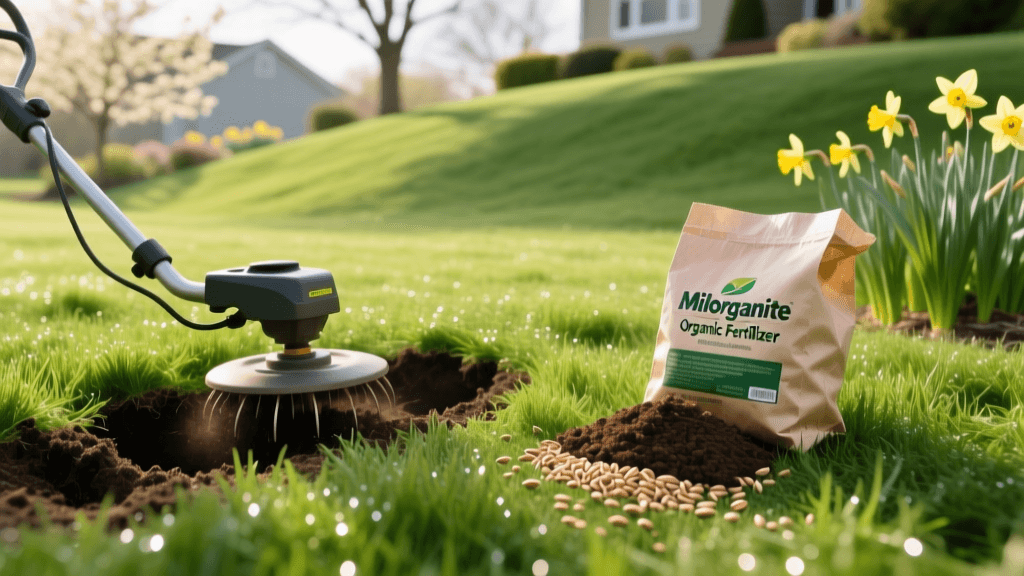
2026 Spring Aeration and Seeding With Milorganite Guide
The 2026 Perspective on Spring Lawn Renovation
As we navigate the 2026 lawn care season, homeowners and turf professionals alike are prioritizing sustainable, soil-building practices over quick-fix synthetic chemicals. One of the most effective and ecologically sound methods for renovating a thin or damaged lawn is combining spring core aeration, overseeding, and the application of Milorganite organic slow-release fertilizer. While fall is traditionally viewed as the prime time for cool-season lawn renovations, spring presents a unique and highly effective window for warm-season grasses, as well as a critical repair period for cool-season lawns recovering from winter damage.
Milorganite, a 6-4-0 nitrogen-phosphorus-potassium fertilizer derived from heat-dried microbes, has remained a staple in the turf industry for decades. In 2026, with supply chains fully stabilized and a standard 32-pound bag retailing between $16 and $19 at major home improvement centers, it remains one of the most cost-effective, non-burning fertilizers available for seeding projects. This comprehensive guide will walk you through the exact science, timing, and step-by-step execution of pairing spring aeration and seeding with Milorganite.
Understanding Your Grass Type: Cool-Season vs. Warm-Season
Before breaking ground, it is vital to understand how your specific grass type dictates the spring aeration and seeding schedule. According to turfgrass researchers and resources like the University of Minnesota Extension, core aeration alleviates soil compaction, reduces thatch, and creates the necessary seed-to-soil contact for germination. However, the timing depends entirely on your grass species.
Warm-Season Grasses (Bermuda, Zoysia, Centipede, St. Augustine)
For warm-season grasses, late spring to early summer (typically late May through June) is the absolute best time for aeration and seeding or sprigging. These grasses thrive in heat, and aerating them as they break dormancy and enter their peak growth phase allows for rapid recovery and aggressive seedling establishment.
Cool-Season Grasses (Tall Fescue, Kentucky Bluegrass, Ryegrass)
For cool-season grasses, fall is the gold standard for aeration and overseeding. However, spring aeration and seeding are necessary in 2026 for lawns that suffered severe winter kill, snow mold damage, or heavy foot traffic compaction. If you must seed cool-season grasses in the spring, do so as early as possible (March to April) when soil temperatures reach 50°F to 60°F, giving the seedlings time to establish deep roots before the brutal summer heat arrives.
Why Milorganite is the Ultimate Seeding Companion
When overseeding, the choice of fertilizer is critical. Many homeowners mistakenly apply high-nitrogen synthetic fertilizers (like urea-based 20-5-10 blends) alongside their seed. This is a massive mistake. Synthetic salts can easily "burn" tender new seedlings and force rapid, weak top-growth at the expense of root development.
Milorganite solves this problem entirely. Here is why it is the premier choice for spring seeding:
- Non-Burning Formula: Because Milorganite is composed of 85% slow-release, water-insoluble nitrogen, it will not burn new seedlings or existing turf, even if applied heavily or during unseasonably warm spring spells.
- Rich in Iron: Milorganite contains 2.5% iron, which promotes deep, dark green coloration in new grass without relying on excessive nitrogen flushes.
- Soil Biology Enhancement: As an organic-based product, it feeds the soil microbiome. The Environmental Protection Agency (EPA) encourages the use of slow-release, organic-based fertilizers to minimize nutrient runoff into local waterways, making Milorganite an environmentally responsible choice for 2026.
- Phosphorus Content: With a 4% phosphorus content (the middle number in 6-4-0), Milorganite provides the exact macronutrient required for vigorous root development in germinating seeds.
Step-by-Step Spring Aeration and Seeding Protocol
Follow this precise sequence to maximize your germination rates and ensure the Milorganite integrates perfectly into the soil profile.
Step 1: Mow Low and Bag Clippings
Set your mower to its lowest safe setting for your grass type (usually around 1.5 to 2 inches). Bag all clippings. This removes physical barriers, allowing the aerator tines to penetrate the soil easily and ensuring the new seed reaches the soil surface.
Step 2: Core Aeration
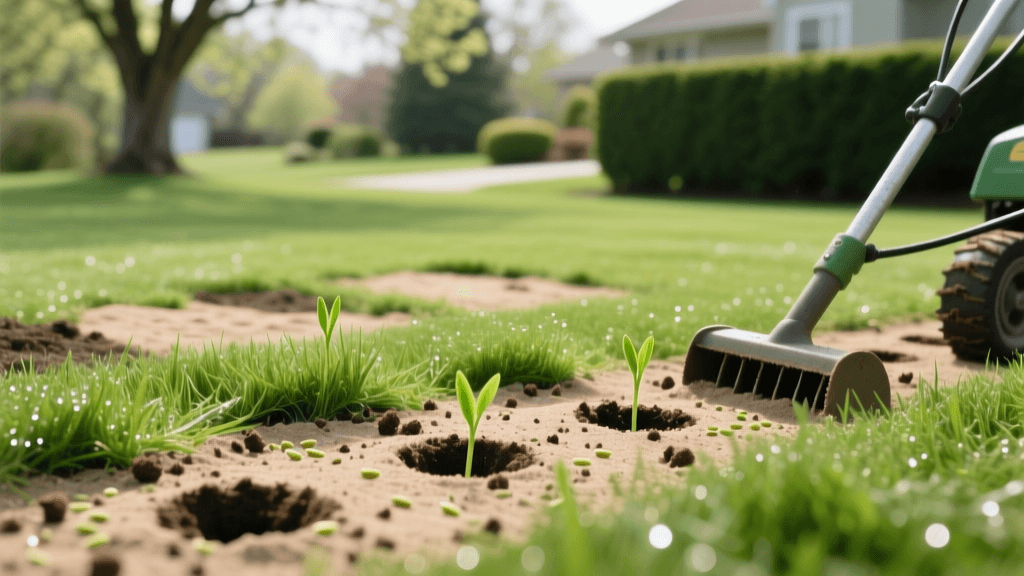
Rent or hire a professional to perform core aeration. Do not use spike aerators, as they merely push soil outward, worsening compaction. A core aerator pulls physical plugs of soil (ideally 2 to 3 inches deep) out of the ground. Make two passes over the lawn in perpendicular directions to ensure maximum hole density. Leave the soil plugs on the lawn; they will break down and act as a natural topdressing.
Step 3: Overseeding
Apply your grass seed using a broadcast spreader. In 2026, turf-type tall fescue blends featuring endophyte enhancements for drought and pest resistance are highly recommended for cool-season repairs, while hulled Bermuda seed remains the standard for warm-season spring establishment. Apply seed at the heavy overseeding rate recommended on the bag (typically 3 to 5 lbs per 1,000 sq ft for tall fescue).
Step 4: Applying Milorganite
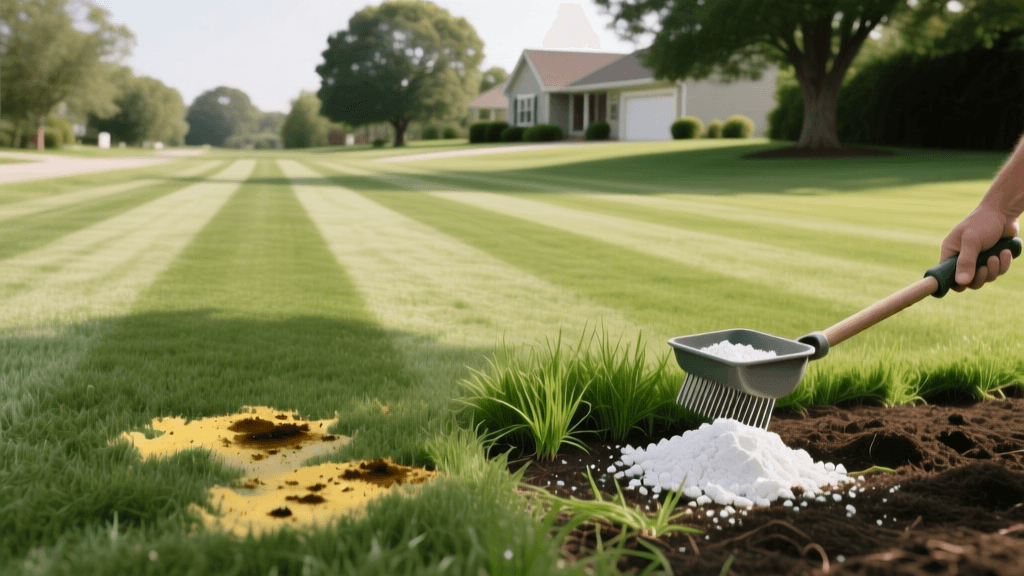
Immediately after seeding, apply Milorganite. The official Milorganite lawn care guidelines recommend a standard application rate of 32 pounds per 2,500 square feet. The granules will fall into the aeration holes, delivering nutrients directly to the root zone and the germinating seeds. If you are using a rotary spreader, ensure your settings are calibrated for Milorganite's specific granule size to avoid uneven distribution.
Step 5: Drag Matting or Raking
Use a drag mat, a piece of chain-link fence, or a stiff garden rake to gently work the seed and Milorganite granules into the aeration holes and the top 1/8 inch of the soil. Seed-to-soil contact is the single most important factor in germination success.
Milorganite Application and Seeding Rates
Use the table below as a quick-reference guide for your 2026 spring renovation project.
| Grass Type | Best Spring Window | Soil Temp Target | Seed Rate (per 1k sq ft) | Milorganite Rate |
|---|---|---|---|---|
| Bermuda (Hulled Seed) | Late May - June | 65°F - 70°F | 2 - 3 lbs | 32 lbs / 2,500 sq ft |
| Zoysia (Plugs/Seed) | Late May - June | 65°F - 70°F | Plugs: 1 per sq ft | 32 lbs / 2,500 sq ft |
| Tall Fescue (Repair) | March - April | 50°F - 60°F | 3 - 5 lbs | 32 lbs / 2,500 sq ft |
| Kentucky Bluegrass | March - April | 50°F - 60°F | 1 - 2 lbs | 32 lbs / 2,500 sq ft |
The Pre-Emergent Dilemma: What You Must Avoid
One of the most common and devastating mistakes homeowners make in the spring is applying a pre-emergent herbicide (such as Prodiamine or Dithiopyr) to prevent crabgrass, while simultaneously trying to overseed. Pre-emergents work by creating a chemical barrier in the top layer of soil that stops all seeds from germinating—including your expensive new grass seed.
If you are committing to a spring aeration and seeding project, you must skip the spring pre-emergent application. Milorganite is strictly a fertilizer and contains no herbicides, making it 100% safe to use alongside grass seed. To manage crabgrass in a newly seeded spring lawn without chemicals, rely on the shade provided by your new, thick turf canopy, and maintain proper mowing heights (3.5 to 4 inches for cool-season grasses) to shade the soil and prevent weed seeds from receiving the sunlight they need to sprout.
Watering and Post-Germination Care
The success of your Milorganite and seed application hinges entirely on your watering schedule. Because Milorganite is slow-release, it relies on soil moisture and microbial activity to break down and release nitrogen. Without adequate water, both the seed and the fertilizer will sit dormant.
- Weeks 1-3 (Germination Phase): Water lightly 2 to 3 times per day for 10-15 minutes. The goal is to keep the top inch of soil consistently moist but not waterlogged. This prevents the delicate new roots from drying out.
- Weeks 4-6 (Establishment Phase): As seedlings reach 2 inches in height, reduce watering frequency to once a day, but increase the duration to encourage deeper root growth into the aeration holes.
- Week 8 and Beyond: Transition to a deep and infrequent watering schedule (1 to 1.5 inches of water per week, including rainfall). This promotes drought tolerance and forces the roots to seek out the slow-release nutrients provided by the Milorganite deep in the soil profile.
Conclusion
Combining spring core aeration, overseeding, and Milorganite is a powerhouse strategy for lawn renovation in 2026. By avoiding synthetic fertilizer burn, leveraging the natural phosphorus and iron content of Milorganite, and ensuring proper seed-to-soil contact through aeration, you set the stage for a dense, resilient, and vibrant lawn. Whether you are establishing a new warm-season Bermuda lawn in early summer or patching up a cool-season Fescue lawn in early spring, this organic-focused methodology ensures long-term soil health and stunning curb appeal.