Lawn Care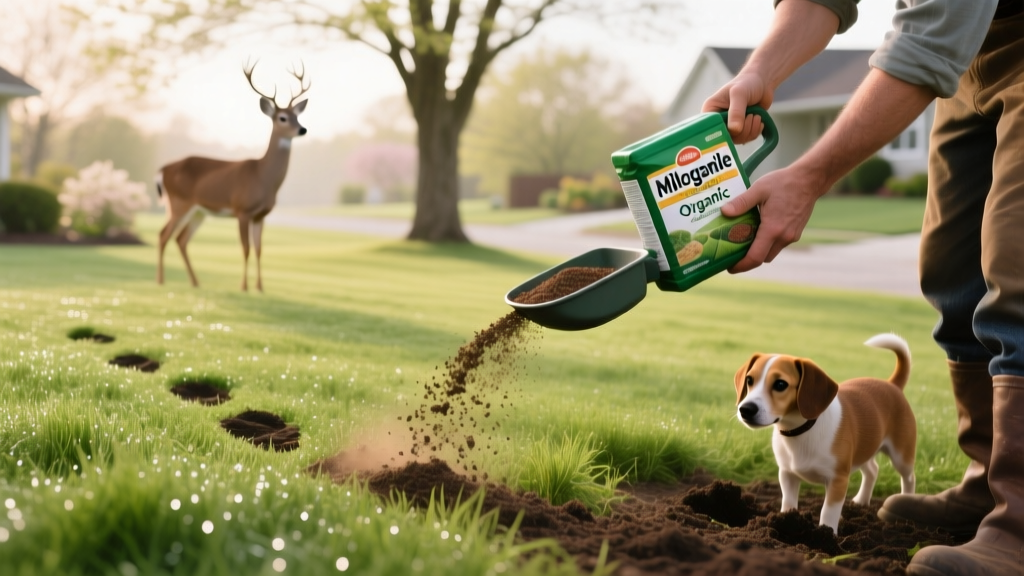
Spring Milorganite Fertilizer 2026: Wildlife & Pet Safety Guide
Lisa ThompsonPublished
Introduction to Spring 2026 Lawn Care and Wildlife Management
As the soil thaws and turfgrass exits winter dormancy, Spring 2026 presents the perfect window to establish a robust, green lawn. For homeowners committed to organic lawn care, spring fertilization with Milorganite organic slow-release fertilizer remains a gold standard. However, when you share your yard with local fauna—ranging from browsing deer and foraging rabbits to curious domestic dogs and nocturnal scavengers—fertilizing becomes more than just a nutrient delivery system. It becomes an exercise in wildlife and yard animal management.
Milorganite is uniquely positioned in the 2026 lawn care market because of its distinct origin and composition. Unlike synthetic salts, it interacts directly with the local ecosystem. In this comprehensive guide, we will explore how to leverage Milorganite as a mild wildlife deterrent, how to manage unwanted attention from pets and scavengers, and how to protect aquatic habitats from nutrient runoff while achieving a pristine spring lawn.
What is Milorganite and Why Use It in Spring?
Milorganite is a biosolid-based, slow-release organic fertilizer manufactured by the Milwaukee Metropolitan Sewerage District. The current 2026 formulation boasts a 6-4-0 NPK (Nitrogen-Phosphorus-Potassium) ratio, alongside 2.5% iron. Because the nitrogen is bound in organic matter and heat-dried microbes, it relies on soil microbial activity to break down and release nutrients to the grass roots.
This slow-release mechanism is vital for spring applications. Synthetic fertilizers often force rapid, lush top-growth that requires frequent mowing and can burn tender spring shoots if temperatures suddenly spike. Milorganite, conversely, feeds the lawn steadily over 8 to 10 weeks. Furthermore, because it contains virtually no soluble salts, it is incredibly safe for the complex web of soil-dwelling wildlife, particularly earthworms and beneficial nematodes, which are the foundation of a healthy yard ecosystem.
The Deer and Rabbit Deterrent Effect
One of the most fascinating aspects of using Milorganite from a wildlife management perspective is its secondary function as a mild animal repellent. White-tailed deer and Eastern cottontail rabbits rely heavily on their sense of smell to identify predators and human activity. The processed, heat-dried biosolids in Milorganite carry a distinct, earthy odor that these prey animals associate with human presence.
While it will not replace a physical fence in areas with severe deer pressure, applying Milorganite in the early spring can create an olfactory buffer zone around your property. According to research reviewed by the Rutgers Cooperative Extension, scent-based repellents that mimic human or predator odors are most effective when applied consistently before animals develop a habit of browsing on your spring blooms. By broadcasting Milorganite along the perimeter of your lawn and near vulnerable garden beds, you can discourage deer and rabbits from entering your yard during the critical early-spring foraging period.
Wildlife Interaction Chart
Understanding how different animals react to the scent and composition of Milorganite is crucial for effective yard management. Below is a breakdown of common wildlife interactions and the recommended management strategies for Spring 2026.
| Wildlife Species | Reaction to Milorganite | Yard Management Strategy |
|---|---|---|
| White-tailed Deer | Mild avoidance due to human-associated scent | Apply along perimeter beds to deter browsing |
| Eastern Cottontail Rabbits | Avoidance of treated zones | Use as a buffer around vulnerable spring blooms |
| Earthworms | Highly attracted; feeds on organic matter | Encourages soil aeration; attracts foraging birds |
| Domestic Dogs | Highly attracted; may roll or dig | Water in immediately; keep off lawn for 24 hours |
| Raccoons & Skunks | Investigate scent; may dig for perceived grubs | Ensure proper soil incorporation via heavy watering |
The Earthworm and Bird Connection
Not all wildlife interactions are about deterrence; some are about encouragement. Earthworms are the unsung heroes of lawn care, naturally aerating the soil and breaking down thatch. Milorganite is an exceptional food source for earthworms. When you apply this organic fertilizer in the spring, you are essentially setting a feast for your soil's subterranean workforce.
However, a thriving earthworm population will inevitably attract above-ground wildlife, specifically foraging birds like American Robins, European Starlings, and various grackles. While bird activity is generally a sign of a healthy, biologically active lawn, flocks of starlings can sometimes tear up tender spring grass while aggressively hunting for worms. If bird damage becomes an issue, ensure you are mowing at the correct spring height (around 3 inches for cool-season grasses) to protect the soil surface and give the turf canopy time to establish deep roots.
Managing Pets, Raccoons, and Skunks
While deer and rabbits are repelled by the scent of Milorganite, scavengers and domestic pets are often intensely attracted to it. Dogs, in particular, are notorious for rolling in freshly applied Milorganite or attempting to dig it up, mistaking the rich, organic aroma for something to eat or play with. Similarly, nocturnal scavengers like raccoons and skunks may investigate the treated lawn, sometimes tearing up sod in search of what they perceive to be a food source or a grub infestation.
To mitigate these unwanted wildlife and pet interactions, the application technique is just as important as the product itself. The golden rule for applying Milorganite in a wildlife-heavy yard is to water it in immediately and heavily. Washing the granules off the grass blades and deep into the soil profile accomplishes two things: it masks the surface scent that attracts dogs and raccoons, and it places the nutrients exactly where the grass roots and earthworms can access them. Keep pets off the lawn for at least 24 hours after application and watering to allow the granules to fully settle into the thatch and soil.
Protecting Aquatic Wildlife from Phosphorus Runoff
Wildlife management extends beyond the mammals and birds in your yard; it also includes the aquatic ecosystems in your local watershed. Milorganite contains 4% phosphorus. While phosphorus is essential for root development and energy transfer in plants, it is also the primary catalyst for harmful algae blooms in lakes, ponds, and streams. When phosphorus runs off into waterways, it triggers explosive algae growth that depletes oxygen in the water, leading to fish kills and the destruction of aquatic habitats.
The Environmental Protection Agency (EPA) strictly monitors nutrient pollution and advises homeowners to be highly vigilant about fertilizer runoff. In Spring 2026, many municipalities have tightened regulations regarding phosphorus applications. To protect aquatic wildlife, never apply Milorganite on impervious surfaces like driveways or sidewalks, and always sweep any stray granules back onto the grass. Furthermore, establish a strict 10-to-15-foot buffer zone around ponds, streams, and drainage ditches where no fertilizer is applied whatsoever. Utilizing native riparian plants in these buffer zones will naturally filter any subsurface water movement before it reaches the habitat.
Step-by-Step Spring Application Guide for 2026
To maximize the benefits of Milorganite while minimizing negative wildlife encounters, follow this precise spring application protocol. For more regional timing specifics, consulting resources like the University of Minnesota Extension can help you align your schedule with local soil temperatures.
- Check Soil Temperature: Wait until your soil temperature consistently reaches 55°F at a depth of 2 inches. Applying too early, when the ground is cold and dormant, means the microbial activity required to break down the organic nitrogen will not be present, leaving the granules sitting on the surface where they are more likely to attract scavengers.
- Calculate Your Rate: The standard application rate is 32 pounds per 2,500 square feet. In 2026, a standard bag covers exactly this area, making it easy to calculate your needs without over-applying.
- Calibrate Your Spreader: Use a broadcast spreader for even coverage. If using a Scotts Classic Drop Spreader, a setting of 8.5 is generally recommended. Ensure your spreader is clean and free of old, caked-on synthetic salts that could harm soil biology.
- Apply to Dry Grass: Broadcast the Milorganite when the grass blades are dry. This prevents the granules from sticking to the foliage, which can cause localized burning and leaves the scent exposed to pets.
- Water Heavily: Immediately after application, provide at least 0.5 inches of irrigation or rely on a steady spring rainstorm. This washes the granules into the soil, activates the microbial breakdown process, and hides the scent from digging animals.
Conclusion
Spring fertilization with Milorganite organic slow-release fertilizer is a powerful tool for cultivating a lush, resilient lawn in 2026. By understanding the complex relationship between this unique biosolid product and your local wildlife, you can turn potential conflicts into ecological advantages. From deterring browsing deer to feeding essential earthworms and protecting fragile aquatic habitats, mindful application ensures your lawn thrives in harmony with the natural world around it.