Lawn Care
2026 Spring Milorganite Fertilizer Schedule for Lawns
Why Choose Milorganite for Spring 2026?
As we navigate the 2026 lawn care season, homeowners and turf professionals alike are increasingly turning away from harsh synthetic chemicals in favor of sustainable, organic alternatives. At the forefront of this movement is Milorganite, a trusted organic slow-release fertilizer that has been a staple in American lawn care for decades. But what exactly makes it the ideal choice for your spring fertilization schedule this year?
Milorganite is composed of heat-dried microbes that have digested organic matter. According to the Environmental Protection Agency (EPA), biosolids that meet strict regulatory standards are safe and beneficial for soil health. Milorganite boasts a 6-4-0 NPK (Nitrogen-Phosphorus-Potassium) ratio. While the nitrogen content might seem lower than synthetic alternatives, a remarkable 85% of this nitrogen is slow-release. This means it feeds your lawn gradually over 8 to 10 weeks, perfectly matching the natural growth patterns of spring turf without causing the rapid, weak flushes of growth that make grass susceptible to late-season diseases.
Furthermore, Milorganite contains 4% non-staining iron, a crucial micronutrient that promotes deep, rich greening without the excessive top-growth associated with high-nitrogen synthetics. In 2026, with supply chain fluctuations keeping synthetic urea prices somewhat unpredictable, a standard 36-pound bag of Milorganite remains a highly cost-effective and environmentally responsible choice, typically retailing between $16 and $22 depending on your region.
The 2026 Spring Milorganite Application Schedule
Timing is everything when it comes to spring fertilization. Applying fertilizer too early can result in nutrient runoff if the grass is still dormant, while applying too late misses the critical window for root development before summer heat stress sets in.
Soil Temperature and Phenological Indicators
Rather than relying strictly on the calendar, the most accurate way to time your spring Milorganite application in 2026 is by monitoring soil temperatures. You want to apply when the soil temperature at a depth of two inches consistently reaches 55°F for cool-season grasses, and 65°F for warm-season grasses. If you do not have a soil thermometer, look for phenological indicators in your landscape:
- Cool-Season Grasses: Apply when Forsythia bushes drop their yellow blooms, or when lilac buds begin to swell. This usually falls between late March and mid-April, depending on your hardiness zone.
- Warm-Season Grasses: Wait until the lawn is at least 50% greened up and you have mowed it twice. This typically aligns with mid-April to late May in southern climates.
Coordinating with Crabgrass Pre-Emergents
A common question in 2026 is whether Milorganite can be applied alongside crabgrass pre-emergents. The answer is a resounding yes. Because Milorganite contains no synthetic salts that might interfere with herbicide barriers, you can safely apply your pre-emergent and your Milorganite on the same day. In fact, the slow-release nature of Milorganite ensures that once the pre-emergent breaks down, your turf will still have a steady supply of nutrients to recover from any spring weed competition.
Cool-Season vs. Warm-Season Spring Schedules
Different grass species have distinct metabolic needs in the spring. Here is how to tailor your Milorganite application based on your turf type.
Cool-Season Grasses (Kentucky Bluegrass, Fescue, Ryegrass)
Cool-season grasses experience their most vigorous root growth in the spring and fall. For these lawns, a moderate spring application is key. You want to encourage root depth without pushing so much top-growth that the grass exhausts its carbohydrate reserves before the summer drought.
- Rate: Apply 32 lbs of Milorganite per 2,500 square feet (or roughly 13 lbs per 1,000 sq ft).
- Timing: Early to mid-spring, just as the grass breaks dormancy and begins active growth.
- Follow-up: Wait 8 to 10 weeks before your late spring or early summer application.
Warm-Season Grasses (Bermuda, Zoysia, Centipede, St. Augustine)
Warm-season grasses are just waking up as cool-season grasses are hitting their peak. They require a steady nutrient supply to fuel their aggressive summer growth phase.
- Rate: Apply 32 lbs of Milorganite per 2,500 square feet.
- Timing: Wait until the threat of the final spring frost has completely passed and the grass has fully broken dormancy (often late April or May in the Sunbelt). Applying too early can feed winter weeds instead of your dormant turf.
- Centipede Exception: Centipedegrass is highly sensitive to over-fertilization. If you have Centipede, halve the application rate to avoid iron toxicity and nitrogen burn, even with a slow-release organic.
Step-by-Step Application Guide
To get the most out of your organic investment, follow this precise application routine:
- Mow First: Mow your lawn to its recommended spring height and leave the clippings on the lawn to return additional organic matter to the soil.
- Calibrate Your Spreader: Check the back of the Milorganite bag for the 2026 spreader setting chart. Because Milorganite pellets are uniform but slightly larger than synthetic prills, ensure your rotary spreader is set correctly to avoid overlapping or missed stripes.
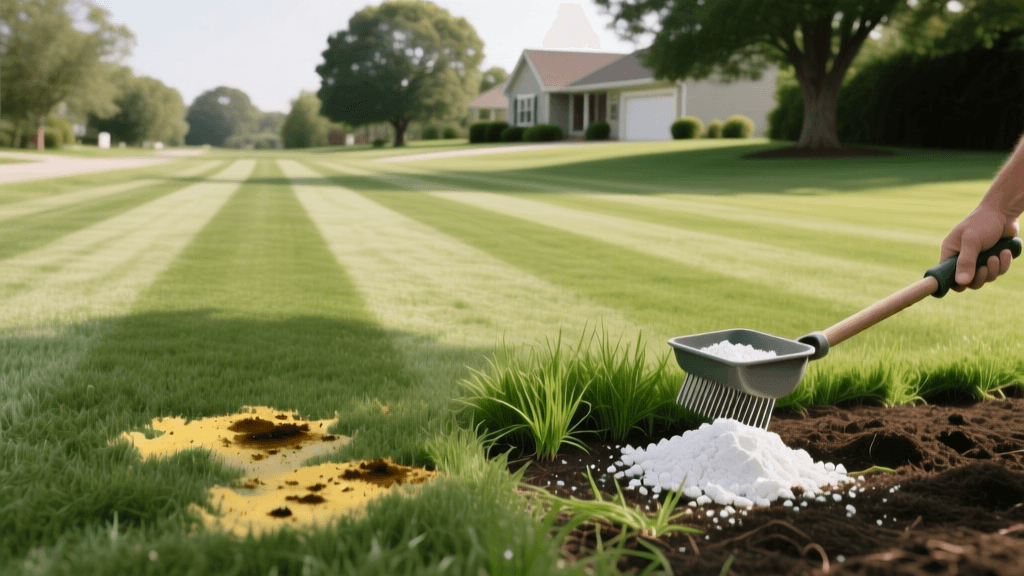
- Spread Evenly: Apply half the required amount in a north-south direction, and the other half in an east-west direction. This cross-hatching method guarantees even coverage and prevents streaking.
- Sweep Hardscapes: Use a leaf blower or broom to sweep any pellets off driveways and sidewalks back onto the lawn. While the iron in Milorganite is marketed as non-staining, leaving concentrated pellets on porous concrete during heavy spring rains can cause temporary rust-colored spots.
- Watering: While Milorganite does not strictly require immediate watering in like synthetic urea (which can volatilize and burn), a light watering of about 1/4 inch helps the pellets settle into the soil profile and kickstarts the microbial breakdown process.
Milorganite vs. Synthetic Spring Fertilizers
How does this organic stalwart compare to the synthetic options lining the shelves of big-box stores in 2026? Review the comparison below to understand the trade-offs.
| Feature | Milorganite (Organic) | Synthetic Urea/Ammonium |
|---|---|---|
| Nitrogen Release | Slow (8-10 weeks) | Fast (2-4 weeks) |
| Burn Risk | Virtually zero | High if over-applied |
| Soil Microbe Impact | Feeds soil biology | Can disrupt microbes |
| Iron Content | 4% (Natural greening) | Usually 0% (unless added) |
| Runoff Risk | Very low (water insoluble) | Moderate to high |
For a comprehensive look at regional turfgrass maintenance, university extensions remain an invaluable resource. The Penn State Extension Lawn Care program frequently highlights the environmental benefits of utilizing slow-release, organic nitrogen sources to protect local watersheds from nutrient pollution.
Pro Tips and Troubleshooting for 2026
Even with an easy-to-use product like Milorganite, a few expert considerations will ensure flawless results this spring.
Embrace the Earthy Scent
Because Milorganite is derived from organic biosolids, it has a distinct, earthy odor upon application. Do not be alarmed; this smell is entirely natural and typically dissipates within 24 to 48 hours, especially after a light watering or a spring rain shower.
Pet and Wildlife Safety
Milorganite is highly safe for pets and children once applied. However, its organic scent can sometimes attract curious dogs or local wildlife, who may mistake the pellets for food. To prevent your dog from digging up the lawn or eating the fertilizer, water the product in immediately after application to wash the scent deeper into the soil profile.
Pairing with Core Aeration
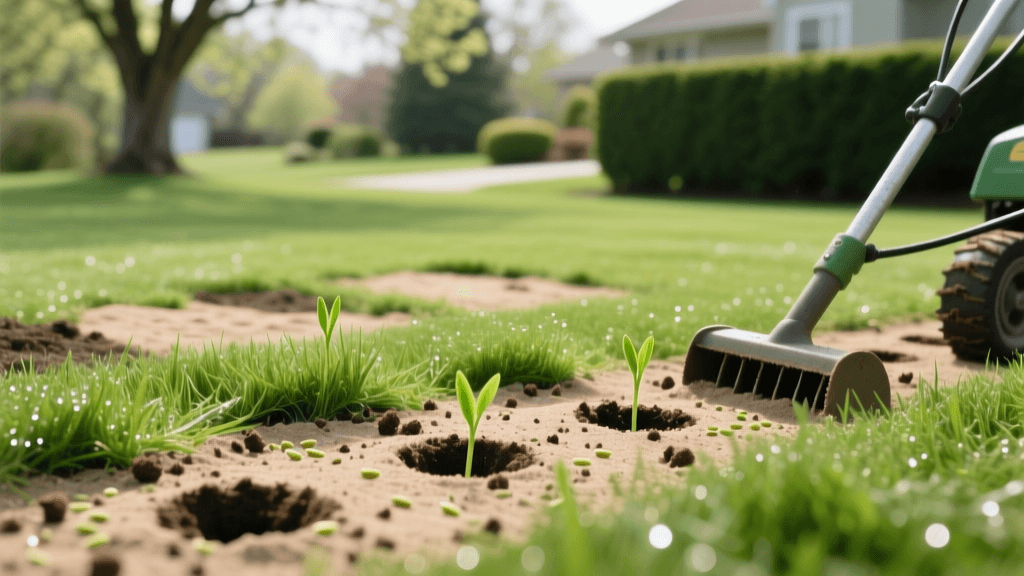
If your spring schedule includes core aeration to alleviate soil compaction, time your Milorganite application for the exact same day. The aeration holes will act as direct conduits, dropping the organic pellets deep into the root zone where soil microbes can break them down most efficiently. This synergy is one of the most effective cultural practices you can implement in 2026 for a thicker, more drought-resilient lawn.
Conclusion
Spring fertilization sets the tone for the entire growing season. By choosing Milorganite in 2026, you are not just feeding your grass; you are building a resilient, biologically active soil ecosystem. Stick to the soil-temperature guidelines, apply evenly, and watch your lawn transform into a deep green, disease-resistant carpet that will thrive well into the heat of summer.