Pest Control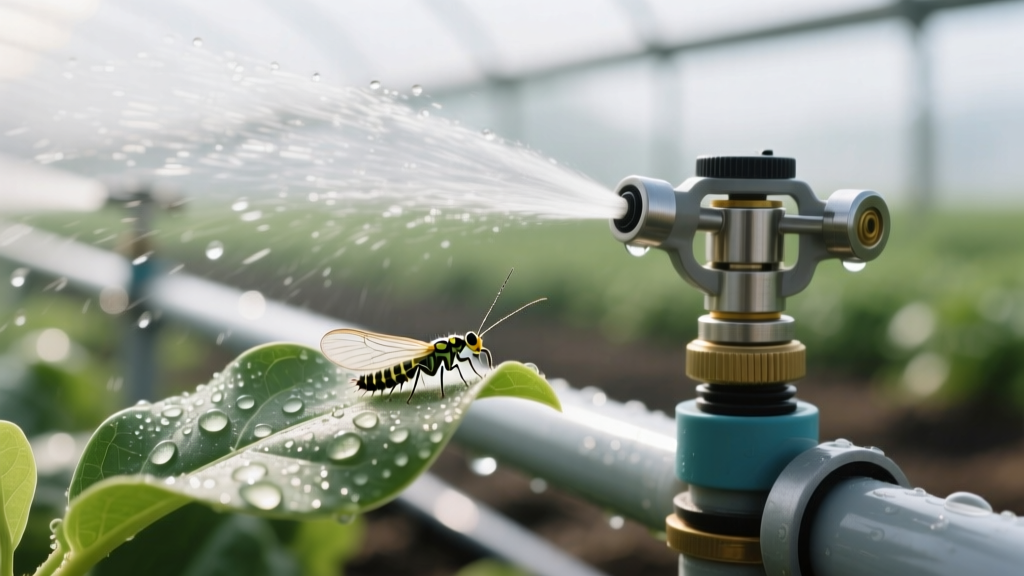
2026 Sprinkler Guide: Lacewing Larvae Rates For Whiteflies
Lisa ThompsonPublished
The 2026 Whitefly Challenge and Biological Solutions
As we navigate the 2026 growing season, landscape professionals and home gardeners are facing unprecedented pressure from whitefly populations. Driven by shifting climate zones and increasingly resilient biotypes, whiteflies (*Trialeurodes vaporariorum* and *Bemisia tabaci*) are causing severe damage to ornamental plants, vegetable gardens, and greenhouse crops. While chemical pesticides have long been the default, the 2026 consensus among entomologists heavily favors Integrated Pest Management (IPM). At the forefront of this biological revolution is the green lacewing (*Chrysoperla rufilabris* and *Chrysoperla carnea*), specifically in its larval stage. Often called 'aphid lions,' lacewing larvae are voracious predators that also aggressively consume whitefly eggs and nymphs.
However, introducing biological controls into a landscape is only half the battle. The modern landscape relies heavily on automated sprinkler and irrigation systems to maintain plant health. The intersection of foliar-dwelling predatory insects and overhead water delivery creates a complex management dilemma. If you are utilizing lacewing larvae for whitefly management in 2026, understanding the precise application rates and how to synchronize your irrigation schedules is critical for the survival of your beneficial insects and the health of your plants.
Determining Exact Lacewing Larvae Application Rates
Before integrating your irrigation systems, you must establish the correct biological application rates. According to the University of California Integrated Pest Management program, lacewing larvae must be applied at specific densities to outpace the reproductive cycle of the whitefly. Whiteflies reproduce exponentially in warm weather, meaning a low predator-to-pest ratio will result in failed control.
2026 Application Rate Guidelines
- Preventative / Low Infestation: 2 to 5 larvae per square foot. Apply when whitefly adults are first spotted on sticky traps or the undersides of lower leaves.
- Moderate Infestation: 5 to 10 larvae per square foot. Apply when honeydew is visible and leaf yellowing begins.
- Severe / Curative Infestation: 10 to 20+ larvae per square foot. Requires immediate, heavy application combined with targeted horticultural oils (applied prior to larvae release) to knock down adult populations.
In 2026, commercial suppliers typically ship lacewing larvae in either dry media (like corn cobs or buckwheat hulls) for broadcast application, or in liquid suspensions designed for specialized spray equipment. The liquid suspension method is where irrigation and sprinkler systems become directly involved in the application process.
The Sprinkler and Irrigation Dilemma
Lacewing larvae are foliage-dwelling predators. Once released, they immediately begin crawling across the leaf surfaces in search of whitefly eggs and nymphs. They are relatively slow-moving and lack the ability to cling to leaves during high-velocity water impacts. This creates a massive conflict with standard overhead sprinkler systems.
As noted by Penn State Extension, whiteflies thrive on the undersides of leaves, which is exactly where lacewing larvae hunt. If an overhead sprinkler system activates within 48 hours of a dry broadcast release, the water droplets will physically wash the larvae off the foliage and into the soil, where they will starve. Furthermore, the micro-climate created by constant overhead moisture can promote fungal pathogens that negatively impact lacewing pupation.
Irrigation System Compatibility Chart
| Irrigation Method | Emitter / Nozzle Type | Lacewing Survival Impact | Recommended 2026 Action |
|---|---|---|---|
| Overhead Sprinkler | Standard Impact / Rotor | High Mortality (Wash-off) | Pause system 48-72hrs post-release |
| Low-Pressure Mist | >1000 Micron Fogger | Moderate (Good for liquid) | Use specifically for liquid larval suspension |
| Drip Irrigation | Subsurface Drip Lines | Zero Impact (Ideal) | Maintain normal schedule for soil moisture |
| Soaker Hoses | Porous Wall Tubing | Zero Impact (Ideal) | Best alternative for garden bed hydration |
Liquid Suspension Application via Irrigation Systems
For large-scale landscapes, golf courses, and extensive garden beds in 2026, manually shaking dry lacewing media onto plants is labor-prohibitive. Instead, pest control professionals are utilizing liquid lacewing suspensions applied directly through modified low-pressure sprinkler networks and hose-end siphons.
Nozzle Specifications and Pressure Limits
If you are using a sprinkler system to *apply* the lacewing larvae in a liquid suspension, you cannot use standard high-pressure nozzles. The shearing force of water exiting a standard nozzle at 40+ PSI will fatally damage the soft-bodied larvae. To safely distribute lacewing larvae via an irrigation network:
- Nozzle Size: Use nozzles or emitters with an orifice diameter of at least 1000 microns (1 mm) to allow the larvae to pass through without mechanical injury.
- Pressure Limits: Restrict system pressure to under 20 PSI. Utilize pressure regulators at the zone valves specifically designated for biological applications.
- Filtration: Remove standard mesh filters from the injection zone. Standard 100-mesh irrigation filters will trap and clog the larvae, destroying the application and ruining the sprinkler heads.
By utilizing specialized low-pressure misting sprinklers, you can evenly coat the undersides of the canopy with the liquid suspension, delivering the larvae exactly where the whitefly nymphs reside.
Smart Irrigation Scheduling for Biological Control
The rise of smart irrigation controllers in 2026 has made it significantly easier to coordinate pest control applications with landscape hydration. Platforms like Rachio, Hunter Hydrawise, and B-hyve now allow users to create 'Biological Pause' schedules via their smartphone apps.
When planning a lacewing larvae release for whitefly management, follow this smart-controller protocol:
- T-Minus 24 Hours: Run a deep, thorough overhead irrigation cycle. This ensures the plants are fully hydrated and the soil moisture is optimal, reducing the immediate need for subsequent watering.
- T-Zero (Application Day): Disable all overhead sprinkler zones. Apply the lacewing larvae (either dry broadcast in the evening or liquid suspension via low-pressure modified lines).
- T-Plus 48 to 72 Hours: Keep overhead sprinklers disabled. The larvae need this critical window to hatch (if applied as eggs), disperse, and anchor themselves to the leaf surfaces using their silk-like threads.
- Resuming Irrigation: After the 72-hour establishment window, resume overhead watering, but prefer early morning cycles. This allows the foliage to dry quickly, preventing fungal issues that could harm the developing lacewing pupae.
If your landscape requires daily hydration due to extreme 2026 summer heat, you must transition to subsurface drip irrigation or soaker hoses for the zones undergoing biological whitefly control. This delivers vital water to the root zone without disturbing the foliar battlefield above.
Step-by-Step Sprinkler Management Protocol
To summarize the integration of your irrigation infrastructure with your lacewing larvae application rates, adhere to this step-by-step checklist:
- Step 1: Audit your sprinkler zones. Identify which zones utilize overhead impact sprinklers versus drip lines.
- Step 2: Calculate the square footage of the affected garden beds to determine your exact lacewing larvae requirement (e.g., 10,000 larvae for a 1,000 sq ft moderate infestation).
- Step 3: Program your smart irrigation controller to suspend overhead watering in the target zones for a minimum of 3 days.
- Step 4: If applying via liquid suspension, install a 1000-micron bypass filter and a pressure regulator set to 15 PSI on your application hose or sprinkler manifold.
- Step 5: Apply the larvae during dusk or early dawn to avoid UV degradation of the liquid carrier and to give the larvae immediate cover from daytime heat.
- Step 6: Monitor whitefly populations using yellow sticky traps. If the population continues to rise after 14 days, a secondary application of lacewing larvae may be required, accompanied by another 72-hour sprinkler pause.
Conclusion
Managing whiteflies in 2026 requires a sophisticated approach that marries entomology with landscape engineering. Lacewing larvae remain one of the most effective, environmentally safe biological controls available. However, their success is entirely dependent on how well you manage your landscape's micro-climate. By understanding the precise application rates and rigorously controlling your sprinkler and irrigation systems to prevent larval wash-off, you can establish a thriving predator population that will naturally decimate whitefly infestations for the entirety of the growing season.