Gardening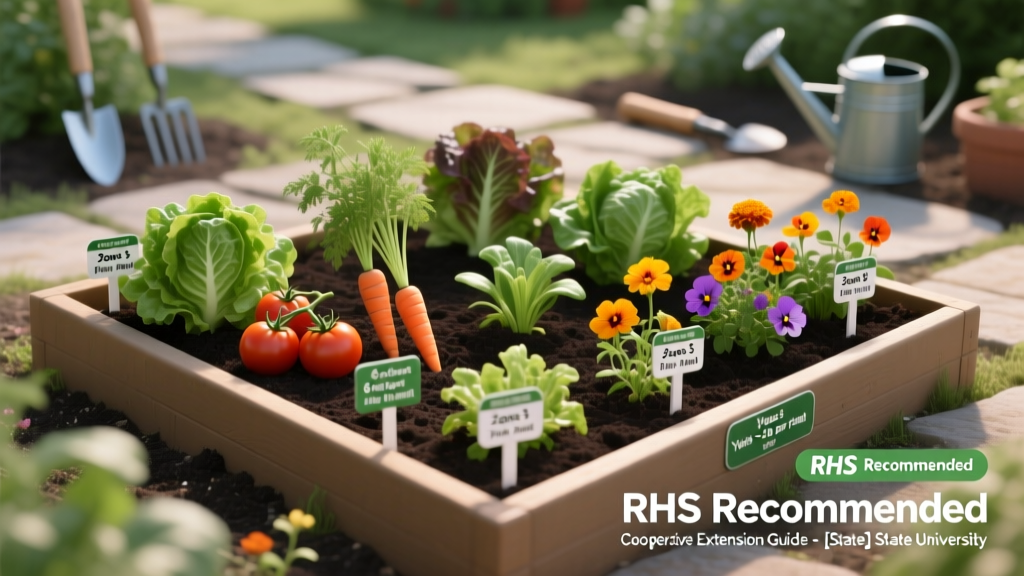
Square Foot Gardening Method Explained
What Square Foot Gardening Actually Is
Square foot gardening is a high-density planting system that divides a raised bed into a grid of one-foot squares, each planted with a specific number of plants based on their mature size. Mel Bartholomew popularized the method in his 1981 book and revised it in 2006, replacing native soil entirely with a custom growing mix. The idea is simple: match how many plants you put in each square to how much space they actually need when full-grown. That cuts down on bare spots, means less weeding, and puts water and nutrients right where the roots can use them.
The method isn’t just about spacing. It brings together a specific soil mix, a permanent grid, and a plan for planting crops in sequence — and those pieces only work well together. A square foot grid planted in heavy clay will struggle just as much as perfect soil with no spacing control.
Building the Bed and the Mel's Mix Formula
The standard square foot garden bed is 4 feet wide by 4 feet long and at least 6 inches deep, though 12 inches works better for carrots, beets, and other root vegetables. The 4-foot width lets you reach the center from either side without stepping in and compressing the soil. You can make beds longer than 4 feet, but keep the width at or under 4 feet.
Bartholomew’s revised soil formula, commonly called Mel's Mix, uses equal parts by volume: coarse vermiculite, peat moss or coconut coir, and a blended compost made from at least five different sources. For a standard 4×4 bed at 6-inch depth, you’ll need about 8 cubic feet of mix. At 12 inches deep, that’s 16 cubic feet. The University of Vermont Extension points out that using compost from multiple sources helps build a more diverse soil microbiome and a broader range of nutrients (University of Vermont Extension, 2019).
The grid is usually made from lath strips, wooden slats, or even heavy twine stretched across the bed frame and tied off every foot. It stays in place all season. It helps you plant evenly and keeps you from packing too many plants into the corners or leaving empty spaces in the middle.
Lumber and Material Choices
Untreated cedar and redwood hold up best for bed frames, lasting 10 to 20 years without rotting — no chemical treatment needed. Avoid pressure-treated lumber with chromated copper arsenate (CCA), which was phased out for home use in the U.S. in 2003 but still shows up in old salvaged wood. Modern ACQ-treated lumber is considered safe by the EPA for raised beds, though some gardeners line the inside with heavy-gauge polyethylene just in case.
Laying galvanized hardware cloth across the bottom before filling the bed helps keep out burrowing pests like voles and gophers, especially if you’re growing root crops. A 1/4-inch mesh blocks both.
Planting Density by Crop
How many plants go in each square foot comes from the spacing recommendation on the seed packet, converted to a per-square-foot count. The Royal Horticultural Society’s vegetable spacing guidelines line up closely with Bartholomew’s density table, showing the numbers reflect real growing needs, not made-up rules (RHS, 2022).
| Crop | Plants per Square Foot | Spacing (inches) | Typical Yield per Square |
|---|---|---|---|
| Radish | 16 | 3 | 16 radishes |
| Carrots | 16 | 3 | 16 carrots |
| Beets | 9 | 4 | 9 beets plus greens |
| Spinach | 9 | 4 | ~1 lb fresh leaves |
| Lettuce (leaf) | 4 | 6 | 4 heads or continuous cut |
| Bush beans | 9 | 4 | ~0.5 lb per harvest |
| Kale | 1 | 12 | Continuous harvest, 3–5 months |
| Tomato (determinate) | 1 per 2 sq ft | 18–24 | 8–15 lbs per plant |
| Marigold (dwarf) | 4 | 6 | Continuous bloom, 3–4 months |
Large vining crops like winter squash, cucumbers, and indeterminate tomatoes need vertical support or room to spread over the edge of the bed. One cucumber plant fits in a single square but needs a trellis at least 5 feet tall. Indeterminate tomatoes usually get one plant per 4-square-foot section and need strong staking or a cage anchored outside the bed.
Flowers in the Square Foot System
Flowers fit right into the grid. Dwarf marigolds, planted at 4 per square foot along the edges, help keep aphids and whiteflies away — both by being close and by releasing certain compounds. Nasturtiums, also at 4 per square, draw aphids away from vegetables while giving you edible flowers and leaves. Zinnias, at 1 per square foot, bring in beneficial wasps and give you cut flowers from midsummer until frost.
The Cornell University Cooperative Extension recommends mixing flowering annuals with vegetables to support beneficial insects, noting that beds with at least 20% flowers tend to have fewer pest problems than beds with vegetables only (Cornell Cooperative Extension, 2021).
Planting Dates by USDA Hardiness Zone
Square foot gardening doesn’t change how cold-hardy a plant is, but the raised bed and tight spacing do affect the immediate environment. Raised beds warm up 2 to 4°F faster than ground-level soil in spring, so cool-season crops often go in 1 to 2 weeks earlier in most zones.
- Zones 3–4 (Minnesota, northern Maine, Montana): Last frost typically May 15–June 1. Sow cool-season crops like spinach, radish, and peas in raised beds starting late April. Wait until after June 1 to set out warm-season crops. First fall frost hits September 1–15, giving warm-season crops about 90 days to grow.
- Zones 5–6 (Ohio, Pennsylvania, Missouri, Oregon coast): Last frost April 1–May 15. Sow cool-season crops in mid-March under row cover. Set out tomatoes and peppers after May 15. Start fall spinach and kale August 15–September 1.
- Zones 7–8 (Virginia, Tennessee, Pacific Northwest lowlands, Georgia piedmont): Last frost March 1–April 1. You can often get two full growing seasons. Spring cool-season crops run February through May; fall ones go September through December. Warm-season crops fill June through September.
- Zones 9–10 (Southern California, Arizona low desert, Gulf Coast): Frost is rare or doesn’t happen at all. Cool-season crops grow October through March. Warm-season crops go in March through June and again September through November. Most vegetables slow down or rest in July and August when temperatures climb above 95°F.
Row cover fabric rated at 1.5 oz per square yard adds about 4°F of frost protection and can stretch the season a bit at both ends in zones 5 through 7. Heavier 2.0 oz fabric gives 6°F of protection but cuts down on light enough to slow seedling growth.
Succession Planting Within the Grid
Because each square is managed on its own, you can replant it as soon as one crop is done. In Zone 6, for example, a square of radishes sown in early April is usually ready by early May. Right after harvest, you could set out basil or sow bush beans for summer, then plant spinach in late August for fall. Getting three crops from one square foot in a single season is common.
The trick is keeping a simple calendar for your zone and having transplants or seeds ready when squares open up. A notebook or spreadsheet tracking what’s in each square and when it’s likely to be done is plenty. Fancy systems exist, but the method works best when it’s easy enough to stick with.
Watering, Feeding, and Soil Maintenance
Mel's Mix drains well and dries out faster than regular soil — especially in hot weather. In zones 7 and warmer, daily watering may be needed in summer. Drip irrigation or a soaker hose laid under the grid before planting works best: it delivers water right to the roots and keeps the leaves dry, cutting down on fungal disease.
Since the mix contains no native soil, it holds no built-in nutrient supply beyond what’s in the compost. After each harvest, add about one cup of fresh compost to each square before replanting. Over a full season, that keeps organic matter and nutrients steady without synthetic fertilizer for most crops. Heavy feeders like tomatoes, corn, and squash do better with a balanced granular fertilizer mixed into the top 2 inches at transplant time.
The NC State Extension suggests testing the soil every two to three years, even in raised beds with custom mixes — pH and nutrient levels shift over time no matter where you start (NC State Extension, 2020). Most vegetables and flowers grow well between pH 6.0 and 7.0. Lime raises pH; sulfur lowers it, though it takes several weeks for changes to show up in a test.
- Test soil pH and nutrients in early spring before the first planting.
- If pH needs adjusting, do it first, then wait three to four weeks before planting to let things settle.
- Add one cup of compost per square after each harvest, working it gently into the top inch.
- At season’s end, spread a 1-inch layer of compost over the whole bed and cover it with burlap or cardboard to protect the soil over winter.
- In spring, pull off the cover, check for compaction, and loosen the top 2 inches with a hand fork before planting.
Common Problems and How to Address Them
Damping off — when seedlings suddenly flop over at the soil line — happens more often in square foot beds than in open ground because tight spacing traps humidity near the surface. Thinning to the right number of plants per square and watering in the morning instead of evening helps a lot. Some gardeners sprinkle cinnamon on the soil around seedlings — small trials suggest it has antifungal effects, though it won’t fix poor spacing or drainage.
Nutrient deficiency often shows up as yellowing between leaf veins (interveinal chlorosis), usually pointing to iron or manganese shortage in soils with high pH. If your test shows pH above 7.2, a foliar spray of chelated iron at the label rate gives quick relief while longer-term pH adjustments take hold.
Pests can move fast in dense plantings because there’s less space between hosts. Hand-picking works well for caterpillars and beetles in small beds. For aphids, a strong blast of water knocks most of them off without chemicals. Floating row cover, installed right after transplanting, blocks flying pests — just remember to remove it when flowering crops need pollinators.
The raised bed setup also helps in places with poor drainage or flood risk. Beds lifted 12 inches above grade drain well even during heavy rain, keeping roots from sitting in water and rotting. That’s why this method is popular in urban community gardens in cities like Philadelphia, Detroit, and Seattle, where soil contamination or drainage issues make in-ground gardening tough.
