Gardening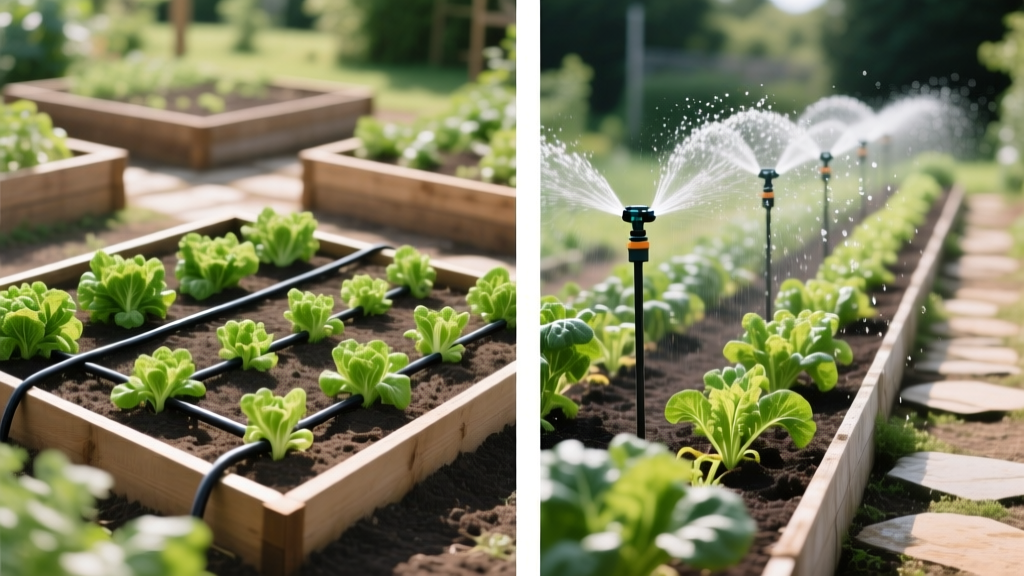
Best Irrigation for Square Foot vs Row Gardens 2026
David ParkPublished
Navigating 2026 Garden Layouts and Water Management
As we navigate the 2026 growing season, water conservation and precise moisture delivery are more critical than ever for home gardeners. With shifting climate patterns and stricter municipal water restrictions in many regions, choosing the right irrigation system is no longer just a matter of convenience; it is a necessity for a successful harvest. When planning your vegetable garden, the two most dominant layout philosophies are Square Foot Gardening (SFG) and traditional row planting. Each method dictates a completely different approach to water management, sprinkler placement, and drip line routing.
According to the EPA WaterSense program, outdoor water use accounts for nearly a third of all residential water consumption, with traditional overhead sprinklers losing a massive percentage to wind drift and evaporation. In 2026, the focus has shifted heavily toward targeted micro-irrigation and smart automation. Whether you are cultivating a dense 4x4 raised bed or tending to a sprawling 50-foot backyard row garden, matching your irrigation hardware to your specific layout is the key to maximizing yields while minimizing your water footprint.
The Core Differences in Water Delivery
The fundamental difference between square foot and row gardening lies in plant density and spatial geometry. Square foot gardening relies on intensive, grid-based planting within confined raised beds, typically measuring 4 feet by 4 feet. Plants are spaced just inches apart, creating a microclimate that shades the soil and reduces surface evaporation. Conversely, traditional row gardens feature long, linear planting zones with wide walking paths between them to accommodate tillers and wheelbarrows. This open soil exposure makes row gardens highly susceptible to moisture loss, requiring entirely different sprinkler and drip configurations to maintain consistent soil hydration.
Square Foot Gardening (SFG) Irrigation Strategies
In a square foot garden, every single square inch of soil is utilized. Using overhead oscillating sprinklers or impact rotors in this setup is highly inefficient, as a significant amount of water lands on the wooden bed borders, nearby pathways, and the gardener themselves. Furthermore, wetting the dense foliage of closely planted crops like tomatoes and squash can promote fungal diseases like powdery mildew.
Drip Grids and Micro-Sprayers
For 2026, the gold standard for SFG irrigation is the integrated drip grid. Products like the Netafim Techline CV or Rain Bird XFD drip lines feature built-in pressure-compensating emitters spaced exactly 12 inches apart. By snaking this tubing in a grid pattern across your 4x4 bed, you deliver water directly to the root zone of every single plant. For blocks of shallow-rooted crops like carrots, radishes, or dense leafy greens, micro-sprayers mounted on risers provide a gentle, localized umbrella of water that mimics rainfall without the waste of a full-sized sprinkler head. The University of Minnesota Extension heavily recommends drip and micro-irrigation for raised beds to maintain consistent moisture levels without disturbing the carefully engineered soil structure.
Traditional Row Garden Irrigation Strategies
Row gardens present a challenge of distance and volume. Running rigid drip lines across 50 feet of garden space can be cumbersome and prone to kinking. Instead, row gardeners in 2026 are turning to flexible drip tape and smart-controlled overhead sprinklers for broad coverage.
Drip Tape and Oscillating Sprinklers
Drip tape, such as T-Tape, is a flat, collapsible tubing that inflates when water pressure is applied. It is incredibly cost-effective for long rows of corn, beans, and peas. Emitters are typically spaced 8 inches apart, providing a continuous wetting front along the entire row. Because drip tape is thin-walled, it must be laid out carefully and secured with landscape staples to prevent wind displacement. For germination and broad-leaf crops where overhead moisture is acceptable, modern oscillating sprinklers like the Melnor XT4200 offer adjustable width and range controls. When paired with a smart timer, these sprinklers can deliver a precise half-inch of water per week, minimizing the runoff that plagued older, less efficient models.
2026 Smart Irrigation Technology and Automation
Regardless of your garden layout, manual watering is becoming obsolete. The 2026 lineup of smart irrigation controllers utilizes hyper-local Evapotranspiration (ET) data, pulling real-time weather metrics from nearby stations to adjust watering schedules automatically. Controllers like the Orbit B-hyve XR and the latest Rachio models can independently manage multiple zones, allowing you to run a drip grid on your square foot beds (Zone 1) and a soaker hose network on your row garden (Zone 2) with customized flow rates and durations. Integrating inline soil moisture sensors ensures that your system will automatically skip a scheduled watering cycle if recent rainfall has already adequately saturated the root zone.
Head-to-Head Irrigation Comparison Chart
| Irrigation Method | Best Layout Match | Water Efficiency | Est. Setup Cost (per 100 sq ft) | Maintenance Level |
|---|---|---|---|---|
| Integrated Drip Grid | Square Foot Raised Beds | 95% (Excellent) | $45 - $65 | Low (Annual flushing) |
| Micro-Sprayers | Square Foot (Root Crops) | 85% (Very Good) | $50 - $70 | Medium (Nozzle cleaning) |
| Drip Tape (T-Tape) | Traditional Long Rows | 90% (Excellent) | $15 - $25 | High (Replace every 1-2 yrs) |
| Oscillating Sprinkler | Traditional Wide Rows | 65% (Fair) | $30 - $50 | Low (Moving the unit) |
| Soaker Hoses | Curved or Short Rows | 80% (Good) | $25 - $40 | Medium (Winter cracking) |
Soil Type, Capillary Action, and Emitter Spacing
When designing your 2026 irrigation layout, you must account for your native soil or raised bed mix. Water moves through soil via capillary action, and the lateral spread of water dictates how far apart your emitters or drip lines should be placed. In heavy clay soils, water moves slowly but spreads widely; therefore, drip tape emitters can be spaced further apart (12 to 18 inches) while still maintaining a continuous wetting front. In contrast, sandy soils or highly porous raised bed mixes drain rapidly and pull water straight down with very little lateral spread. For sandy environments in square foot beds, you must use drip lines with emitters spaced no more than 6 to 8 inches apart to ensure the entire grid receives adequate moisture.
Integrating Fertigation into Your 2026 Layout
Fertigation—the process of injecting liquid fertilizers directly into the irrigation system—has become a mainstream practice for home gardeners in 2026. Row gardens utilizing drip tape are perfectly suited for inline venturi injectors, allowing you to feed long rows of heavy-feeding crops like tomatoes and peppers with liquid kelp or fish emulsion directly at the root zone. Square foot gardens, which typically rely on a rich, pre-mixed soil blend (often referred to as Mel's Mix), generally require less frequent fertigation. However, if you choose to fertigate a square foot grid, ensure you are using fully soluble, filtered organic nutrients to prevent the micro-emitters from clogging with organic particulates.
Seasonal Maintenance and Winterization
To protect your investment, end-of-season maintenance is non-negotiable. For square foot gardens utilizing rigid drip grids, flush the lines with a high-pressure blast of water in late autumn to clear out mineral deposits and root intrusions. Disconnect the smart controller and store it indoors. For row gardens using drip tape, the material is generally treated as a consumable; UV degradation and soil shifting will compromise the tape over the winter. It is best to pull up the drip tape, recycle it, and lay down fresh tape each spring. Overhead sprinklers and oscillating bases must be completely drained of water and stored in a frost-free garage to prevent the internal brass and plastic components from cracking during freeze-thaw cycles.
Conclusion
Choosing between square foot and row gardening ultimately comes down to your available space, physical mobility, and crop preferences. However, the success of either method in 2026 hinges entirely on deploying the correct irrigation strategy. By abandoning wasteful overhead spraying in favor of targeted drip grids for raised beds and efficient drip tape for long rows, you align your garden with modern water conservation standards. Pair these targeted delivery methods with a smart, weather-aware controller, and you will cultivate a thriving, resilient vegetable garden capable of weathering whatever the 2026 climate brings.
