Gardening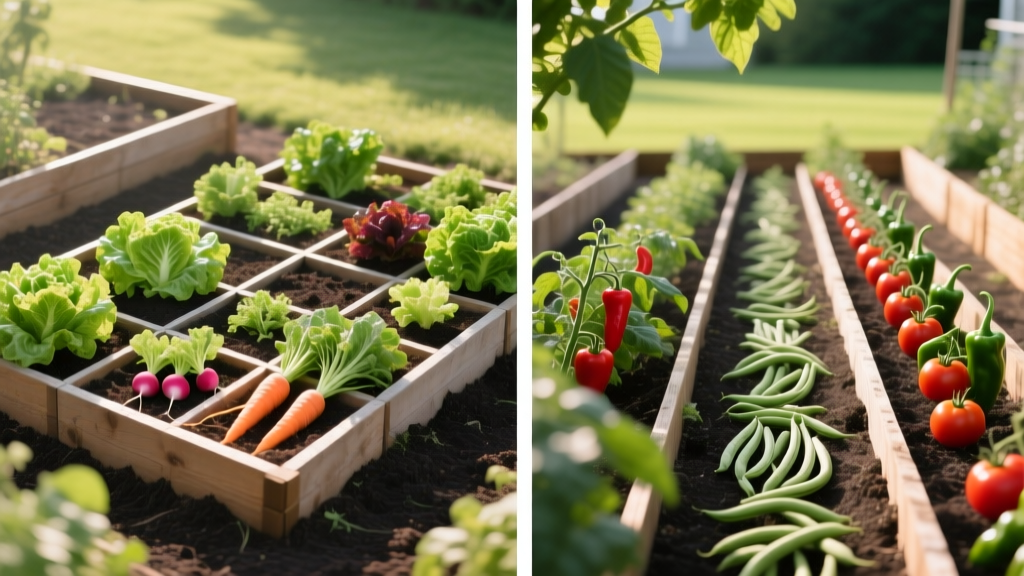
Square Foot vs Row Planting: 2026 Garden Layout Patterns
Lisa ThompsonPublished
The Intersection of Lawn Aesthetics and Edible Landscaping in 2026
For decades, the vegetable garden was hidden away in the back corner of the yard, treated purely as a utilitarian food factory. But as we move through 2026, the trend of "front-yard edible landscaping" has completely transformed how we view garden layouts. Today, homeowners apply the same aesthetic rigor to their vegetable beds as they do to their lawns. Just as a lawn care enthusiast uses a zero-turn mower and a striping kit to create alternating light and dark bands of fescue or Kentucky bluegrass, a modern gardener uses planting layouts to create visual texture, geometry, and striking patterns in the landscape.
When planning your 2026 vegetable garden, the two dominant layout philosophies are traditional row planting and the square foot gardening method. Both offer distinct visual signatures. Row planting creates long, linear "stripes" of foliage that draw the eye toward a focal point, mimicking the manicured lines of a professional sports field. Square foot gardening, conversely, creates a "pixelated" or mosaic pattern, resembling a formal parterre or a meticulously designed checkerboard. According to the Cornell University Cooperative Extension, selecting the right layout is no longer just about yield; it is about integrating your edible crops seamlessly into your overall landscape design. Let us break down the visual and practical differences between these two methods to help you design your signature garden pattern.
Row Planting: The Linear "Striping" Effect
Traditional row planting is the agricultural standard, adapted for the home landscape. In this method, crops are planted in long, continuous lines with wide walking paths between them. From an aesthetic perspective, row planting is the vegetable garden equivalent of lawn striping. The parallel lines of green foliage create a powerful sense of perspective, depth, and order. If you have a long, rectangular yard, running rows perpendicular to the house can make the space feel wider, while running them parallel can elongate the view.
In 2026, the "striped" look of row gardening is often enhanced by integrating smart drip irrigation systems, such as Netafim's latest pressure-compensating drip lines, which lay perfectly straight down the furrows, adding a subtle, structured hardscape element to the soil. Row planting is ideal for large-scale crops like sweet corn, indeterminate tomatoes, and winter squash, which require extensive trellising and sprawling space.
Pros and Cons of the Row Pattern
- Aesthetic Appeal: Creates strong linear perspectives and a classic, agrarian "striped" look that pairs beautifully with traditional farmhouse or rustic landscape designs.
- Accessibility: Wide paths (typically 24 to 36 inches) allow for easy maneuverability of wheelbarrows, garden carts, and even small rotary tillers.
- Space Inefficiency: A significant percentage of your garden's square footage is dedicated to pathways rather than productive soil.
- Weed Management: The large expanses of bare soil between rows require frequent cultivation or heavy mulching to prevent weed invasions that can ruin the clean "striped" aesthetic.
Square Foot Gardening: The Geometric Mosaic
Square foot gardening (SFG), originally popularized by Mel Bartholomew, divides the growing area into small, highly organized square sections, typically within a 4-foot by 4-foot raised bed. If row planting is the lawn stripe, square foot gardening is the intricate checkerboard pattern of a golf course green or a formal French parterre. Each 12-inch by 12-inch square is planted with a specific crop based on its mature size—ranging from one tomato plant per square to sixteen radishes per square.
As detailed by The Old Farmer's Almanac, this method maximizes yield in small spaces while creating a stunning, highly organized mosaic of colors and textures. In 2026, landscape designers are increasingly using SFG beds as focal points in front yards, framing them with crisp cedar borders and filling the squares with vibrant, contrasting crops like purple cabbage, bright red Swiss chard, and trailing nasturtiums. The grid pattern naturally suppresses weeds because the dense canopy of the mature plants leaves little room for opportunistic invaders.
Pros and Cons of the Mosaic Pattern
- Aesthetic Appeal: Offers a highly structured, formal, and colorful mosaic pattern that elevates the garden to a piece of living landscape art.
- Space Efficiency: Yields up to 80% more produce per square foot compared to traditional rows, making it perfect for urban and suburban lots.
- Ergonomics: Raised beds bring the soil level up, reducing back strain and making the geometric patterns easily viewable from standing height.
- Initial Cost: Building raised beds and purchasing the specialized soil mix requires a higher upfront financial investment in 2026.
2026 Layout Comparison: Rows vs. Square Foot
To help you decide which aesthetic and practical approach suits your 2026 landscape goals, review the comparison table below. This data reflects current average costs, spatial requirements, and design impacts for a standard 100-square-foot growing area.
| Feature | Traditional Row Planting | Square Foot Gardening |
|---|---|---|
| Visual Pattern | Linear stripes, agrarian perspective | Geometric mosaic, formal parterre |
| Space Utilization | 40% growing area / 60% pathways | 80% growing area / 20% pathways |
| Estimated 2026 Setup Cost (per 100 sq ft) | $50 - $120 (soil amendments, stakes) | $350 - $600 (cedar lumber, soil mix) |
| Watering Method | Furrow irrigation, overhead sprinklers, drip tape | Hand watering, targeted micro-drip grids |
| Weed Pressure | High (requires frequent hoeing/mulching) | Low (dense canopy suppresses weeds) |
| Best Suited For | Large yards, heavy feeders, root crops | Small urban yards, front-yard aesthetics, salad greens |
Designing the Negative Space: Pathways and Borders
In lawn care, the contrast between the light and dark stripes is what makes the pattern pop. In vegetable gardening, the "negative space"—the pathways and borders—defines your chosen layout pattern. A sloppy pathway will ruin the visual impact of both a striped row garden and a mosaic square foot garden.
For row gardens, the wide pathways are an opportunity to extend the lawn's aesthetic into the garden. Many homeowners in 2026 are planting low-growing, drought-tolerant micro-clovers or creeping thyme in their row pathways. This creates a continuous, lush green carpet that contrasts beautifully with the taller, striped rows of vegetables. Alternatively, laying down heavy-duty woven landscape fabric topped with a 2-inch layer of decomposed granite provides a crisp, clean line that emphasizes the linear geometry of the rows.
For square foot gardens, the pathways between the raised beds should complement the formal geometry of the boxes. Standard practice dictates leaving 3-foot paths between 4x4 beds to ensure accessibility. To enhance the mosaic aesthetic, consider using contrasting hardscape materials. A border of dark river rock or crushed black basalt between natural cedar beds creates a striking visual frame, making the vibrant greens and reds of the vegetable squares stand out vividly. According to Penn State Extension, properly designed pathways not only improve the visual flow of the landscape but also prevent soil compaction in the growing zones, ensuring healthier root systems.
Soil Preparation for Visual and Structural Integrity
The aesthetic success of your garden relies heavily on the structural integrity of the soil. In traditional row planting, the soil is typically amended in place. For 2026, the recommendation is to avoid deep tilling, which disrupts the soil microbiome and brings dormant weed seeds to the surface, ruining the clean look of your rows. Instead, practice "no-till" layering: apply a 2-inch layer of premium compost over the rows each spring, allowing earthworms to incorporate it naturally. This maintains a dark, rich, uniform soil color that makes the green "stripes" of your crops pop.
In square foot gardening, the soil is entirely imported. The classic "Mel's Mix" remains the gold standard, but 2026 sustainability trends have shifted the recipe slightly due to environmental concerns regarding peat moss. The modern, eco-friendly equivalent is a blend of one-third coarse vermiculite, one-third coconut coir (a sustainable peat alternative), and one-third diverse organic compost. This mixture is incredibly dark, fluffy, and uniform, providing a perfect, matte-black backdrop for the geometric grid of your plants. Because the soil is contained within raised beds, it never becomes muddy or compacted, ensuring the garden looks immaculate even after a heavy spring rainstorm.
Final Verdict: Choosing Your Garden's Signature Pattern
Choosing between square foot and row planting in 2026 ultimately comes down to your available space, your budget, and the aesthetic statement you wish to make. If you have a sprawling backyard and want to create sweeping, linear perspectives that mimic the satisfying stripes of a freshly mowed lawn, traditional row planting is your best approach. It is cost-effective, ideal for large harvests, and offers a classic, rustic charm.
However, if you are integrating your vegetable garden into your front yard, or if you have a smaller suburban lot and desire a formal, highly structured landscape feature, the geometric mosaic of square foot gardening is unparalleled. The raised beds act as architectural elements, and the dense, colorful planting squares create a living tapestry that rivals any ornamental flower bed. Whichever pattern you choose, treating your vegetable layout with the same attention to detail as your lawn's striping will transform your garden from a simple food source into a masterpiece of edible landscape design.
