Gardening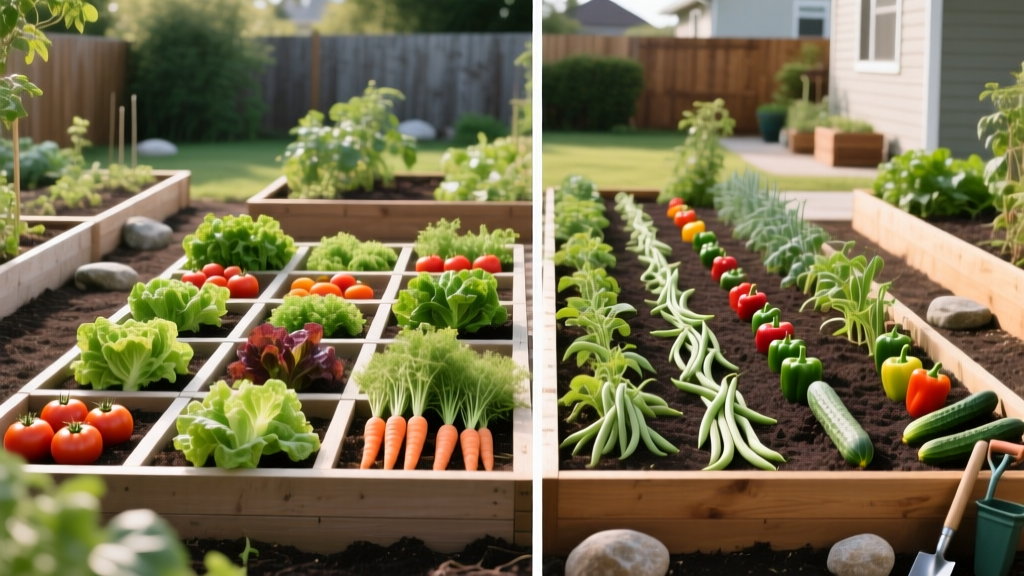
Square Foot vs Row Planting: 2026 Foodscaping Layout Guide
Emily WatsonPublished
The Foodscaping Revolution of 2026
Welcome to the 2026 gardening season, where the line between ornamental landscaping and agricultural productivity has completely dissolved. Edible landscaping, widely known as foodscaping, has evolved from a niche permaculture concept into a mainstream landscape architecture standard. Homeowners and landscape designers are no longer relegating vegetable patches to hidden backyard corners. Instead, they are integrating lush, food-bearing plants into front yard focal points, driveway borders, and patio centerpieces. When designing an edible landscape, the foundational decision you must make revolves around spatial geometry: should you utilize the intensive grid of Square Foot Gardening (SFG) or the sweeping, linear aesthetics of Traditional Row Planting?
Both methods offer distinct advantages depending on your aesthetic goals, available square footage, and maintenance preferences. According to the University of Maryland Extension, intensive planting methods have seen a massive resurgence in urban and suburban environments where maximizing yield per square foot is paramount. However, traditional rows still hold a revered place in rural foodscaping and large-scale cottage garden designs. In this comprehensive 2026 guide, we will break down the square foot vs row planting debate specifically through the lens of edible landscaping, helping you design a yard that is as beautiful as it is bountiful.
Square Foot Gardening: The Intensive Geometric Approach
Originally popularized by Mel Bartholomew, Square Foot Gardening divides a raised bed into a precise grid of 1-foot by 1-foot squares. In 2026, this method has been elevated by modern foodscapers who use the grid to create stunning, parterre-style edible gardens that rival formal French estate landscapes. By assigning specific crops to specific squares—such as a central square of vibrant ruby red Swiss chard surrounded by squares of trailing nasturtiums and compact bush basil—gardeners can create living mosaics.
Advantages for Edible Landscaping
- Aesthetic Symmetry: The 4x4 or 4x8 grid lends itself perfectly to formal landscape designs. When framed with modern composite materials or corrugated metal, SFG beds look like intentional architectural features rather than messy farm plots.
- Weed and Pest Management: Because the soil in an SFG bed is typically a customized, soil-less blend (often a mix of peat moss or coconut coir, vermiculite, and blended composts), weed pressure is virtually eliminated. This keeps your front yard landscape looking pristine with minimal effort.
- High-Density Companion Planting: The Wisconsin Master Gardener Program notes that intensive spacing encourages beneficial microclimates. You can easily pair a tall tomato plant in one square with shade-tolerant lettuce in the adjacent square, creating a layered, lush visual texture.
Limitations to Consider
The primary drawback of SFG in a landscaping context is the initial cost and labor of building raised structures and sourcing the specialized soil mix. Furthermore, large sprawling crops like winter squash or sweet corn are notoriously difficult to manage within a strict 1-foot grid, requiring dedicated trellising that may disrupt sightlines in a curated front yard landscape.
Traditional Row Planting: The Linear Harvest
Traditional row planting is the hallmark of the classic American vegetable garden. Seeds or transplants are sown in long, continuous lines with wide walking paths between them. While often associated with utilitarian farming, row planting has been brilliantly adapted by 2026 foodscaping professionals to create dramatic landscape features, living fences, and sweeping border gardens.
Advantages for Edible Landscaping
- Living Screens and Borders: Rows are unparalleled for creating edible privacy screens. A double row of towering Jerusalem artichokes, sweet corn, or pole beans grown on a modern copper trellis can beautifully obscure a property line or hide an unsightly utility box.
- Cost-Effective Scaling: If you have a large, open lawn area that you wish to convert into an edible meadow or a rustic cottage garden, row planting directly into the amended native soil is significantly cheaper than constructing dozens of raised beds.
- Mechanized Maintenance: For larger suburban or rural estates, wide rows allow for the use of modern, battery-powered electric tillers and smart-weeding robots, making the maintenance of expansive edible landscapes highly efficient.
Limitations to Consider
Row planting is inherently space-inefficient. A significant percentage of your yard will be dedicated to compacted walking paths rather than productive soil. Additionally, without the strict boundaries of a raised bed, row gardens can easily look overgrown and messy by late summer, which may conflict with strict Homeowner Association (HOA) guidelines regarding front yard aesthetics.
Head-to-Head Comparison: SFG vs. Row Planting
To help you decide which layout suits your 2026 foodscaping project, review the comparative data below. This table highlights how each method performs across critical landscaping and agricultural metrics.
| Feature | Square Foot Gardening (SFG) | Traditional Row Planting |
|---|---|---|
| Space Efficiency | Extremely High (No wasted path space) | Low to Moderate (Requires wide access paths) |
| Aesthetic Style | Formal, Geometric, Parterre, Modern | Rustic, Cottage, Meadow, Linear Borders |
| Soil Requirements | Imported Soil-less Mix (Higher initial cost) | Amended Native Soil (Lower initial cost) |
| Ideal Crop Types | Leafy greens, root veggies, bush herbs, compact fruits | Sprawling squashes, sweet corn, tall orchard understories |
| HOA Compatibility | Excellent (Looks like structured ornamental beds) | Poor to Fair (Can appear agricultural or unkempt) |
| Irrigation Setup | Smart drip grids, micro-sprinklers | Drip tape, soaker hoses, overhead sprinklers |
Integrating Layouts into Your Edible Landscape Design
The most breathtaking foodscapes of 2026 do not rely exclusively on one method; they hybridize both techniques to suit the micro-zones of the property. Here is how you can seamlessly integrate both layouts into your outdoor living spaces.
Using SFG for Front Yard Focal Points
The front yard demands high curb appeal. Square Foot Gardening is the undisputed champion of the front yard edible landscape. By utilizing modular, 2026-era composite raised bed kits that feature built-in seating ledges, you can create an inviting, geometric garden that welcomes guests. Plant the outer squares with low-growing, flowering herbs like creeping thyme and alyssum to soften the hardscape edges. Reserve the inner squares for visually striking edibles such as 'Bright Lights' Swiss chard, purple cauliflower, and globe artichokes, which provide architectural height and vibrant color.
Using Rows for Perimeter Screening and Allees
Reserve traditional row planting for the perimeters of your property or to line long driveways. An 'allee'—a formal pathway lined with trees or tall plants—can be created using rows of espaliered fruit trees or towering sunflowers. Furthermore, the Cornell University Vegetable Growing Guides suggest that long rows of perennial edibles, such as asparagus or rhubarb, make excellent, low-maintenance landscape borders that return year after year, providing structural integrity to the garden design without the need for annual replanting.
2026 Design Tip: Soften the rigid lines of traditional row planting by interplanting the ends of your rows with cascading ornamental flowers like nasturtiums or calendula. This creates a 'spilling' effect that bridges the gap between the agricultural row and the surrounding ornamental lawn.
Soil, Water, and Smart Tech in 2026
Regardless of the layout you choose, modern foodscaping relies heavily on hidden infrastructure to maintain a pristine aesthetic while ensuring optimal plant health. In 2026, the integration of smart garden technology is standard practice for high-end edible landscapes.
For Square Foot Gardens, the soil profile is everything. Because you are planting intensively, the soil must be rich and perfectly draining. The modern standard is a mix of 30% high-quality compost, 30% coconut coir (a sustainable alternative to peat moss), and 40% coarse vermiculite. To maintain the aesthetic, top-dress the beds with a thin layer of finely shredded cedar mulch or decorative river stones around the base of the plants to retain moisture and prevent soil splash during heavy rains.
For Row Planted Gardens, soil preparation involves broadforking and amending the native earth with organic matter. Because rows cover larger areas, they are more susceptible to surface evaporation. The 2026 solution is the use of biodegradable, wood-fiber weed mats that suppress weeds while allowing water penetration, completely eliminating the need for unsightly black plastic mulch. These mats blend seamlessly into the landscape, mimicking the look of natural leaf litter.
Irrigation in both layouts has moved away from overhead spraying, which promotes fungal diseases and wastes water. Instead, foodscapers are utilizing Wi-Fi-enabled drip irrigation systems connected to local hyper-weather APIs. In an SFG bed, a precise grid of adjustable micro-drippers ensures every 1-foot square receives the exact volume of water required by the specific plant residing there. In row gardens, subsurface drip lines are buried just inches below the soil surface, delivering water directly to the root zones while keeping the surface completely dry and free of muddy puddles, preserving the clean look of your landscape.
Final Verdict: Choosing Your 2026 Layout
The choice between square foot gardening and traditional row planting ultimately depends on your property's spatial dynamics and your aesthetic vision. If your goal is to create a highly manicured, high-yield, and HOA-compliant edible garden in a front yard or patio setting, the geometric precision of Square Foot Gardening is your best tool. It transforms vegetable growing into a structured, ornamental art form.
Conversely, if you are managing a larger suburban lot, a rural homestead, or wish to establish living privacy screens and expansive cottage-style borders, traditional row planting offers the scale and rustic charm necessary to anchor the landscape. By understanding the strengths of both methods, you can mix, match, and design a 2026 foodscape that feeds your family while dramatically elevating the beauty and value of your property.
