Gardening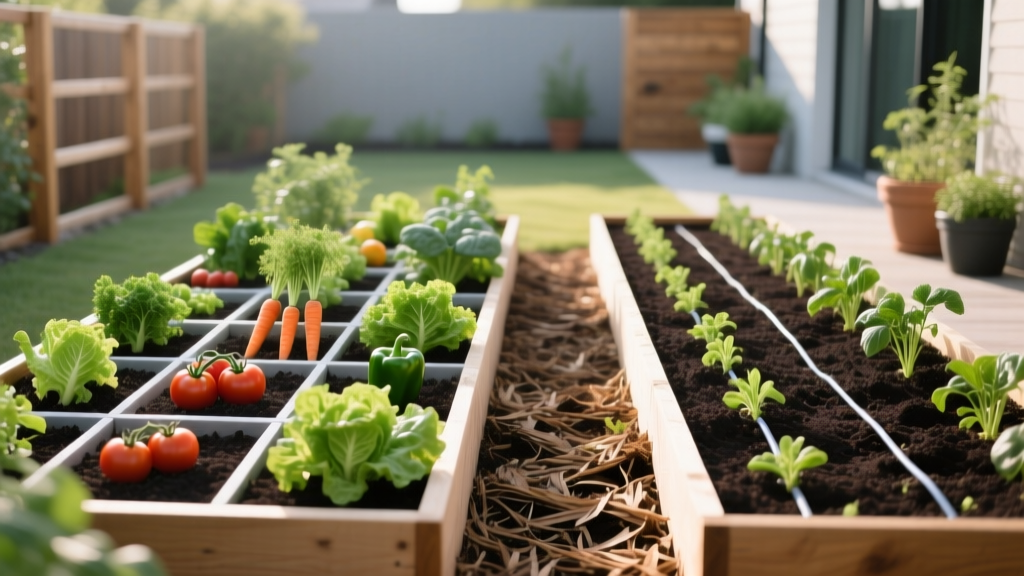
Square Foot vs Row Planting for Raised Beds: 2026 Guide
Sarah ChenPublished
The Evolution of Raised Bed Layouts in 2026
Raised bed vegetable gardening continues to dominate home landscaping and urban farming trends in 2026. With supply chain issues of the early 2020s firmly in the rearview mirror, gardeners now have access to a wider variety of composite materials, untreated cedar, and advanced soil amendments than ever before. However, once the bed is built and filled, every gardener faces the same fundamental design question: how should you layout your crops? The two primary contenders are the highly structured Square Foot Gardening (SFG) method and the traditional Row Planting method. While both techniques can be adapted to raised beds, they offer vastly different approaches to space utilization, soil management, and crop maintenance. In this comprehensive 2026 guide, we will break down the square foot versus row planting debate, helping you maximize your yield, minimize your weeds, and design the most efficient raised bed vegetable garden for your specific needs.
Square Foot Gardening: The High-Density Approach
Popularized by Mel Bartholomew in the 1980s and continuously refined by modern horticulturists, Square Foot Gardening is a high-density planting method that divides your raised bed into a grid of 1-foot by 1-foot squares. According to the Old Farmer's Almanac, this method was specifically designed to eliminate the wasted space of traditional garden aisles, making it the ultimate solution for small urban yards and patio gardens.
In a standard 4x8-foot raised bed, a square foot layout gives you exactly 32 individual planting zones. Each square is planted based on the mature size of the crop. For example, a single square can hold 16 carrots, 4 bush beans, 2 cucumbers (with a trellis), or 1 large broccoli plant. The physical grid is often created using biodegradable jute twine, thin wooden lath, or laser-cut bamboo grids that have become highly popular in 2026 garden catalogs.
Pros of Square Foot Gardening
- Maximum Yield per Square Foot: By eliminating walking paths inside the bed, nearly 100% of the soil surface is utilized for growing.
- Drastic Weed Reduction: The dense canopy created by closely spaced plants shades the soil, suppressing weed germination.
- Visual Organization: The grid system makes crop rotation, succession planting, and garden journaling incredibly straightforward.
Cons of Square Foot Gardening
- Intensive Soil Requirements: SFG relies on a specific, highly aerated soil blend (traditionally equal parts compost, peat moss or coconut coir, and coarse vermiculite) which can be expensive to mix and fill in 2026.
- Overcrowding Risks: Poor airflow in humid climates can lead to fungal diseases like powdery mildew if plants are not pruned properly.
Row Planting: The Traditional Adaptation
Row planting is the agricultural standard, adapted for the raised bed environment. Instead of a grid, seeds and transplants are sown in linear rows that run the length or width of the bed. While traditional in-ground row farming requires wide aisles for tractors and tillers, raised bed row planting compresses these rows to maximize the 3-to-4-foot width of the bed. Typically, a 4-foot wide raised bed can accommodate three to four narrow rows, spaced 10 to 12 inches apart, with a small walking path left between adjacent beds.
As noted by researchers at the University of Wisconsin-Madison Extension, row planting in raised beds bridges the gap between commercial farming efficiency and backyard accessibility. It is particularly favored by gardeners who grow large quantities of staple crops for preserving, canning, or freezing.
Pros of Row Planting
- Ideal for Sprawling and Large Crops: Crops like corn, potatoes, and large winter squashes thrive in rows where their root systems and foliage can spread without rigid boundaries.
- Simplified Irrigation: Laying down linear drip tape is significantly faster and more uniform than routing micro-tubing around a complex square foot grid.
- Easier Soil Preparation: Row planting does not strictly require the expensive, fluffy Mel's Mix. A standard blend of 60% topsoil and 40% compost works exceptionally well, keeping initial 2026 setup costs lower.
Cons of Row Planting
- Lower Overall Density: You will grow fewer total plants per raised bed compared to a strict SFG grid.
- Increased Weeding: The linear gaps between rows expose more soil to sunlight, requiring more frequent cultivation or the application of organic mulches.
Head-to-Head Comparison: Square Foot vs. Row Planting
To help you visualize the differences, here is a structured comparison of how these two methods perform in a standard 4x8-foot raised bed (32 square feet of growing area) during the 2026 growing season.
| Feature | Square Foot Gardening (SFG) | Raised Bed Row Planting |
|---|---|---|
| Space Efficiency | Extremely High (Grid utilization) | Moderate (Requires intra-bed spacing) |
| Soil Mix Required | High-compost, peat/coir, vermiculite | Standard topsoil and compost blend |
| Weed Control | Excellent (Dense canopy shade) | Moderate (Requires mulch between rows) |
| Irrigation Setup | Complex (Grid drip or hand watering) | Simple (Inline drip tape) |
| Best Suited Crops | Leafy greens, radishes, herbs, bush beans | Corn, potatoes, peas, sprawling squash |
| Setup Time | High (Building grids, precise planting) | Low (Drawing lines, direct sowing) |
Soil Preparation and Volume Requirements
Soil is the most significant investment in any raised bed garden. In 2026, with the rising costs of organic matter and sustainable peat alternatives like expanded shale and biochar, choosing your layout dictates your soil budget.
Square Foot Gardening Soil: The SFG method demands a soil structure that is incredibly loose, moisture-retentive, and nutrient-dense. Because plants are growing inches apart, their roots compete fiercely for resources. A premium mix of 40% high-quality screened compost, 30% coconut coir (the modern, sustainable replacement for peat moss), and 30% coarse vermiculite or perlite is mandatory. For a 4x8 bed that is 12 inches deep, this requires roughly 32 cubic feet of premium soil mix, which can cost between $250 and $400 depending on your local 2026 bulk delivery rates.
Row Planting Soil: Because row planting gives roots more horizontal space to forage, you can utilize a heavier, more mineral-rich soil base. A blend of 50% high-quality garden topsoil, 30% compost, and 20% aeration material (like pumice or rice hulls) provides excellent structure. This mix is significantly cheaper to source in bulk from local landscape suppliers, often cutting your soil budget in half compared to the SFG method.
Irrigation and Water Management Strategies
Watering a densely packed grid is fundamentally different from watering linear rows. In 2026, smart irrigation controllers and low-flow drip systems are the standard for water conservation.
For Square Foot Gardens, overhead watering is discouraged as it wets the dense foliage, inviting disease. Instead, gardeners use adjustable micro-drippers on flexible risers, allowing them to place a single emitter at the base of each of the 32 squares. While highly efficient, routing the 1/4-inch micro-tubing through a bamboo or twine grid can be tedious and visually cluttered.
For Row Planted Beds, inline drip tape is the undisputed champion. You simply unroll a 1/2-inch drip line with pre-punched emitters spaced 6 or 12 inches apart directly down each row. This provides uniform moisture to the root zone, is easy to flush at the end of the season, and costs a fraction of the micro-dripper setup. If you are growing water-heavy crops like tomatoes or cucumbers in rows, pairing drip tape with a thick layer of straw mulch between the rows will lock in moisture during the peak heat of late July and August.
Crop Selection and Companion Planting
The layout you choose should heavily influence what you pull from your 2026 seed catalogs. According to the Gardeners' Supply Company, matching the crop's growth habit to the bed's geometry is the secret to a bountiful harvest.
Best Crops for Square Foot Grids
- Root Vegetables: Carrots, radishes, and beets thrive in the loose, deep soil of an SFG bed. You can plant 16 carrots per square foot.
- Leafy Greens: Lettuce, spinach, and Swiss chard can be planted 4 per square, allowing for continuous cut-and-come-again harvesting.
- Companion Planting: SFG makes interplanting easy. You can place a single marigold or nasturtium in the corner of a tomato square to deter nematodes and attract pollinators without disrupting the main crop's root zone.
Best Crops for Row Planting
- Tall Staples: Sweet corn requires block planting for proper wind pollination. Dedicating an entire 4x8 raised bed to 4 rows of corn is highly effective.
- Trellised Legumes: Pole beans and snap peas can be planted in a single row along the north edge of the bed, climbing up a cattle panel or net trellis without shading out the rest of the garden.
- Tuberous Crops: Potatoes and sweet potatoes need the loose, hilled soil that is easily managed in a wide row format.
Accessibility, Ergonomics, and Maintenance
When designing your 2026 garden, physical accessibility must be a primary consideration. Square Foot Gardening strictly dictates that beds should be no wider than 4 feet. This ensures that the gardener can reach the exact center of the bed (2 feet in) from either side without ever stepping on the soil. Stepping on raised bed soil causes compaction, destroying the aeration you paid good money to achieve. If you have mobility issues or use a wheelchair, SFG beds can be built up to 30 inches high, bringing the grid exactly to waist level.
Row planting offers more flexibility in bed width if you incorporate internal pathways. Some gardeners build 6-foot wide raised beds but leave a 2-foot-wide mulched walking path down the exact center. This creates two 2-foot-wide growing rows on either side, combining the linear efficiency of row planting with the strict accessibility rules of raised bed design. This hybrid approach is highly recommended for larger suburban gardens where space is less of a constraint than in urban SFG setups.
Making the Final Decision for Your 2026 Garden
Ultimately, the choice between square foot and row planting in raised beds comes down to your specific goals, budget, and the crops you wish to cultivate. If you are gardening in a small urban space, want to grow a massive variety of herbs, greens, and small vegetables, and are willing to invest in premium soil mixes and intricate drip grids, Square Foot Gardening is your best path forward. It turns a small 4x4 footprint into a highly productive, visually stunning edible landscape.
Conversely, if you are looking to grow staple crops for summer canning, prefer a more relaxed and traditional aesthetic, want to keep your initial soil and irrigation costs low, and are focused on high-volume harvests of tomatoes, peppers, and beans, Raised Bed Row Planting will serve you beautifully. Many experienced gardeners in 2026 are adopting a hybrid approach: utilizing SFG for their intensive salad greens and root crops near the kitchen door, while dedicating larger, further-back raised beds to row-planned tomatoes, squashes, and potatoes. By understanding the strengths and limitations of both methods, you can design a raised bed vegetable garden that is perfectly tailored to your lifestyle and culinary needs this season.
