Gardening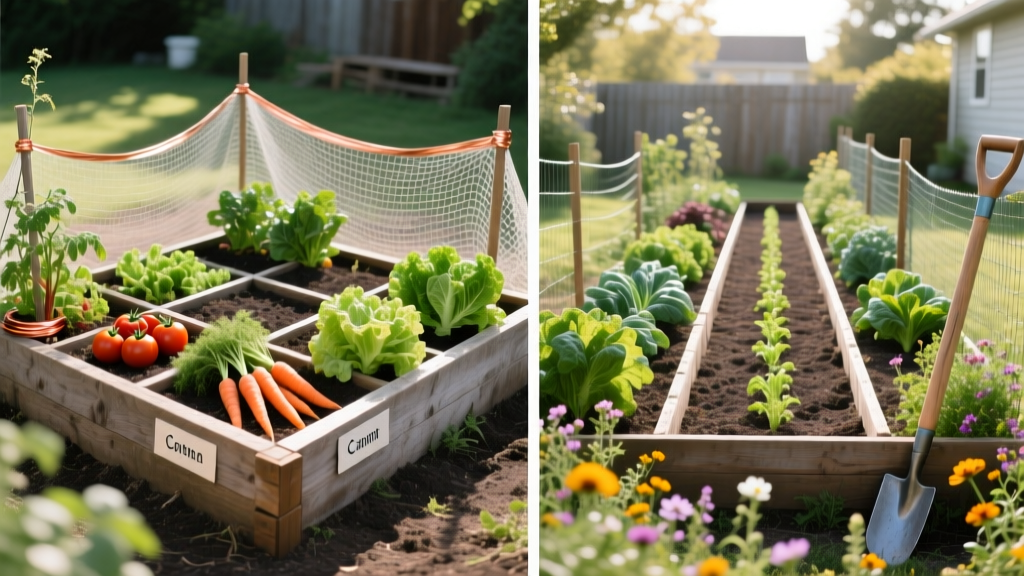
Square Foot vs Row Gardening: Wildlife Defense 2026
Mike RodriguezPublished
The 2026 Garden Battlefield: Wildlife vs. Your Harvest
As we navigate the 2026 growing season, suburban sprawl and shifting ecological patterns have pushed wildlife deeper into residential zones. For home gardeners, the debate between square foot gardening (SFG) and traditional row planting is no longer just about maximizing yield or minimizing weeding; it is fundamentally about defense. Deer, rabbits, groundhogs, and foraging birds view your carefully tended vegetables as an all-you-can-eat buffet. When designing your garden layout this year, understanding how wildlife interacts with different spatial arrangements is critical to protecting your investment. According to the USDA APHIS Wildlife Damage Management program, proactive exclusion and strategic garden design remain the most effective methods for mitigating crop loss, far outperforming reactive chemical repellents.
Understanding the Layouts: Square Foot vs. Traditional Rows
Before analyzing the wildlife implications, we must define the two primary layouts. Traditional row planting involves tilling long, linear trenches—often 20 to 50 feet long—spaced widely apart to accommodate walking paths and tractor or tiller access. This method mimics commercial agriculture. Conversely, the Square Foot Gardening Foundation promotes a highly concentrated approach: utilizing 4x4-foot raised beds divided into a 16-square grid, filled with a specific soil mix, and elevated off the ground. In 2026, with the rising costs of water and soil amendments, SFG has seen a massive resurgence, but how do these layouts hold up against a determined groundhog or a herd of suburban deer?
Overhead Threats: Birds, Squirrels, and Netting Economics
Birds and tree squirrels are notorious for plucking newly sprouted seedlings and stealing ripening berries. To stop them, physical exclusion via bird netting is the gold standard. Here, the square foot method holds a distinct advantage. Covering a 4x4-foot raised bed requires only a single, manageable piece of netting and a lightweight, snap-together PVC hoop frame. In 2026, pre-fabricated 4x4 hoop house kits cost roughly $45 to $65, allowing you to secure a bed in under ten minutes.
Traditional rows, however, present a logistical nightmare for overhead exclusion. Covering a 30-foot row of bush beans requires heavy-duty conduit, multiple overlapping panels of netting, and extensive staking to prevent wind damage. The cost of materials for row netting can easily exceed $250 per row, and the sheer surface area acts as a sail during spring storms, often collapsing onto the crops and trapping wildlife inside. For high-value crops like blueberries or sweet corn, SFG's compact footprint makes total overhead enclosure both financially and physically feasible for the average homeowner.
Terrestrial Intruders: Rabbits and Groundhogs
Rabbits will cleanly decapitate your pepper plants, while groundhogs will devour entire rows of brassicas in a single night. Excluding burrowing and hopping mammals requires a physical barrier that extends both upward and downward. Experts at Cornell University Wildlife Damage Management emphasize that a fence is only as good as its underground apron. To stop groundhogs, you must bury 1/2-inch galvanized hardware cloth at least 12 inches deep, bending the bottom 6 inches outward in an 'L' shape to thwart digging.
When applying this to traditional rows, the perimeter you must dig and trench is massive. A 20x40-foot row garden requires 120 linear feet of deep trenching and hardware cloth installation—a backbreaking weekend project that costs upwards of $300 in materials alone. In contrast, a cluster of four 4x4 raised beds arranged in a block creates a centralized garden space with a much smaller total perimeter. Furthermore, because SFG utilizes raised beds, you can easily staple hardware cloth directly to the bottom and sides of the wooden bed frame before filling it with soil, creating an impenetrable floor that completely eliminates the burrowing threat without digging a single trench.
The Deer Dilemma: Fencing and Perimeter Defense
Deer are the ultimate garden predators. They can jump 8 feet high and will browse on almost any tender foliage. Fencing is the only reliable deterrent, but the geometry of your garden dictates the cost. Traditional row gardens require expansive, sprawling fences. An 8-foot-tall woven wire or polypropylene deer fence enclosing a traditional 1,000-square-foot row garden requires a massive investment in pressure-treated posts, tension wires, and netting, easily pushing the 2026 installation cost past $1,500.
Square foot gardens, by nature, are modular and compact. By grouping your 4x4 beds tightly together with narrow 2-foot walking paths between them, you can enclose the entire growing area in a much smaller, highly fortified compound. Many SFG practitioners in 2026 are utilizing 'hoop house deer cages'—heavy-duty welded wire panels zip-tied to PVC arches over each individual bed. This decentralized defense means that if one enclosure is breached, the rest of your garden remains protected, whereas a single fallen tree branch compromising a traditional row garden fence exposes the entire crop.
Automated Deterrents and Line of Sight
Motion-activated sprinklers, such as the industry-leading Orbit Yard Enforcer, remain a top-tier psychological deterrent for nocturnal foragers like raccoons and deer. However, their effectiveness relies entirely on an unobstructed infrared line of sight. In a traditional row garden, tall crops like indeterminate tomatoes, sweet corn, and trellised pole beans quickly create blind spots. A deer can easily walk down a row, shielded by the cornstalks, completely bypassing the sprinkler sensor.
Square foot gardening mitigates this issue through strict spatial management and companion planting. Because the beds are only 4 feet wide, you can mount motion sensors on central posts that overlook the entire grid without crop interference. Additionally, SFG encourages the interplanting of low-growing deterrents like pungent alliums and French marigolds around the perimeter of the grid, masking the scent of your primary crops and confusing the olfactory senses of foraging mammals.
2026 Wildlife Defense Comparison Chart
| Wildlife Defense Metric | Square Foot Gardening (4x4 Beds) | Traditional Row Planting |
|---|---|---|
| Bird Netting Installation | Easy; cheap pre-made 4x4 hoop kits ($50 avg) | Difficult; requires custom conduit framing ($200+) |
| Burrowing Mammal Exclusion | Excellent; hardware cloth stapled to bed floor | Poor; requires deep perimeter trenching |
| Deer Fencing Economics | Highly cost-effective; smaller centralized perimeter | Expensive; sprawling fence lines and high wind-load |
| Motion Sprinkler Efficacy | High; clear line of sight over compact beds | Low; tall row crops create sensor blind spots |
| Companion Scent Masking | Integrated into the 1x1 grid system seamlessly | Often relegated to distant border rows |
Companion Planting as a Biological Deterrent
While physical barriers are paramount, biological deterrents play a supporting role. Traditional row planting often segregates crops by type—all the brassicas in one row, all the nightshades in another. This monoculture approach makes it incredibly easy for pests and wildlife to locate their favorite foods. The square foot method inherently promotes polyculture. By placing a square of highly aromatic garlic or onions directly adjacent to a square of vulnerable lettuce, you create a localized scent barrier that deters rabbits and deer, who rely heavily on their sense of smell to locate tender shoots.
Final Verdict for the 2026 Season
When evaluating garden layouts strictly through the lens of wildlife and yard animal management, the square foot gardening method emerges as the undisputed champion for 2026. Its compact, modular nature drastically reduces the financial and physical burden of installing exclusion netting, buried hardware cloth, and deer fencing. While traditional row planting may still hold value for those looking to grow massive quantities of field corn or dry beans for livestock, the modern home gardener facing intense suburban wildlife pressure will find that the raised, gridded approach of SFG offers superior protection, easier maintenance, and a significantly higher rate of harvest survival. Plan your defenses early, invest in quality physical barriers, and let the geometry of your garden do the heavy lifting this season.
