Pest Control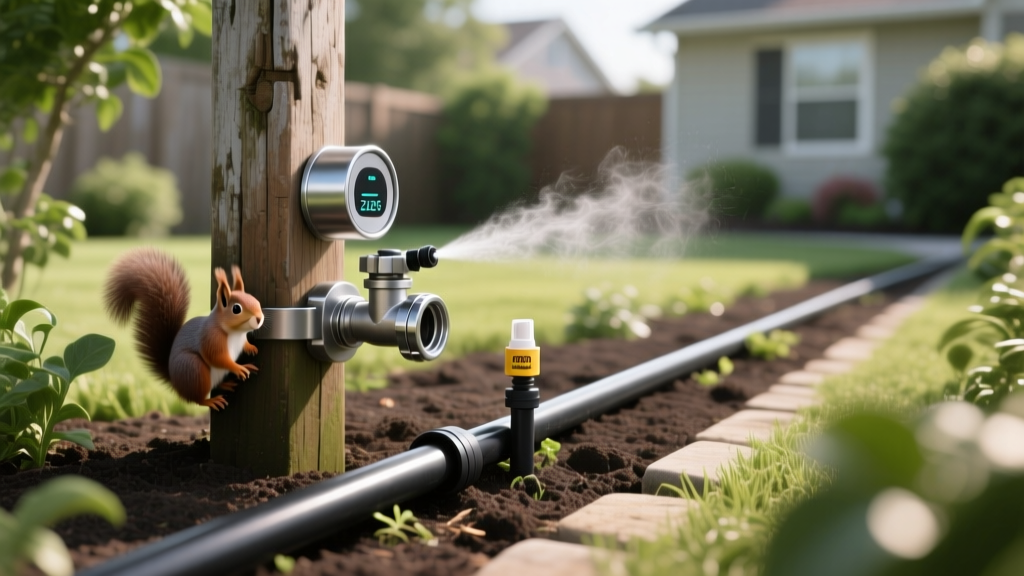
Stop Squirrels Chewing Irrigation: Baffles & Capsaicin 2026
Emily WatsonPublished
The Hidden Threat: Squirrels and Your Irrigation System in 2026
As smart irrigation controllers and high-efficiency drip systems become the standard in 2026, homeowners are increasingly frustrated by a low-tech problem: squirrel damage. Ground squirrels and tree squirrels are notorious for gnawing on polyethylene drip lines, PVC sprinkler risers, and even the low-voltage wiring of smart irrigation valves. A single punctured drip line can drain hundreds of gallons of water, ruining your landscape's water efficiency and spiking your utility bills.
While motion-activated sprinklers are a common deterrent, they do not protect the physical infrastructure of your irrigation system. To truly safeguard your sprinkler and drip networks, a targeted approach using physical pole baffles and capsaicin-based repellents is the most effective integrated pest management (IPM) strategy available this year.
Why Squirrels Target Sprinkler and Drip Irrigation Lines
Squirrels possess open-rooted incisors that grow continuously throughout their lives. To keep their teeth filed down, they must chew on hard and semi-hard materials. The flexible polyethylene tubing used in modern drip irrigation systems provides the perfect resistance. Furthermore, during the hot, dry spells of late summer, squirrels often chew through sprinkler lines and emitter heads simply to access the pressurized water inside.
According to the University of California Integrated Pest Management program, tree squirrels frequently damage plastic irrigation lines, garden hoses, and sprinkler heads, causing significant water loss and landscape damage. When squirrels establish nesting territories near your irrigation valve manifolds, the chewing becomes a persistent, daily issue that threatens your entire watering schedule.
Step 1: Installing Pole Baffles for Irrigation Valves and Hubs
Your irrigation valve manifold and backflow preventer are the brains and heart of your watering system. Squirrels often dig around valve boxes to bury nuts or seek shelter, which can expose and damage the low-voltage wiring connecting your smart controller to the valves. If your manifold is mounted on a post, or if your backflow preventer is situated near a fence line or tree trunk, installing a baffle is critical.
Choosing the Right Baffle Design
For 2026, the most effective baffles for protecting elevated irrigation hubs are the stovepipe baffle and the cone baffle.
- Stovepipe Baffles: These are cylindrical tubes, typically 18 to 24 inches long and 6 to 8 inches in diameter, made of galvanized steel or heavy-duty PVC. They are mounted vertically on the post holding your irrigation manifold. Because the surface is smooth and the diameter is too wide for a squirrel to grip, they simply slide off if they attempt to climb.
- Cone Baffles: Shaped like an inverted funnel, these are mounted horizontally on poles or hung from above. An 18-inch-wide cone mounted at least 4 feet off the ground prevents squirrels from leaping onto your backflow preventer or valve manifold from the ground or nearby shrubs.
Installation Measurements: Mount the baffle at least 4 feet above the ground and ensure there is a 5-foot clearance from any overhanging branches or fences. Squirrels can leap up to 8 feet horizontally, so positioning your irrigation hub away from jump-off points is just as important as the baffle itself.
Step 2: Applying Capsaicin Spray to Drip Lines and Sprinkler Heads
While baffles protect the central hubs, you cannot install a baffle over hundreds of feet of drip irrigation tubing spread across your garden beds. This is where capsaicin spray becomes your primary line of defense.
Capsaicin is the active chemical compound that gives chili peppers their heat. When applied to irrigation lines, it acts as a powerful taste and olfactory repellent. The Environmental Protection Agency (EPA) classifies capsaicin as a biochemical biopesticide, noting its effectiveness as a non-toxic animal repellent that leaves no harmful environmental residue in your soil or water supply.
Selecting a Capsaicin Formulation for Irrigation
Not all capsaicin sprays are created equal, especially when they will be exposed to the constant moisture of an irrigation system.
- Liquid Concentrates: These are mixed with water and sprayed directly onto poly tubing and PVC risers. They are easy to apply but require frequent reapplication, especially if your sprinklers have high overspray that washes the treatment off the drip lines.
- Wax-Based Capsaicin Blocks and Pastes: For 2026, wax-based formulations are the gold standard for irrigation systems. You can rub these pastes directly onto sprinkler emitter heads, drip line connectors, and the bite-prone joints of your poly tubing. The wax resists washing off during rain or heavy irrigation cycles, providing up to 60 days of protection.
Application Technique: Wear heavy nitrile gloves and safety goggles. Apply the capsaicin treatment to the first 12 inches of any exposed drip line emerging from the soil, as well as all emitter heads and micro-sprinklers. Do not spray capsaicin directly into the nozzle of a sprinkler head, as it can clog the filter screen and disrupt the spray pattern.
Comparison Table: Baffle Types and Capsaicin Formulations for 2026
| Deterrent Type | Target Irrigation Area | Durability & Lifespan | Estimated Cost (2026) |
|---|---|---|---|
| Stovepipe Baffle | Valve manifold posts, backflow preventer stands | Permanent (Galvanized Steel) | $25 - $45 per unit |
| Cone Baffle | Hanging irrigation hubs, fence-mounted timers | Permanent (UV-Treated PVC) | $15 - $30 per unit |
| Liquid Capsaicin Spray | Long runs of poly drip tubing, PVC risers | 14-21 days (Washes off easily) | $20 - $35 per gallon |
| Wax Capsaicin Paste | Emitter heads, micro-sprinklers, tubing joints | 45-60 days (Water-resistant) | $12 - $18 per 8oz block |
Maintenance and Reapplication Schedule
A common mistake homeowners make is applying a repellent in the spring and forgetting about it until a drip line is severed in August. To maintain a pest-free irrigation system, you must align your pest control maintenance with your irrigation seasonal startup and winterization.
- Spring Startup (March/April): When you flush your irrigation lines and test your zones, inspect all PVC risers and poly tubing for teeth marks. Apply a fresh coat of wax-based capsaicin to all emitters and joints. Ensure pole baffles on your valve manifolds are secure and free of debris or spider webs that might give squirrels a foothold.
- Mid-Summer Peak (July/August): Squirrel activity and thirst peak during late summer. If you are using liquid capsaicin, reapply every 14 to 21 days, or immediately after a heavy rainstorm. Check the soil around your valve boxes; if you see digging, consider placing a layer of heavy gravel or hardware cloth beneath the mulch around the manifold.
- Fall Winterization (October/November): When blowing out your sprinkler lines with compressed air, take the opportunity to wipe down the tubing. If you use wax-based capsaicin, you may need to use a mild solvent to remove the old wax before winter to prevent it from trapping dirt and debris, reapplying a fresh layer when you restart the system the following spring.
Integrating Physical Deterrents with Smart Irrigation
Modern smart irrigation controllers, like those utilizing weather-based evapotranspiration (ET) data, can actually assist in your pest management strategy. Overwatering creates soggy soil that attracts insects, which in turn attract foraging squirrels. By ensuring your smart controller is accurately calibrated for your specific soil type and plant material, you maintain optimal soil moisture levels that are less attractive to digging pests.
Additionally, some advanced flow sensors integrated into 2026 irrigation systems can detect the exact minute a drip line is severed by a squirrel, automatically shutting off the zone and sending an alert to your smartphone. While this does not prevent the initial bite, it saves thousands of gallons of water and prevents landscape erosion while you repair the line and reapply your capsaicin deterrent.
For more comprehensive strategies on managing wildlife interactions in your landscape, the Penn State Extension provides excellent guidelines on selecting and rotating wildlife repellents to prevent animals from becoming habituated to a single scent or taste over the course of the season.
Conclusion
Protecting your irrigation infrastructure requires a multi-layered approach. By utilizing physical baffles to secure your critical valve manifolds and backflow preventers, and applying targeted capsaicin formulations to your vulnerable drip lines and emitter heads, you can effectively eliminate squirrel damage. Implementing this IPM strategy in 2026 will ensure your smart irrigation system operates at peak efficiency, saving water, money, and the health of your landscape.