Pest Control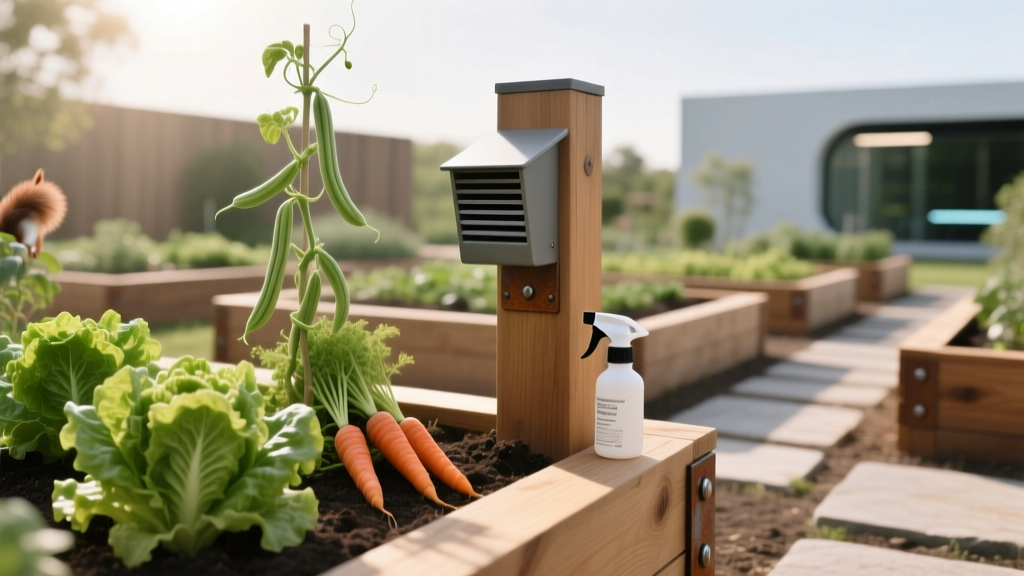
Best Squirrel Deterrents for Raised Beds 2026: Baffles & Sprays
Emily WatsonPublished
The Unique Squirrel Threat to Raised Bed Gardens
Raised bed vegetable gardening has exploded in popularity, and as we navigate the 2026 growing season, gardeners are facing a familiar but frustrating adversary: the Eastern Gray Squirrel. While raised beds offer excellent drainage, ergonomic benefits, and superior soil control, their elevated nature and loose, amended soil make them prime targets for foraging squirrels. These agile rodents view your carefully cultivated heirloom tomatoes, crisp bell peppers, and tender cucumbers as an all-you-can-eat buffet. To protect your harvest without resorting to harmful traps or toxic chemicals, modern Integrated Pest Management (IPM) relies on a dual-layered defense system. By combining physical barriers—specifically squirrel baffles on structural poles—with organic capsaicin sprays, you can create an impenetrable, eco-friendly fortress around your raised beds.
Why Squirrels Target Raised Beds Specifically
Unlike traditional in-ground rows, raised beds are essentially giant, accessible planter boxes filled with premium, fluffy compost and loam. Squirrels are natural diggers, and the loose soil in a raised bed is incredibly inviting for caching nuts or unearthing newly planted seeds. Furthermore, the structural elements we use to support our crops—such as tall wooden trellis poles, metal cattle panels, and PVC hoop house frames—serve as perfect arboreal highways. Squirrels will climb a nearby fence, jump onto a vertical tomato trellis pole, and bypass any ground-level deterrents you have set up. According to Penn State Extension, wildlife damage in gardens is best managed by understanding the animal's behavior and exploiting its physical limitations. Squirrels cannot climb upside down, and they are highly sensitive to certain chemical compounds, which forms the basis of our 2026 IPM strategy.
Strategy 1: Deploying Squirrel Baffles on Trellis and Hoop Poles
A baffle is a physical obstruction, typically a smooth dome or a long cylinder, designed to prevent climbing animals from ascending a pole. While traditionally used on bird feeders, baffles are a secret weapon for raised bed gardeners in 2026. If your raised bed utilizes vertical poles for netting, bird deterrents, or heavy-duty trellising, squirrels will use them to access the bed.
Types of Baffles for Garden Structures
- Polycarbonate Dome Baffles: These clear, 15-to-18-inch domes are mounted above the bed on central poles or tall hoop house supports. If a squirrel attempts to drop from a nearby tree branch or climb up the central axis, the slippery dome deflects them away from the crops. In 2026, UV-treated polycarbonate models cost between $25 and $35 and resist yellowing and cracking.
- Stovepipe Cylinder Baffles: Made of galvanized steel, these 24-inch long cylinders are wrapped around the base of your trellis or hoop house poles. Because the metal is smooth and the cylinder is too wide for a squirrel to hug, they simply slide down when they try to climb. These are ideal for the corner posts of rectangular cedar raised beds.
Critical Installation Rules
For baffles to work, they must be installed at least 4 feet off the ground, and the pole must be placed at least 8 feet away from any overhanging branches or fences. Squirrels can jump horizontally up to 10 feet, so spatial awareness and pruning nearby tree limbs are critical steps in your physical defense strategy.
Strategy 2: Capsaicin Spray as an Organic Chemical Barrier
While baffles handle the physical highways, capsaicin spray guards the plants and soil themselves. Capsaicin is the active chemical compound that gives hot peppers their fiery kick. Mammals, including squirrels, possess specific trigeminal nerve receptors that register capsaicin as a severe burning sensation. Birds and beneficial insects, however, lack these receptors, meaning capsaicin is a highly targeted, organic repellent that won't disrupt your local pollinator population. The Environmental Protection Agency (EPA) recognizes capsaicin-based repellents as a safe, minimum-risk pesticide when used according to label directions.
Commercial Formulations vs. DIY Blends
In 2026, commercial hot pepper waxes and sprays are formulated with natural sticking agents (like pine resin or plant-based waxes) that withstand rain and UV degradation far better than homemade blends. A 32-ounce ready-to-spray bottle of commercial capsaicin repellent typically costs between $18 and $26. While you can make a DIY spray using blended habanero peppers, garlic, and a drop of dish soap, commercial versions offer a standardized Scoville heat unit (SHU) concentration, ensuring consistent results without the risk of clogging your sprayer nozzle with organic pulp.
Application Techniques for Raised Beds
Spray the leaves, stems, and the soil perimeter of your raised bed. The goal is not to coat the edible fruit heavily (unless you enjoy spicy tomatoes), but to create a sensory barrier on the foliage and the bed's wooden or stone edges. Squirrels often taste the soil and the rims of raised beds before digging; a hot perimeter stops them in their tracks.
2026 Deterrent Comparison Chart for Raised Beds
| Deterrent Method | Best Used For | Estimated Cost (2026) | Longevity | Effectiveness |
|---|---|---|---|---|
| Pole Cylinder Baffles | Trellis posts, hoop house frames | $20 - $30 each | 5+ Years | High (Physical) |
| Dome Baffles | Central poles, hanging baskets | $25 - $40 each | 3-5 Years | High (Physical) |
| Capsaicin Spray | Foliage, soil surface, bed rims | $18 - $26 per bottle | 1-2 Weeks | High (Chemical) |
| Motion-Activated Sprinklers | Perimeter defense, large beds | $60 - $90 | 1-2 Seasons | Medium-High |
| Predator Urine/Decoys | Psychological deterrence | $15 - $25 | Days | Low (Habituation) |
Step-by-Step Integrated Pest Management (IPM) Plan
To maximize your harvest this season, implement this dual-defense IPM plan tailored specifically for raised bed configurations.
Step 1: Audit and Prune
Walk around your raised beds and identify all vertical structures. Trim back any tree branches that hang within 10 feet of your garden. Squirrels are aerial acrobats; if they can drop directly into your tomatoes, ground and pole defenses won't matter.
Step 2: Install Cylinder Baffles on Vertical Poles
Attach 24-inch galvanized stovepipe baffles to the base of your tomato cages, bean trellises, and netting poles. Ensure the bottom of the baffle is at least 4 feet from the soil line. If your raised bed is built against a fence, ensure the fence line is capped or angled outward to prevent climbing access.
Step 3: Apply the Capsaicin Perimeter
Mix or purchase your capsaicin spray. Donning gloves and eye protection, spray the outer rim of the raised bed (the wood, stone, or metal edging) and the top two inches of the soil perimeter. Lightly mist the lower leaves of your most vulnerable crops, such as eggplants and young peppers.
Step 4: Maintain and Reapply
Capsaicin degrades under intense summer UV light and washes away during heavy rainstorms. Plan to reapply the spray every 10 to 14 days, or immediately after a significant rainfall. Baffles require zero maintenance once installed, making this a highly efficient routine.
Safety, Harvesting, and Maintenance
When working with concentrated capsaicin sprays, always wear nitrile gloves and protective eyewear. The compound can cause severe irritation if transferred from your hands to your eyes or face. When it comes time to harvest your vegetables, simply wash the produce thoroughly with cool water and a mild, food-safe vegetable wash. The capsaicin residue is entirely water-soluble and will rinse away, leaving your produce safe and flavor-neutral. As noted by The Humane Society of the United States, utilizing sensory repellents and physical barriers is the most humane and ecologically sound method for managing garden wildlife conflicts.
Conclusion
Defending your raised bed vegetable garden from squirrels in 2026 doesn't require expensive netting enclosures or harmful chemicals. By understanding how squirrels interact with your garden's architecture, you can deploy pole baffles to shut down their physical highways. Pairing this with a rigorous capsaicin spray routine creates a multi-sensory deterrent that keeps rodents out while leaving beneficial insects and birds completely unharmed. Implement this IPM strategy early in the planting season, and you will be rewarded with a pristine, bountiful harvest.