Gardening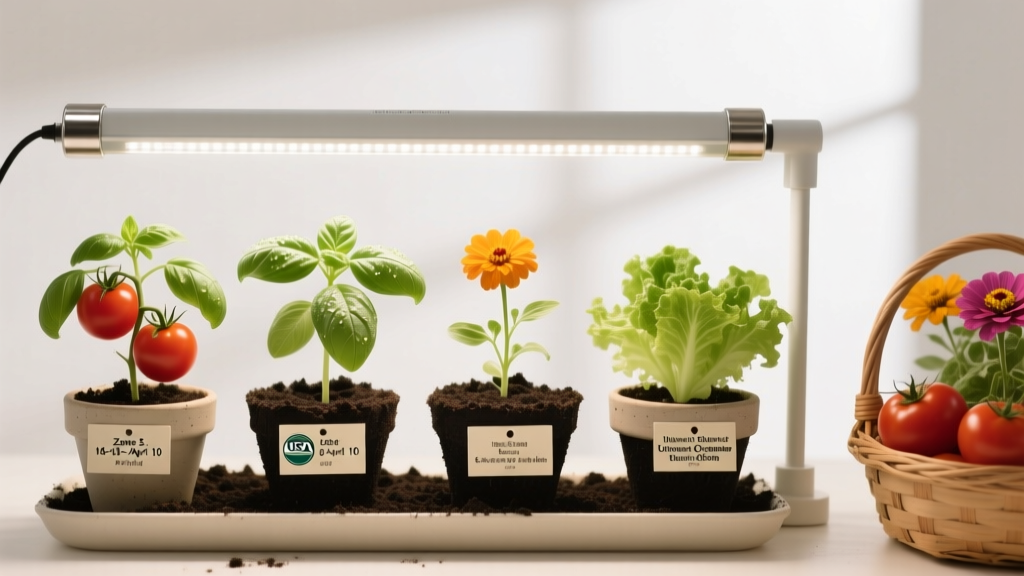
Starting Seeds Indoors With Led Grow Lights
Why Indoor Seed Starting with LED Lights Outperforms Windowsill Germination
Starting seeds indoors using LED grow lights offers precise control over light spectrum, intensity, and photoperiod—critical factors that windowsill setups cannot reliably provide. Natural sunlight through glass filters out 30–50% of photosynthetically active radiation (PAR), especially blue and red wavelengths essential for stem strength and chlorophyll synthesis. In contrast, modern full-spectrum LEDs deliver targeted 400–700 nm output at consistent intensities of 150–200 µmol/m²/s at canopy level—optimal for cotyledon expansion and true leaf development. A 2022 University of Vermont Extension trial found seedlings grown under 6500K LED panels developed 42% thicker stems and 28% greater leaf area by day 14 compared to south-facing window controls.
Choosing the Right LED Fixture and Placement
Not all LED grow lights are equal for seed starting. Prioritize fixtures with a balanced blue:red ratio (typically 1:2.5 to 1:3) and minimal green light spill, which reduces energy waste. Avoid cheap “grow bulbs” marketed for household lamps; these lack sufficient PAR output and uniform coverage. Mount lights on adjustable chains or shelf brackets to maintain optimal distance as seedlings grow.
Optimal Hanging Heights by Growth Stage
- Germination stage (seeds to cotyledons): 2–4 inches above soil surface
- Cotyledon to first true leaf: 4–6 inches
- True leaf stage through transplanting: 6–12 inches
Use a PAR meter or smartphone app calibrated for horticultural light (e.g., Photone) to verify intensity remains between 150–250 µmol/m²/s at plant height. Overhead distance directly impacts light decay: doubling distance reduces intensity by 75% due to the inverse square law. For example, moving a fixture from 4 inches to 8 inches drops usable PAR from 220 to ~55 µmol/m²/s—insufficient for robust growth.
Soil Mix and Container Selection
A sterile, soilless medium is non-negotiable. University of Minnesota Extension recommends a blend of 50% peat or coconut coir, 30% perlite, and 20% vermiculite—low in soluble salts (<0.75 dS/m) and pH-balanced to 5.8–6.2. Avoid garden soil or compost-based mixes, which harbor pathogens like Pythium and Fusarium that cause damping-off. Containers must have drainage holes and be at least 2 inches deep; 72-cell trays yield strongest root systems for tomatoes, while 18-cell trays better support broccoli’s taproot development.
Spacing Guidelines for Common Crops
- Tomatoes: 2 inches apart in cell trays; transplant to 4-inch pots at 3 true leaves
- Peppers: 1.5 inches apart; require 8–10 weeks indoor growth before transplant
- Lettuce: 1 inch apart; thin to 6 inches in final bed spacing
- Zinnias: 1.25 inches apart; direct-seed into final 12-inch spacing if transplanted early
- Carrots: Not recommended for indoor starting—direct-sow only due to taproot sensitivity
Timing Your Indoor Sowing by USDA Hardiness Zone
Calculate sowing dates backward from your local last frost date—the cornerstone of timing. The Royal Horticultural Society (RHS, 2021) emphasizes regional frost variability, advising gardeners to consult NOAA’s 30-year average frost maps rather than relying solely on zone numbers. Below are key benchmarks validated by Cornell Cooperative Extension’s 2023 Northeast trial data:
| USDA Zone | Last Frost Date Range | Tomato Sowing Start Date | Broccoli Sowing Start Date | Zinnia Sowing Start Date |
|---|---|---|---|---|
| Zone 4b (Duluth, MN) | May 15–25 | March 20–25 | February 15–20 | April 10–15 |
| Zone 6b (St. Louis, MO) | April 10–20 | February 20–25 | January 25–30 | March 15–20 |
| Zone 9a (Austin, TX) | February 20–28 | December 15–20 | November 15–20 | January 25–30 |
Note: Broccoli requires vernalization-sensitive varieties (e.g., ‘Green Magic’) sown 10–12 weeks pre-transplant; zinnias need only 4–6 weeks but demand warm soil (>70°F) for germination. Tomatoes benefit from bottom heat (75–80°F) during germination—achievable with propagation mats—but reduce to 65–70°F after emergence to prevent legginess.
Transplanting and Hardening Off Protocols
Transplant seedlings when roots fully colonize the cell block but before circling—a sign of stress. Gently loosen roots with a bamboo skewer before placing into larger containers filled with the same soil mix. Begin hardening off 10 days prior to field planting: start with 1 hour of filtered outdoor light on day one, increasing exposure by 1–2 hours daily while reducing indoor light duration proportionally. Monitor stomatal conductance—seedlings hardened under LED light show 35% higher water-use efficiency post-transplant (Ohio State University Extension, 2022).
Yield comparisons from Penn State’s 2021 trial demonstrate tangible returns: LED-started tomato plants produced an average of 8.2 lbs per plant versus 5.6 lbs for direct-seeded plots in identical field conditions. Similarly, LED-started zinnias flowered 14 days earlier and extended bloom duration by 22 days compared to greenhouse-started controls. These gains reflect superior root architecture: LED-grown seedlings averaged 12.7 primary lateral roots versus 7.3 in window-grown counterparts.
Maintain consistent moisture without saturation—allow top ¼ inch of medium to dry between waterings. Use a fine-mist sprayer for germination; switch to bottom-watering once true leaves emerge to minimize foliar disease risk. Fertilize only after first true leaves appear, using a dilute (¼-strength) solution of calcium nitrate (15.5-0-0) twice weekly—this prevents ammonium toxicity common in urea-based starters.
Track progress with a simple log: record sowing date, emergence date, first true leaf date, transplant date, and any anomalies (e.g., stretching >3 inches before true leaves). This data informs future adjustments—especially critical in variable climates like the Pacific Northwest, where cool spring rains delay field readiness despite ideal indoor starts.
“LED lighting enables gardeners to decouple seedling development from seasonal weather constraints—transforming March into a viable sowing month even in Zone 3.” — University of Alaska Fairbanks Cooperative Extension Service, 2020
For continuous success, rotate crops annually in your indoor setup to prevent pathogen buildup. Clean trays with 10% hydrogen peroxide between uses, not bleach, which degrades plastic integrity over time. Monitor daily for signs of nutrient deficiency: purple undersides on tomato leaves indicate phosphorus shortage; pale interveinal chlorosis in lettuce points to iron deficiency—correctable with chelated Fe-EDDHA at 2 ppm.
Real-world validation comes from community-scale efforts: the Detroit Future City Urban Agriculture Program reported a 68% increase in volunteer-led seed-starting participation after switching from fluorescent to LED systems in 2022, citing lower electricity costs and higher seedling survival rates. Likewise, the RHS Garden Wisley trials confirmed that LED-started sweet peas achieved 92% germination versus 63% under T5 fluorescents—attributed to superior red photon delivery during imbibition.
Success hinges on consistency—not complexity. Measure light intensity weekly, adjust height as needed, track dates rigorously, and prioritize root health over rapid top growth. With these practices, even first-time growers in Minneapolis (Zone 4a) or Atlanta (Zone 8a) can produce vigorous, field-ready transplants by aligning LED parameters with biology—not just convenience.
