Gardening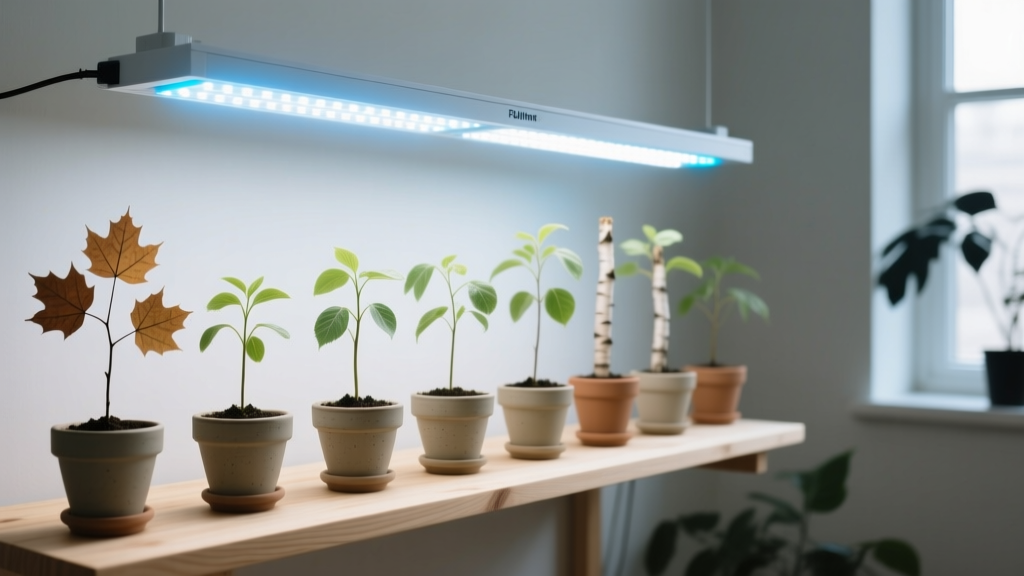
2026 LED Grow Light Schedule For Starting Tree Seeds Indoors
Anna KowalskiPublished
Why Tree Seeds Require a Specialized LED Approach in 2026
Starting tree seeds indoors is a deeply rewarding endeavor that allows home gardeners and reforestation enthusiasts to cultivate heritage fruit trees, native shade species, and rare ornamentals from scratch. However, unlike fast-growing annual vegetables, tree seedlings are building complex woody tissues, deep taproots, and long-term structural integrity. As of 2026, the latest generation of tunable full-spectrum LED grow lights offers unprecedented control over this process, but only if you apply the correct light schedule and spectrum.
According to the University of Minnesota Extension, growing trees from seed requires careful attention to dormancy breaking (stratification) and subsequent environmental cues. Once a tree seed breaks dormancy and sprouts, the light it receives dictates whether it will become a leggy, weak sapling or a sturdy, lignified young tree. Modern 2026 LED fixtures allow us to mimic the exact solar conditions a seedling would experience on a forest floor or in an open orchard, drastically improving survival rates when it comes time to transplant outdoors.
Understanding PPFD and Light Spectrums for Woody Stems
Before setting your timer, it is crucial to understand Photosynthetic Photon Flux Density (PPFD) and how different light wavelengths affect tree physiology. Tree seedlings generally require a lower PPFD during their first few weeks compared to mature fruiting plants like tomatoes or peppers.
- Blue Light (400-500nm): Essential for tree seedlings. Blue wavelengths suppress excessive stem elongation, promoting compact, sturdy growth and encouraging the early development of lignin (the compound that makes wood hard).
- Red Light (600-700nm): Drives photosynthesis and root expansion. A balanced spectrum with a slight red bump helps the seedling establish the deep root system necessary for long-term drought tolerance.
- Far-Red Light (700-750nm): In 2026, many advanced horticultural LEDs include far-red diodes. While beneficial for flowering, too much far-red during the seedling stage can trigger 'shade avoidance syndrome,' causing your tree saplings to stretch unnaturally tall and weak.
For most tree species, aim for a PPFD of 200 to 400 µmol/m²/s at the canopy level during the early seedling stage. This is easily achieved by hanging a modern full-spectrum LED board 18 to 24 inches above the propagation trays.
The Ultimate Indoor LED Light Schedule for Tree Seedlings
Trees are not uniform; an understory tree like the Eastern Redbud has vastly different light requirements than a canopy-dominant species like the White Oak. However, a generalized three-phase LED schedule will successfully guide most tree seeds from germination to outdoor readiness.
Phase 1: Germination and Emergence (Weeks 1-3)
Many tree seeds require darkness to germinate, which is why they are sown at a depth equal to twice their diameter. During this phase, your LED lights should remain off until the first cotyledons (seed leaves) break the soil surface. Once you see green tissue emerging, introduce a gentle light schedule of 12 hours on, 12 hours off. Keep the PPFD low (around 150-200 µmol/m²/s) to avoid shocking the tender new growth. The Royal Horticultural Society emphasizes that maintaining consistent moisture and gentle, indirect light during emergence prevents damping-off disease, a fungal issue that thrives in warm, overly bright, and humid indoor environments.
Phase 2: True Leaf Development and Lignification (Weeks 4-10)
Once the seedling develops its first set of 'true leaves' (which look different from the initial round cotyledons), it is time to increase both the intensity and duration of the light. Switch your LED timer to 14 to 16 hours on, 8 to 10 hours off. This extended photoperiod mimics the long days of early summer, signaling the tree to maximize vegetative growth and root expansion. Increase the PPFD to 300-400 µmol/m²/s by lowering the light fixture to 12-18 inches above the canopy. The 8-hour dark period is non-negotiable; trees require darkness for cellular respiration and the transport of carbohydrates down to the root zone.
Phase 3: Hardening Off and Transplant Preparation (Weeks 11-14)
As your saplings approach their transplant date, they must be acclimated to the harsher realities of the outdoors, including fluctuating temperatures and intense, unfiltered sunlight. Begin reducing the indoor LED schedule to 12 hours on, 12 hours off to match natural outdoor day lengths. If your 2026 LED fixture features tunable spectrum capabilities, shift the dial slightly toward the blue end of the spectrum to further thicken the stems and harden the leaves before moving the trees to a cold frame or outdoor nursery bed.
Tree Species Light Schedule Chart
Use the following table as a quick-reference guide for some of the most popular tree species started indoors. Always verify the specific stratification requirements before placing seeds under lights.
| Tree Species | Stratification Need | Germination Time | Ideal LED Spectrum | Daily Light Schedule |
|---|---|---|---|---|
| Sugar Maple (Acer saccharum) | Cold (90 days) | 2-4 weeks | Balanced Full-Spectrum | 14 hours on / 10 hours off |
| Red Oak (Quercus rubra) | Cold (30-45 days) | 3-5 weeks | High Blue (Vegetative) | 16 hours on / 8 hours off |
| Apple (Malus domestica) | Cold (60-90 days) | 2-3 weeks | Full-Spectrum + Far-Red | 14 hours on / 10 hours off |
| Eastern Redbud (Cercis canadensis) | Hot water scarification + Cold | 3-6 weeks | Lower Intensity / Dappled | 12 hours on / 12 hours off |
| Ginkgo (Ginkgo biloba) | Cold (60 days) | 4-8 weeks | Balanced Full-Spectrum | 14 hours on / 10 hours off |
Step-by-Step Setup for Your Indoor Tree Nursery
To execute this schedule flawlessly, follow these practical setup steps tailored for modern indoor propagation:
- Prepare the Medium: Tree seeds are highly susceptible to rot. Use a sterile, well-draining mix of 50% coco coir, 30% perlite, and 20% fine pine bark. Avoid heavy, water-retentive potting soils.
- Sow at the Correct Depth: A general rule is to plant the seed at a depth twice its width. For acorns, this means laying them on their side and covering them with about an inch of medium.
- Utilize Smart Timers: In 2026, Wi-Fi-enabled smart plugs and integrated light controllers are standard. Program your 14/10 or 16/8 schedule to turn on at 6:00 AM and off at 8:00 PM or 10:00 PM. Consistency prevents circadian stress in the seedlings.
- Monitor Canopy Distance: Tree seedlings can grow in spurts. Check the distance between the top of the sapling and the LED diodes twice a week. Maintain a minimum of 12 inches to prevent light burn, which manifests as bleached, crispy leaf margins.
- Airflow is Critical: Place a small oscillating fan on a low setting near the seedling trays. The gentle mechanical stress (thigmomorphogenesis) signals the tree to grow a thicker, stronger trunk rather than stretching upward.
Troubleshooting Common Indoor Tree Seedling Issues
Even with a perfect LED schedule, indoor tree propagation comes with unique challenges. Here is how to identify and fix the most common problems:
- Leggy, Spindly Growth: Your light is either too far away, or the PPFD is too low. The seedling is stretching desperately for photons. Lower the fixture by 4 inches and ensure your timer is providing at least 14 hours of light.
- Curling or Crispy Leaf Edges: This is a sign of light burn or nutrient toxicity. Tree seedlings require very little fertilizer in their first two months; the cotyledons provide most of the initial energy. If you haven't fertilized, raise the LED panel 6 inches to reduce light intensity.
- Yellowing Cotyledons: This is often normal. Once the true leaves emerge and take over photosynthesis, the initial seed leaves will yellow and drop off. Do not pull them off; let them abscise naturally.
- Algae Growth on Soil Surface: This indicates overwatering and constant surface moisture. Allow the top half-inch of the growing medium to dry out between waterings, and consider bottom-watering your propagation trays to keep the surface dry.
Conclusion
Starting tree seeds indoors under a carefully managed LED grow light schedule bridges the gap between wild forest regeneration and controlled horticultural success. By respecting the unique physiological needs of woody plants—providing adequate blue light for lignification, enforcing strict dark cycles for root respiration, and adjusting PPFD as the sapling matures—you can cultivate incredibly resilient trees. Whether you are growing a heritage apple orchard from seed or propagating native oaks for local reforestation, mastering your 2026 indoor lighting environment is the first step toward a canopy that will last for generations.
