Lawn Care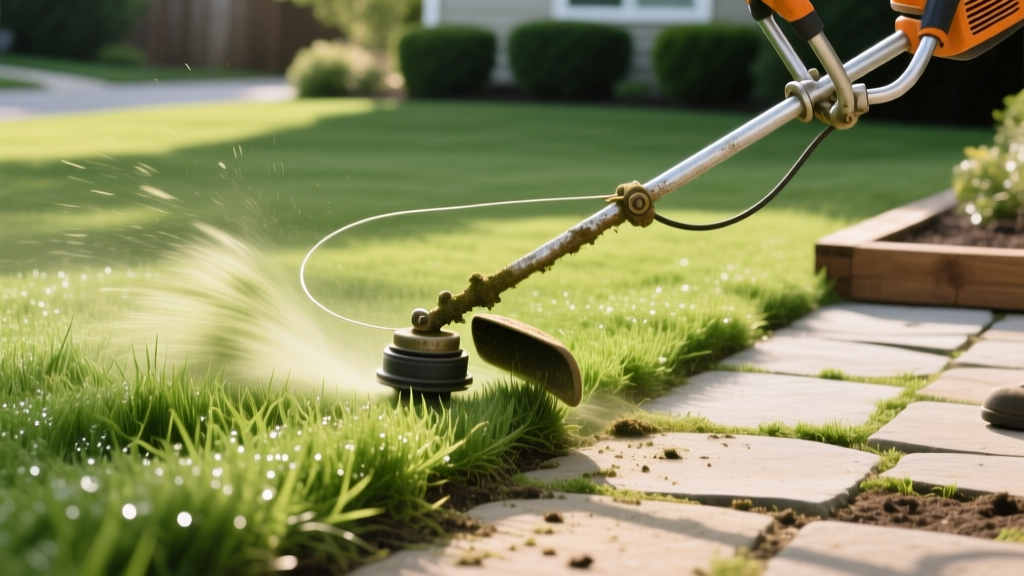
String Trimmer vs Edger 2026: Crisp Borders for Garden Photography
Sarah ChenPublished
The Lens Doesn't Lie: Why Crisp Borders Matter in 2026
Garden photography and landscape documentation have evolved dramatically. In 2026, with the widespread adoption of 60-megapixel mirrorless cameras, high-resolution drone sensors, and 8K time-lapse capabilities, the camera lens captures every single detail of your outdoor space. A blurred background might hide a patchy lawn, but a sharp, wide-angle landscape shot will ruthlessly expose ragged, overgrown, or poorly maintained lawn borders. For landscape photographers, horticulturists documenting seasonal changes, and homeowners obsessed with curb appeal, the transition zone between the turf and the garden bed is the most critical visual element in the frame.
This brings us to a pivotal debate in modern lawn maintenance: the string trimmer versus the dedicated landscape edger. While both tools remove overgrowth, they interact with the turfgrass blade in fundamentally different ways, resulting in vastly different visual outcomes on camera. Understanding the physics of how these tools cut grass—and how light interacts with those cuts during golden hour photography—is essential for producing stunning garden documentation.
The Visual Impact of Lawn Borders in Photography
In photographic composition, lawn borders serve as leading lines. They guide the viewer’s eye from the foreground into the midground, ultimately pointing toward your primary subject, whether that is a blooming hydrangea macro, a specimen Japanese maple, or an architectural hardscape feature. A crisp, 90-degree edge creates a sharp geometric line that contrasts beautifully with the organic, chaotic textures of garden beds and mulch.
Furthermore, the quality of the grass cut directly impacts color rendering in post-processing. When grass is sliced cleanly, the cellular structure of the blade remains intact, reflecting a vibrant, deep green that pops in Lightroom or Capture One. When grass is torn or bruised, the tips oxidize and turn brown within 24 to 48 hours. In a high-resolution photograph, this brown halo creates a visual 'fuzz' along the border, destroying the clean contrast required for professional-grade landscape imagery.
String Trimmers: The Versatile but Unpredictable Framing Tool
The string trimmer (often referred to by the brand name Weed Whacker) is the undisputed king of versatility. Modern 2026 models, such as the EGO Power+ 56V Multi-Head system or the Ryobi 40V Whisper Series, offer immense torque and near-silent operation, making them perfect for early morning photography sessions without disturbing the neighborhood or local wildlife.
However, using a string trimmer to edge a lawn requires the 'flip' technique—turning the tool 90 degrees so the spinning nylon line acts as a vertical blade. While this can create a decent border, it comes with significant photographic drawbacks:
- Inconsistent Depth and Wobble: Human hands naturally shake. A spinning nylon line flexes and wobbles, creating a micro-wavy edge. In a macro shot or a low-angle drone shot, this wobble is highly visible and ruins the illusion of a perfectly straight line.
- Tearing vs. Slicing: Nylon string blunts quickly. Instead of slicing the grass blade, it often shreds it. As noted by turfgrass experts at the University of Minnesota Extension, torn grass tips are highly susceptible to disease and moisture loss, leading to that unsightly brown fringe that looks terrible in high-contrast sunlight.
- Scalping Risks: It is incredibly easy to tilt a string trimmer too far and scalp the soil line. In photography, a scalped edge reveals bare, dry dirt, which creates a harsh, distracting highlight that pulls the eye away from the garden's focal points.
Dedicated Edgers: Sculpting Leading Lines for the Camera
If your primary goal is visual perfection and pristine documentation, the dedicated lawn edger is an indispensable tool. In 2026, commercial-grade battery edgers like the Milwaukee M18 FUEL Edger and the Toro 60V Max EdgeHog have largely eliminated the need for messy gas engines, providing consistent, high-torque power to drive a steel blade through compacted soil and thick rhizomes.
Dedicated edgers utilize a rigid metal blade and a physical guide wheel that rides along the hardscape or bed line. This mechanical stability guarantees a flawless, mathematically straight cut every single time.
- The 90-Degree Shadow Catcher: A dedicated edger cuts a perfect vertical wall of turf. During the 'golden hour' (shortly after sunrise or before sunset), the low-angle sunlight hits this vertical wall, creating a deep, rich shadow line. This shadow acts as a natural vignette and a powerful leading line in your photographs, adding three-dimensional depth to a two-dimensional image.
- Cellular Integrity: A sharp steel blade slices the grass cleanly. According to the Clemson University Home and Garden Information Center, clean cuts heal faster and retain their vibrant green color, ensuring your lawn borders look fresh and lush on camera for days after maintenance.
- Defined Hardscape Transitions: When documenting patios, driveways, or stone pathways, a steel edger cleans out the microscopic debris and soil from the cracks, creating a stark, satisfying contrast between the green turf and the gray stone that architectural photographers covet.
2026 Tool Comparison: Visual Output & Precision
To help you decide which tool belongs in your shed for the upcoming photography season, here is a breakdown of how the string trimmer and dedicated edger compare regarding visual output, precision, and 2026 market costs.
| Feature | String Trimmer (Edging Mode) | Dedicated Steel Edger |
|---|---|---|
| Cut Quality | Shredded/Torn (Brown tips in 48 hrs) | Clean Sliced (Stays green for 7+ days) |
| Line Straightness | Micro-wavy (Visible in macro/drone) | Laser-straight (Perfect leading lines) |
| Shadow Definition | Poor (Rounded, uneven edge) | Excellent (Crisp 90-degree shadow wall) |
| Best Camera Angle | High-angle, wide shots (hides flaws) | Low-angle, macro, and drone top-down |
| 2026 Avg. Cost (Premium) | $250 - $350 (Multi-head attachment) | $350 - $500 (Dedicated brushless unit) |
Time-Lapse Documentation and Seasonal Consistency
For gardeners and landscapers who create time-lapse videos of garden transformations throughout the 2026 growing season, consistency is paramount. If you use a string trimmer one week and an edger the next, the border's thickness, depth, and color will fluctuate wildly, causing a 'jitter' effect in the final time-lapse video. A dedicated edger with a depth-adjustment knob allows you to set the blade to exactly 2.5 inches below the soil line and lock it in. This guarantees that every frame of your weekly documentation matches the last, resulting in buttery-smooth, professional-grade time-lapse videos that clearly showcase the growth patterns of your adjacent perennials and shrubs without distracting border fluctuations.
The Photographer’s Lawn Border Checklist
Before you head out to shoot your garden at dawn, ensure your borders are camera-ready by following this specialized maintenance checklist:
- Edge 48 Hours Before Shooting: This allows any dislodged soil to dry and be blown away, and gives the grass blades time to stand back up, revealing the true depth of the cut.
- Use a Blower, Not a Rake: Rakes can bend the grass blades over the edge, ruining the crisp line. Use a high-MPH lithium-ion blower to clear debris from the trench, ensuring the contrast between turf and mulch is absolute.
- Hydrate the Soil Prior to Edging: If the soil is too dry, an edger blade will chunk and tear the earth, leaving jagged, ugly divots that show up prominently in top-down drone photography. Water the borders lightly the evening before edging for a smooth, butter-like slice.
- Sharpen or Replace Blades: Just as a photographer cleans their lenses, you must maintain your edger blade. A dull steel blade in 2026's high-torque electric edgers will still tear the turf roots. File the blade every 10 hours of use to maintain that mirror-like, photogenic cut.
Conclusion
While the string trimmer remains an essential tool for general weed control and trimming around obstacles, it simply cannot match the optical precision of a dedicated landscape edger when it comes to border maintenance. In 2026, where digital sensors capture reality with unforgiving clarity, the transition from the chaos of the garden bed to the order of the manicured lawn must be absolute. By investing in a dedicated steel edger and treating your lawn borders as vital photographic leading lines, you will elevate your garden documentation from simple snapshots to breathtaking landscape art. The lens never lies, but with the right tools, you can ensure it tells a beautiful, manicured story.