Home & Garden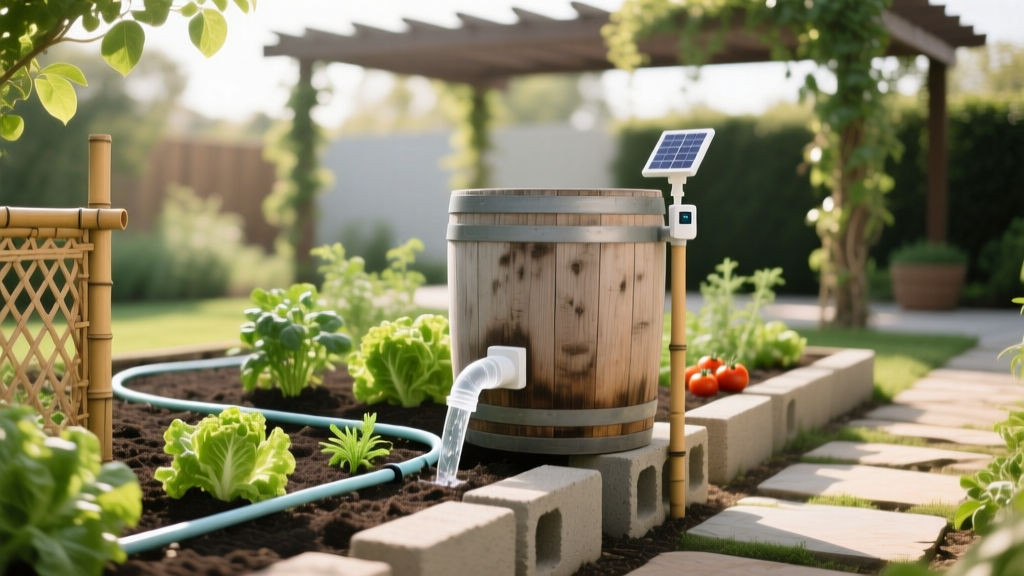
Sustainable Rainwater Harvesting for Garden Irrigation
Lisa ThompsonPublished
Bridging Sustainable Living and Garden Vitality
As homeowners increasingly seek to bridge the gap between indoor eco-conscious living and outdoor landscaping, rainwater harvesting has emerged as a cornerstone of sustainable garden design. Transitioning away from municipal water sources for your outdoor spaces not only reduces your carbon footprint but also nurtures a healthier, more resilient ecosystem in your backyard. According to the Environmental Protection Agency (EPA), outdoor water use accounts for nearly 30% of total household water consumption, with half of that water wasted due to evaporation, wind, or runoff from inefficient irrigation methods.
By capturing precipitation and utilizing gravity-fed drip irrigation, you can create a closed-loop watering system that aligns perfectly with eco-friendly and sustainable landscaping methods. This guide will walk you through the practical steps, material sourcing, and smart-home integrations required to build a highly efficient rainwater harvesting system tailored for your home garden.
The Garden-to-Table Advantage: Why Plants Prefer Rainwater
If you are cultivating a garden-to-table vegetable patch, the quality of your water directly impacts the health of your soil microbiome and the yield of your crops. Municipal water is heavily treated with chlorine, chloramines, and fluoride to ensure human safety, but these chemicals can inadvertently suppress beneficial soil bacteria and mycorrhizal fungi. The Texas A&M AgriLife Extension notes that rainwater is naturally soft, devoid of chlorine and dissolved salts, and typically carries a slightly acidic pH that is ideal for nutrient uptake in most vegetable crops. Furthermore, rainwater contains trace amounts of dissolved nitrogen from the atmosphere, providing a mild, natural fertilizer with every rainfall.
The Mathematics of Catchment: Sizing Your System
Before purchasing materials, you must calculate your roof's catchment potential to properly size your storage barrels. The standard formula for rainwater harvesting is:
Catchment Area (sq ft) × Rainfall (inches) × 0.623 = Gallons Harvested
For example, if you are diverting a single downspout that drains a 500-square-foot section of your roof, a modest 1-inch rainstorm will yield approximately 311 gallons of water. Since a standard food-grade rain barrel holds 50 gallons, a single storm could fill over six barrels. For most residential garden beds, a dual-barrel setup (100 gallons total) linked in series provides ample buffer capacity for dry spells between storms.
Sourcing Eco-Friendly and Sustainable Materials
True sustainability extends beyond water conservation; it includes the lifecycle of the materials you use. Avoid purchasing virgin plastic tanks or PVC piping. Instead, opt for upcycled and recycled materials:
- Storage Barrels: Source used, food-grade High-Density Polyethylene (HDPE #2) 50-gallon drums. These are often discarded by food processing plants (e.g., olive or pickle distributors) and can be purchased for a fraction of the cost of new retail rain barrels. Ensure they are thoroughly rinsed and were never used to store toxic chemicals.
- Drip Tubing: Purchase 1/2-inch drip irrigation tubing made from 100% post-consumer recycled polyethylene. Several eco-conscious brands now offer tubing that diverts plastic waste from landfills.
- Filtration: Use a stainless steel 150-mesh inline filter rather than disposable plastic screen cartridges to prevent debris and mosquito larvae from clogging your drip emitters.
Step-by-Step Installation Guide
Installing a gravity-fed system requires strategic elevation. Water pressure is generated by gravity, yielding approximately 0.433 PSI for every foot of elevation. Drip irrigation requires a minimum of 1 to 2 PSI to function correctly.
Step 1: Foundation and Elevation
Select a level, stable area near your downspout and close to your garden beds. Build a platform using upcycled concrete cinder blocks. Stack the blocks two high to elevate the base of the barrel 36 inches off the ground. This provides roughly 1.3 PSI of pressure at the spigot, which is sufficient for low-flow drip emitters. Place a piece of recycled composite decking or thick plywood on top of the blocks to create a flat, stable surface for the barrel.
Step 2: Downspout Diverter Integration
Rather than cutting the downspout completely, install a winterizable downspout diverter kit. Drill a hole into your aluminum downspout at the height of the barrel's rim, and insert the diverter cup. Connect the diverter to the barrel using a flexible, UV-resistant hose. Once the barrel is full, the water level equalizes, and excess rain automatically flows down the standard downspout, protecting your home's foundation from overflow damage.
Step 3: Filtration and Mosquito Control
At the top inlet of the barrel, secure a fine aluminum window screen with a heavy-duty bungee cord to filter out leaf litter and shingle grit. To prevent mosquito breeding—a common concern with standing water—drop one Bacillus thuringiensis israelensis (Bti) mosquito dunk into the barrel. Bti is a naturally occurring soil bacterium that targets mosquito larvae without harming plants, pets, wildlife, or beneficial soil organisms.
Step 4: Connecting the Gravity-Fed Drip System
Attach a 3/4-inch brass hose bibb to the bottom bulkhead fitting of your barrel. Connect a 150-mesh Y-filter to the bibb to catch any microscopic algae. From the filter, attach your 1/2-inch recycled polyethylene mainline tubing, and run it along the soil surface into your garden beds. Use 0.5 GPH (gallons per hour) pressure-compensating drip emitters punched directly into the tubing at the base of each plant. Because gravity systems operate on low pressure, avoid using micro-sprayers, which require higher PSI.
Cost Breakdown and Return on Investment
Building an eco-friendly system is highly cost-effective. Below is a realistic cost analysis for a dual-barrel, 100-gallon gravity-fed setup.
| Component | Eco-Friendly Specification | Estimated Cost |
|---|---|---|
| Storage (x2) | Upcycled 50-gal Food-Grade HDPE Barrels | $70.00 |
| Diverter Kit | Winterizable Downspout Diverter w/ Tubing | $35.00 |
| Elevation Base | Upcycled Cinder Blocks & Composite Scrap | $20.00 |
| Filtration | Stainless Steel 150-Mesh Y-Filter | $18.00 |
| Distribution | 100 ft Recycled Poly Drip Tubing & Emitters | $45.00 |
| Total Investment | Complete 100-Gallon Sustainable System | $188.00 |
Depending on your local water rates and summer rainfall patterns, a system of this size typically pays for itself within 1.5 to 2 growing seasons, providing decades of virtually free, chemical-free water thereafter.
Integrating Smart Home Tech with Rainwater Systems
While gravity-fed systems are inherently eco-friendly, integrating smart home technology can optimize your water usage even further. Because gravity pressure is too low for standard electronic hose timers, you have two sustainable smart-home integration options:
- On-Demand Solar Pump Integration: Install a small, 12V solar-powered water transfer pump inside the barrel. Connect this to a smart hose timer (like the Rachio or Orbit B-hyve). The smart controller uses local weather data and soil moisture sensors to activate the pump only when the garden truly needs it, preventing overwatering.
- Automated Overflow Management: For a purely gravity-based approach, install a smart water leak sensor on the ground near your barrel's overflow zone. If a massive storm overwhelms the diverter and causes localized flooding, the sensor sends an alert to your smartphone, allowing you to manually adjust your garden's drainage swales before soil erosion occurs.
Seasonal Maintenance and Winterization
To ensure the longevity of your upcycled HDPE barrels, seasonal maintenance is mandatory. In late autumn, before the first hard freeze, completely drain the barrels and leave the bottom spigot open. Disconnect the diverter hose and cap the downspout hole using the provided winterization plug. Leaving water inside the barrels during freezing temperatures will cause the plastic to expand and crack, ruining your upcycled materials and forcing you to purchase replacements. In early spring, flush the lines with a hose-end filter attachment to clear out any stagnant algae or mineral buildup before reconnecting the drip tubing.
Conclusion
Implementing a rainwater harvesting system is one of the most impactful eco-friendly upgrades a homeowner can make. By combining upcycled materials, gravity-fed physics, and smart irrigation logic, you drastically reduce your reliance on municipal water infrastructure. As highlighted by the U.S. Department of Energy, efficient landscaping and water management are critical components of a holistic, energy-efficient home. Whether you are nurturing a delicate garden-to-table tomato crop or maintaining a lush native perennial border, harvested rainwater provides the purest, most sustainable hydration your landscape could ask for.
