Home & Garden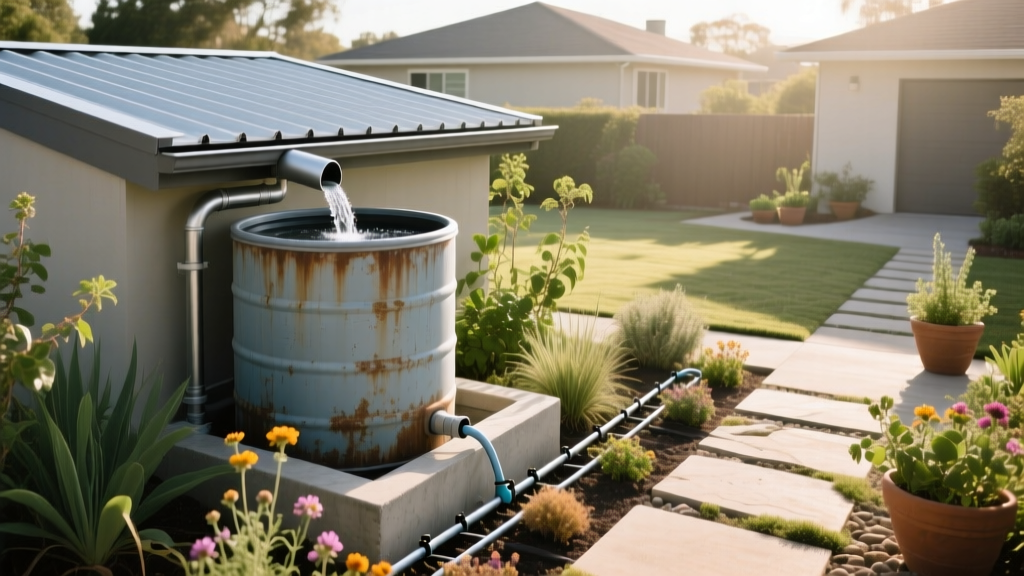
Sustainable Rainwater Harvesting Systems for Home Gardens
James MillerPublished
The Environmental Impact of Outdoor Water Use
As homeowners increasingly seek ways to bridge indoor comfort with outdoor sustainability, rethinking how we water our landscapes is a critical first step. According to the Environmental Protection Agency (EPA), outdoor water use accounts for nearly 30 percent of total household water consumption, and in arid regions, this figure can exceed 60 percent. Much of this treated, potable water is wasted through evaporation, runoff, and inefficient irrigation practices. By adopting eco-friendly rainwater harvesting systems, you can drastically reduce your municipal water reliance, lower your utility bills, and provide your garden with chemical-free, naturally soft water that plants prefer.
Core Components of a Sustainable Rainwater System
A complete rainwater harvesting setup bridges the gap between your roof's catchment area and your garden beds. To build a highly efficient, sustainable system, you need to understand the five core components:
- Catchment Surface: Typically your roof. Metal and asphalt shingle roofs are common, though metal is preferred for eco-friendly setups as it sheds debris and minimizes chemical leaching.
- Conveyance System: Gutters and downspouts that channel water. Opt for aluminum or steel rather than vinyl to increase longevity and reduce plastic waste.
- Pre-Filtration: A first-flush diverter and leaf eaters. The first-flush diverter routes the initial flow of rain—which carries roof dust, bird droppings, and pollen—away from your main storage tank.
- Storage Vessel: The tank or barrel where water is held.
- Distribution: A gravity-fed hose or a solar-powered pump system connected to a drip irrigation network.
Calculating Your Harvest Potential
Before purchasing equipment, you must calculate your potential yield. The standard formula for rainwater harvesting is: Catchment Area (in square feet) × Rainfall (in inches) × 0.623 = Gallons of water harvested.
For example, a 1,000-square-foot roof section receiving one inch of rain will yield approximately 623 gallons of water. If your region receives 30 inches of annual rainfall, that same 1,000-square-foot section could theoretically produce over 18,600 gallons per year. Understanding these metrics helps you right-size your storage solution, preventing unnecessary material waste and overspending.
Comparing Eco-Friendly Storage Options
Choosing the right storage vessel is crucial for both aesthetics and environmental impact. Upcycling materials is a cornerstone of sustainable landscaping. Below is a comparison of the most popular eco-friendly storage options:
| Storage Type | Capacity | Avg. Cost | Eco-Impact & Notes |
|---|---|---|---|
| Upcycled Food-Grade Rain Barrel | 50 - 65 Gallons | $80 - $120 | High. Reuses food industry plastics. Ideal for small urban gardens and gravity-fed drip lines. |
| Reconditioned IBC Tote | 275 - 330 Gallons | $150 - $250 | Very High. Massive water storage in a small footprint. Requires a reinforced gravel base due to weight (over 2,200 lbs when full). |
| Underground Polyethylene Cistern | 1,000+ Gallons | $2,500 - $5,000+ | Moderate. High manufacturing footprint, but saves above-ground space and keeps water cool, preventing algae growth without chemicals. |
According to the Texas A&M AgriLife Extension, reconditioned Intermediate Bulk Container (IBC) totes are among the most cost-effective and sustainable methods for medium-to-large residential gardens, provided they were previously used to store food-grade liquids like vinegar or syrup, never industrial chemicals.
DIY Installation: Upcycling an IBC Tote
Installing a 275-gallon IBC tote is a weekend-friendly DIY project that dramatically boosts your garden's drought resilience. Here is a step-by-step guide to doing it sustainably:
Step 1: Site Preparation. A full IBC tote weighs over 2,200 pounds. You must excavate a level area and lay down a 4-inch base of crushed gravel, topped with concrete pavers. This ensures proper drainage and prevents the tote from sinking into the soil.
Step 2: Elevate for Gravity. To achieve adequate water pressure for a drip irrigation system, elevate the tote on a sturdy, engineered steel or treated lumber stand at least 2 feet off the ground. This provides roughly 0.86 PSI per foot of elevation.
Step 3: Install the First-Flush Diverter. Cut your downspout and install a PVC first-flush diverter. For a 1,000-square-foot roof, you need a diverter that holds at least 10 gallons of water to effectively isolate the dirty initial runoff.
Step 4: Connect and Seal. Use a food-safe silicone sealant and bulkhead fittings to connect the downspout to the tote's top inlet. Cover the inlet with a fine stainless-steel mesh screen to prevent mosquitoes from breeding—a vital step for eco-friendly pest control.
Step 5: Hook Up Drip Irrigation. Attach a standard garden hose to the tote's bottom ball valve. Run this to a pressure regulator and a drip irrigation manifold. Drip systems deliver water directly to the root zone, reducing evaporation by up to 50 percent compared to overhead sprinklers.
Smart Home Integration for Sustainable Irrigation
To truly optimize your eco-friendly setup, integrate your rainwater system with smart home technology. While rain barrels rely on gravity, larger cisterns often use electric pumps. By pairing a smart irrigation controller, such as the Rachio 3 (typically costing between $150 and $250), with a wireless rain sensor and soil moisture monitors, you ensure your pump only activates when the garden genuinely needs water. The American Rainwater Catchment Systems Association (ARCSA) emphasizes that combining automated weather-based scheduling with rainwater harvesting maximizes water conservation and prevents the overflow of storage tanks during unexpected storm events. These smart controllers adjust watering schedules in real-time based on hyper-local weather forecasts, ensuring you never waste harvested water or overload your landscape.
Seasonal Maintenance and Winterization
A sustainable system must be durable. Proper seasonal maintenance extends the lifespan of your components, reducing the need for replacement parts and minimizing landfill waste.
In the spring, clean out your gutters, flush the first-flush diverter, and inspect the stainless-steel mesh screens for tears. Check all rubber O-rings on your hose connections and apply a food-grade silicone grease to prevent drying and cracking. If algae begins to form inside a translucent IBC tote, paint the exterior with a dark, UV-resistant, non-toxic paint to block sunlight, which starves algae without the need for chemical algaecides.
In the autumn, before the first freeze, completely drain your barrels and totes. Disconnect the hoses, open the ball valves, and leave them open to prevent trapped water from freezing, expanding, and cracking the plastic fittings. Store removable pumps and smart sensors indoors. By investing time in seasonal care, your rainwater harvesting system will provide decades of sustainable, eco-friendly irrigation for your home and garden.
