Lawn Care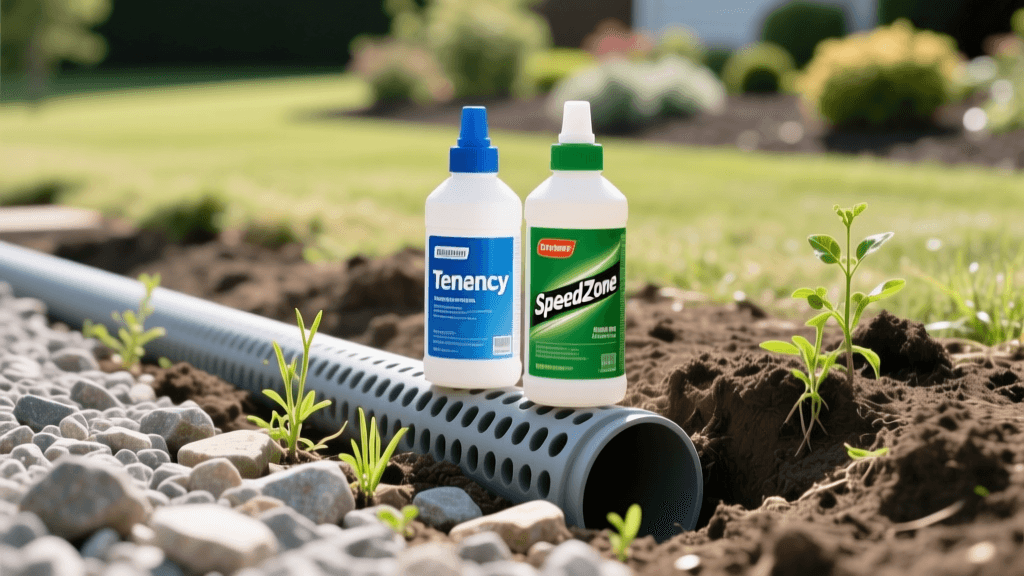
Tenacity vs SpeedZone 2026: French Drain Weed Control
The Hidden Cost of French Drain Installation: The Weed Flush
Installing a French drain is one of the most effective ways to resolve yard pooling and protect your home's foundation from hydrostatic pressure. However, as landscaping trends in 2026 continue to emphasize comprehensive yard hydrology, homeowners are increasingly encountering a frustrating secondary issue: the post-installation weed flush. When you excavate a trench, lay perforated pipe, backfill with gravel, and cap it with topsoil and sod or seed, you fundamentally disrupt the local soil ecology.
This disturbance brings dormant weed seeds to the surface, exposes them to sunlight, and creates a loose, aerated seedbed that is perfect for rapid germination. Furthermore, the altered moisture dynamics along the drain line—where surface water is rapidly wicked away but the underlying gravel retains ambient humidity—creates unique microclimates. These microclimates are highly favorable for opportunistic invaders like crabgrass, plantain, clover, and creeping charlie. To combat this, turf managers and homeowners alike turn to advanced post-emergent herbicides. In 2026, the two most prominent contenders for lawn care professionals and DIY enthusiasts are Tenacity (mesotrione) and SpeedZone (a four-way blend of 2,4-D, MCPP, dicamba, and carfentrazone). But which one is right for the specific conditions created by a French drain? Let us break down the science, the application, and the scenarios.
Understanding Post-Emergent Herbicides in Drainage Zones
Tenacity (Mesotrione): The Seed-Safe Bleacher
Tenacity, powered by the active ingredient mesotrione, is a systemic post-emergent and pre-emergent herbicide that belongs to the HPPD inhibitor class. It works by blocking an enzyme essential for photosynthesis, specifically preventing the production of carotenoids. Without carotenoids to protect them, the weed's chlorophyll is destroyed by sunlight, causing the plant to turn stark white before eventually dying. This bleaching effect is a hallmark of Tenacity and makes it incredibly easy to track your application coverage.
From a French drain perspective, Tenacity's most valuable trait is its safety profile on newly seeded turf. When you cap a French drain trench with fresh topsoil and broadcast grass seed, you are in a highly vulnerable weed window. Most post-emergent herbicides will severely damage or kill germinating grass seed. Tenacity, however, is famously safe for use at the time of seeding for cool-season grasses like Kentucky bluegrass, tall fescue, and perennial ryegrass. It will suppress or eliminate germinating crabgrass and broadleaves without harming your new turf. According to research from Purdue University Turfgrass Science, mesotrione provides exceptional pre- and early post-emergent control of crabgrass, making it the undisputed champion for newly seeded French drain caps. In 2026, a standard 8-ounce bottle of Tenacity retails for approximately $65 to $80, reflecting recent supply chain stabilizations, and covers up to 4 acres when used at the standard pre-emergent rate, or roughly 1 to 2 acres for targeted post-emergent spot treatments.
SpeedZone: The Broadleaf Burn-Down Specialist
SpeedZone is a completely different beast. It is a fast-acting, broad-spectrum broadleaf herbicide that combines four active ingredients: 2,4-D ester, MCPP-p, dicamba, and carfentrazone-ethyl. This multi-mode-of-action formula attacks broadleaf weeds through synthetic auxin mimicry and PPO inhibition, causing unregulated, catastrophic cellular growth that rapidly collapses the weed's vascular system. The inclusion of carfentrazone provides a burn-down effect that is visible within hours, making it immensely satisfying for homeowners who want immediate results.
If your French drain was installed in an established lawn where the existing sod was carefully rolled back and replaced, or if the trench was topped with mature sod rather than seed, SpeedZone is a powerhouse. It excels at destroying the broadleaf weeds that thrive in the slightly compacted, moisture-variable soils along a drainage path—specifically dandelions, plantain, clover, and ground ivy. The University of Minnesota Extension notes that multi-ingredient broadleaf herbicides are critical for managing resistant weed biotypes that have adapted to single-active-ingredient treatments. However, SpeedZone is strictly prohibited on newly seeded lawns. You must wait until the new grass over the French drain has been mowed at least two to three times before applying SpeedZone, or you risk severe phytotoxicity and turf death. In 2026, a gallon of SpeedZone costs around $45 to $55, making it highly economical for large-scale broadleaf cleanups across the entire yard, not just the drain line.
Tenacity vs SpeedZone: 2026 Comparison Chart
| Feature | Tenacity (Mesotrione) | SpeedZone (4-Way Blend) |
|---|---|---|
| Primary Target | Crabgrass, Bentgrass, Nimblewill, Select Broadleaves | Dandelion, Clover, Plantain, Ground Ivy, Chickweed |
| Speed of Kill | Slow (1-3 weeks, turns white first) | Extremely Fast (Visible burn in 24-48 hours) |
| New Seed Safety | Safe at time of seeding (Cool-season grasses) | Unsafe (Wait 2-3 mows after seed germination) |
| Surfactant Required | Yes, Non-Ionic Surfactant (NIS) required | Often not required, but COC/NIS can enhance uptake |
| 2026 Approx. Cost | $65 - $80 per 8 oz bottle | $45 - $55 per 1 gallon jug |
Scenario Matching: Which Herbicide Fits Your French Drain Project?
Scenario A: You Just Seeded Over the Trench
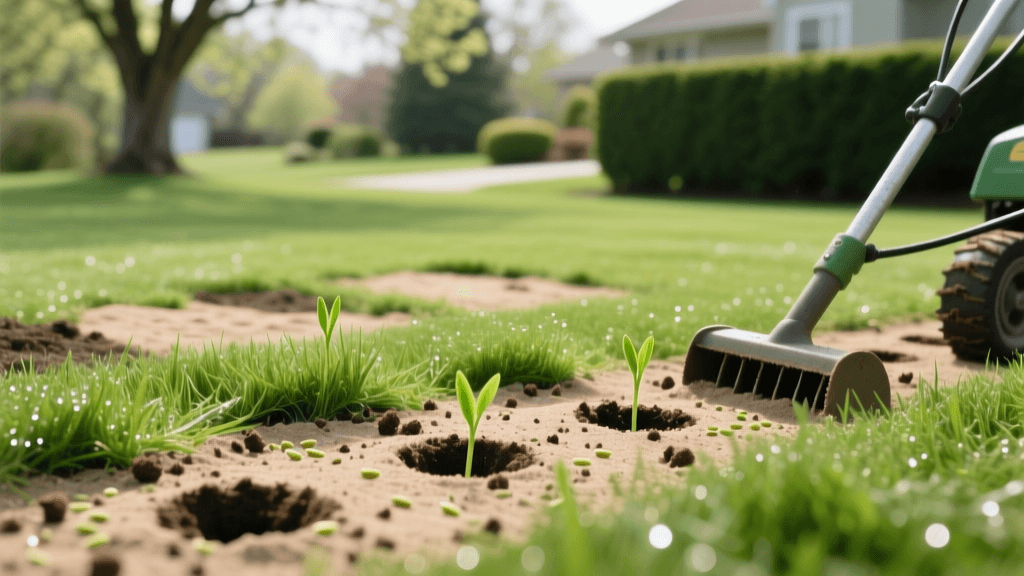
If your French drain installation involved heavy machinery that tore up the yard, requiring you to regrade and broadcast seed over the backfilled trench, Tenacity is your only viable option among these two. Applying SpeedZone to a newly seeded trench will result in the death of your delicate fescue or bluegrass seedlings. Mix Tenacity at a rate of 1/2 teaspoon per gallon of water, add a high-quality non-ionic surfactant, and spray the newly seeded drain line. This will bleach emerging crabgrass and broadleaves while your grass seed safely establishes. Remember that Tenacity can cause temporary whitening of the turfgrass itself, particularly Kentucky bluegrass, but the turf will recover and green up within a week or two.
Scenario B: The Established Lawn is Overrun with Broadleaves
If your contractor used a trenching machine that cleanly sliced the earth, allowing you to roll the existing sod back and lay it perfectly over the gravel cap, your lawn is already established. In this scenario, the soil disturbance will likely trigger a massive flush of broadleaf weeds like plantain and chickweed along the seam lines. SpeedZone is the superior choice here. Mix at 1.4 to 2.1 fluid ounces per gallon of water, depending on the toughness of the weeds and the ambient temperature. Spray the drain line seams on a calm, overcast day to prevent drift. The carfentrazone in SpeedZone will scorch the leaves within hours, and the systemic auxins will kill the roots within a week.
Scenario C: The Wet Zone Nutsedge Problem
It is vital to note that neither Tenacity nor SpeedZone is highly effective against yellow or purple nutsedge, a weed that frequently exploits the damp, gravelly margins of poorly sloped French drains. If your drainage zone is infested with nutsedge, you will need a specialized product containing halosulfuron-methyl (such as Sedgehammer) to penetrate the weed's waxy cuticle and eradicate the underground nutlets. Always identify your primary weed pressure before committing to a herbicide purchase.
Application Best Practices for Disturbed Drainage Zones
When treating weeds along a French drain, you must consider the unique hydrology of the area. French drains are designed to move water, meaning the soil directly above the trench may dry out faster than the surrounding yard during summer heat, or remain perpetually damp if the water table is high. According to the EPA's guidelines on safe lawn pest control, applying herbicides to drought-stressed turf can lead to poor weed control and increased turf damage. If the soil over your French drain is bone dry, irrigate the area lightly the evening before your application to ensure the weeds are actively growing and translocating the herbicide to their roots.
Furthermore, avoid spraying SpeedZone when temperatures exceed 85 degrees Fahrenheit. The ester formulation of 2,4-D in SpeedZone is highly volatile in high heat and can vaporize, drifting onto and damaging nearby ornamental shrubs, vegetable gardens, or sensitive trees. Tenacity is generally safer in warm weather, but it still requires adequate soil moisture to be effective. Always calibrate your sprayer to ensure you are not overlapping passes over the porous gravel zone, as excessive herbicide accumulation can leach through the gravel and potentially impact the surrounding soil biology or groundwater.
Conclusion
Managing the weed flush after a French drain installation requires a strategic approach tailored to your specific turf repair method. If you are starting from scratch with fresh seed over the trench, Tenacity's seed-safe, bleaching action is an invaluable tool to protect your investment. If you are dealing with an established sod cap that is suddenly besieged by broadleaf invaders, SpeedZone offers the rapid, aggressive knockdown needed to restore your lawn's uniformity. By understanding the distinct modes of action and safety profiles of these two 2026 herbicide staples, you can ensure that your newly improved drainage system is complemented by a flawless, weed-free lawn.