Lawn Care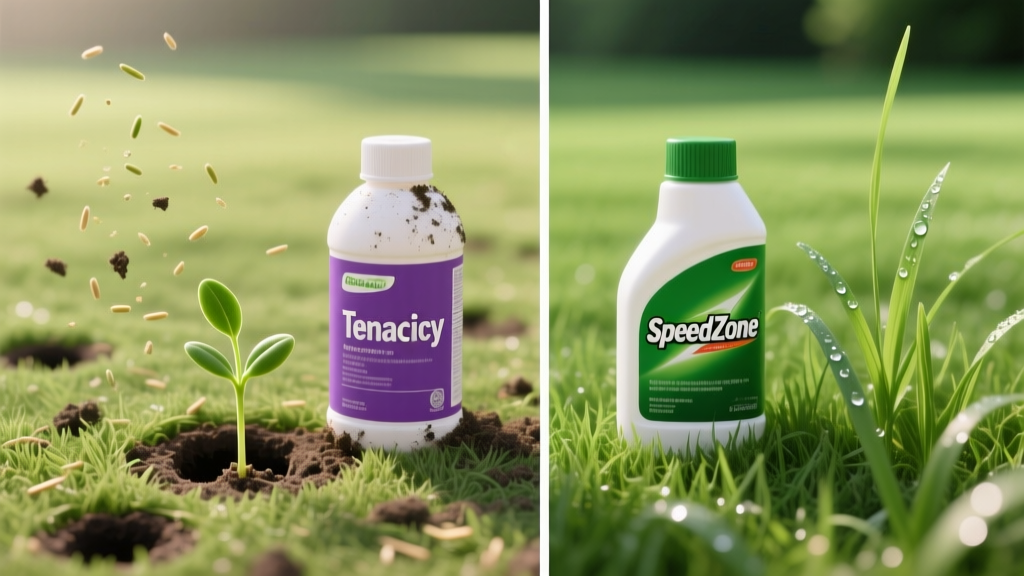
Tenacity vs SpeedZone: 2026 Post-Aeration Weed Control
Lisa ThompsonPublished
The Core Aeration and Weed Control Dilemma in 2026
Core aeration is a foundational practice for maintaining a healthy, vigorous lawn. By extracting small plugs of soil, you alleviate compaction, improve water infiltration, and enhance nutrient uptake. However, from a weed management perspective, core aeration presents a unique challenge. The physical disruption of the soil profile brings dormant weed seeds to the surface, exposes them to light and moisture, and creates an ideal microenvironment for germination. As we navigate the 2026 turf management season, homeowners and lawn care professionals must carefully select their post-emergent herbicides to combat these weeds without harming the turfgrass—especially when aeration is paired with overseeding.
When deciding on a post-emergent strategy following core aeration, the debate almost always narrows down to two industry heavyweights: Tenacity (mesotrione) and SpeedZone (a four-way blend of 2,4-D, dicamba, MCPP, and carfentrazone). Both are highly effective, but their biochemical modes of action, seeding restrictions, and interactions with freshly aerated soil make them suited for entirely different scenarios. In this comprehensive guide, we will break down Tenacity vs. SpeedZone from a core aeration perspective, helping you choose the right chemical tool for your 2026 lawn care calendar.
Understanding Core Aeration's Impact on Weed Germination
Before comparing herbicides, it is crucial to understand what core aeration does to the weed seed bank. According to turfgrass researchers at Purdue Turf Science, the mechanical friction of aeration tines fractures the soil, disrupting pre-emergent herbicide barriers that were applied earlier in the spring. Furthermore, the aeration holes act as moisture traps, encouraging both desirable grass seed and undesirable weed seed to germinate simultaneously.
Because core aeration is most commonly performed in the early fall alongside overseeding (to introduce new, disease-resistant turfgrass cultivars), your choice of post-emergent herbicide is heavily restricted. Applying the wrong product over freshly laid seed and open aeration holes will result in catastrophic seedling death, wasting your time, seed investment, and aeration efforts.
Tenacity (Mesotrione): The Overseeding Companion
Tenacity, powered by the active ingredient mesotrione, is an HPPD (4-hydroxyphenylpyruvate dioxygenase) inhibitor. It works by blocking the weed's ability to produce carotenoids, which protect chlorophyll from sunlight. Without this protection, the weed's chlorophyll degrades, leading to a distinct, ghostly white bleaching effect before the plant ultimately dies.
Why Tenacity Shines During Aeration Season
The defining advantage of Tenacity in an aeration scenario is its seed safety. Tenacity is one of the very few post-emergent herbicides that can be applied at the exact same time as seeding. When you core aerate and drop Kentucky Bluegrass, Tall Fescue, or Perennial Ryegrass seed, you can spray Tenacity on the same day. It will actively kill existing young broadleaf weeds and creeping bentgrass while providing short-term pre-emergent control in the aeration holes, all without harming your new grass seedlings.
Limitations of Tenacity
Tenacity is a systemic herbicide, meaning it takes time to translocate through the plant. You will not see an immediate burn-down; the bleaching process takes 7 to 14 days, and total weed death can take up to three weeks. Additionally, Tenacity requires the addition of a non-ionic surfactant to penetrate the waxy cuticle of target weeds. Finally, it is not effective against mature, deeply rooted broadleaf weeds like large dandelions or mature plantain, which are often exposed by deep-tine aeration.
SpeedZone: The Fast-Acting Broadleaf Eradicator
SpeedZone is a powerhouse post-emergent herbicide formulated with four active ingredients: 2,4-D (ester), dicamba, MCPP-p, and carfentrazone-ethyl. This multi-faceted approach attacks broadleaf weeds through multiple modes of action, mimicking plant growth hormones to cause uncontrolled, fatal cellular division.
Why SpeedZone is the King of Burn-Down
If your lawn has been aerated but you are not overseeding, SpeedZone is unparalleled for rapid clean-up. The inclusion of carfentrazone provides a rapid contact burn, often showing visible wilting and necrosis within 24 to 48 hours. For established lawns that have just undergone aeration to relieve compaction, SpeedZone will swiftly eliminate the mature broadleaf weeds that were stressed by the aeration process, allowing your established turf to fill in the voids.
The Seeding Restriction Roadblock
Here is where SpeedZone fails the aeration-overseeding test. SpeedZone carries a strict seeding restriction. Depending on the specific turfgrass species and the application rate, you must wait anywhere from 3 to 4 weeks after applying SpeedZone before you can safely drop grass seed. Furthermore, you cannot apply SpeedZone to newly germinated grass until it has been mowed at least twice. Therefore, if your aeration strategy includes overseeding, SpeedZone is entirely off the table during the aeration window.
Head-to-Head Comparison: Tenacity vs. SpeedZone
To visualize how these two products stack up for 2026 lawn care routines, review the comparison table below:
| Feature | Tenacity (Mesotrione) | SpeedZone (4-Way Blend) |
|---|---|---|
| Primary Target | Grassy weeds, young broadleaves | Mature broadleaf weeds |
| Speed of Kill | Slow (14-21 days) | Fast (24-72 hours) |
| Visual Symptom | White bleaching | Epinasty (twisting), browning |
| Safe at Seeding? | Yes (Apply at time of seeding) | No (Wait 3-4 weeks post-app) |
| Surfactant Required? | Yes (Non-ionic surfactant) | No (Formulated with esters) |
| Best Aeration Use | Aerate + Overseed scenarios | Aerate established lawns only |
Strategic Timing: Building Your 2026 Aeration Calendar
Maximizing herbicide efficacy requires precise timing relative to your core aeration schedule. The experts at NC State TurfFiles emphasize that herbicide performance is heavily dictated by soil moisture and plant health, both of which are altered by aeration. Here is how to schedule your applications in 2026.
Scenario A: 4 Weeks Pre-Aeration (The Clean Slate Approach)
If you plan to core aerate and overseed in early September, use the first week of August to apply SpeedZone. This will aggressively burn down mature summer broadleaves like clover, spurge, and dandelions. By the time you run your aerator four weeks later, the SpeedZone residual will have dissipated enough to safely allow your new grass seed to germinate in the freshly pulled aeration holes.
Scenario B: Day of Aeration + Overseeding (The Tenacity Protocol)
If your lawn is already relatively free of mature broadleaves but suffers from crabgrass breakthroughs or nimblewill, core aerate, spread your seed, and immediately apply Tenacity. The aeration holes will help the Tenacity reach the soil surface, providing a localized pre-emergent barrier against weed seeds brought up by the tines, while simultaneously acting as a post-emergent against any young, actively growing weeds.
Scenario C: Post-Aeration on Established Turf (No Seed)
If you are aerating an established lawn in the spring or fall to relieve compaction and manage thatch, but you are not overseeding, wait 10 to 14 days after aeration to apply SpeedZone. Why wait? Aeration temporarily stresses the turfgrass root system. Applying a heavy ester-based herbicide like SpeedZone immediately to stressed turf can cause phytotoxicity (chemical burn). Waiting two weeks allows the grass to recover and begin utilizing the newly opened soil channels, making it resilient enough to handle the SpeedZone application.
2026 Regulatory and Environmental Considerations
As of 2026, turf managers must remain acutely aware of shifting environmental regulations regarding synthetic auxin herbicides. Recent EPA directives and state-level mandates have placed stricter buffer zone requirements and application temperature limits on dicamba-containing products like SpeedZone. In many regions, applying SpeedZone when ambient temperatures exceed 85°F is strictly prohibited to prevent volatilization (the herbicide turning into a gas and drifting onto non-target ornamental plants).
Because late-summer aeration often coincides with high heat, Tenacity has become the preferred alternative for warm-weather weed control. Mesotrione does not suffer from the same volatility issues as dicamba or 2,4-D esters, making it a much safer choice for late August aeration schedules in transitional climate zones. However, always consult your local Penn State Extension office or state agricultural database for the most current 2026 county-level herbicide restrictions before purchasing or mixing chemicals.
The Importance of Soil Moisture and Surfactants
Core aeration fundamentally changes how water moves through your soil profile. Because aeration increases infiltration rates, liquid herbicides can sometimes leach past the weed's root zone before they are fully absorbed. To counteract this in 2026, ensure your lawn is adequately watered 24 hours before application. A turgid, well-hydrated weed will actively translocate systemic herbicides like Tenacity much faster than a drought-stressed weed.
When using Tenacity post-aeration, never skip the non-ionic surfactant (NIS). The aeration process leaves behind thousands of soil plugs on the surface. If you spray without a surfactant, the herbicide droplets can easily bounce off the waxy leaves of target weeds and bind to the organic matter in the soil plugs, rendering the chemical useless. A high-quality NIS ensures the droplets spread evenly across the weed foliage, maximizing absorption.
Final Verdict: Which Should You Choose?
The choice between Tenacity and SpeedZone is not about which product is universally 'better,' but rather which product aligns with your specific aeration goals. If your 2026 core aeration strategy involves dropping new grass seed to thicken your turf, Tenacity is your undisputed champion. It provides the unique ability to kill weeds and protect seed simultaneously. Conversely, if you are aerating a mature, established lawn to fight compaction and need to rapidly eradicate stubborn, deep-rooted broadleaf weeds without the intention of seeding, SpeedZone offers unmatched speed and broad-spectrum control. By respecting the seeding restrictions, temperature limits, and soil moisture requirements of each product, you can leverage core aeration to build a thicker, healthier, and virtually weed-free lawn this season.