Lawn Care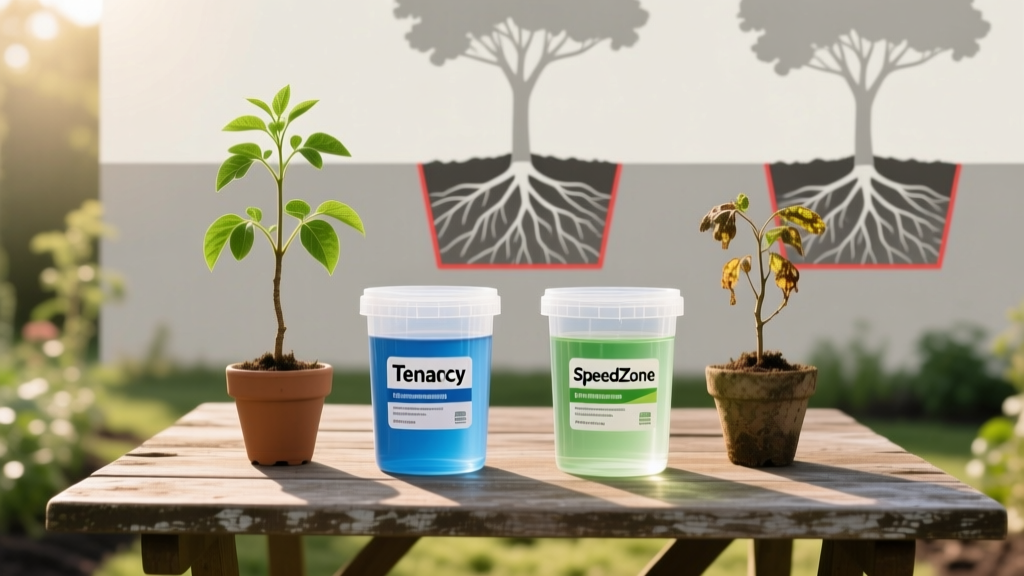
Tenacity vs SpeedZone 2026: Safe Weed Control Near Trees
Robert HayesPublished
Integrating Tree Selection and Lawn Care in 2026
When designing a modern landscape, the integration of robust turfgrass and carefully selected shade or ornamental trees is paramount. However, as any seasoned arborist or turf manager knows, the intersection of tree planting and lawn maintenance is a minefield of chemical interactions. In 2026, post-emergent weed control remains a critical component of lawn care, but applying these chemicals near newly planted or established trees requires a deep understanding of herbicide chemistry, soil mobility, and root zone dynamics.
Two of the most prominent post-emergent herbicides on the market are Tenacity (active ingredient: mesotrione) and SpeedZone (a blend of 2,4-D, MCPP, dicamba, and carfentrazone). While both are highly effective at eliminating broadleaf weeds and problematic grasses, their behavior in the soil and their potential for phytotoxicity to non-target trees vary drastically. This guide explores the Tenacity vs. SpeedZone debate specifically through the lens of tree selection, planting guides, and root zone protection.
The Chemistry: HPPD Inhibitors vs. Synthetic Auxins
To understand how these herbicides affect trees, we must first look at their modes of action. Tenacity is an HPPD (4-hydroxyphenylpyruvate dioxygenase) inhibitor. It works by blocking the production of carotenoids, which protect chlorophyll from sunlight. Without carotenoids, the weed's chlorophyll is destroyed, leading to the characteristic 'bleaching' or whitening of the foliage before the plant dies. Because it is systemic and possesses both pre- and post-emergent activity, mesotrione can remain active in the soil profile for several weeks.
SpeedZone, on the other hand, relies on synthetic auxins (growth regulators) and a contact burn-down agent (carfentrazone). The 2,4-D, MCPP, and dicamba components mimic natural plant hormones, causing rapid, uncontrolled cellular division that literally tears the plant's vascular system apart. Carfentrazone provides the immediate 'burn' that landscapers desire for quick visual results. However, synthetic auxins are notorious for their potential to move through the soil and volatilize into the air, posing significant risks to nearby trees.
Understanding the Tree Root Zone and Drip Line
A common mistake in landscape design and lawn care is assuming that a tree's root system ends at the edge of its canopy. In reality, the structural and absorptive roots of most shade trees—such as oaks, maples, and elms—extend well beyond the 'drip line,' often reaching 1.5 to 2 times the width of the canopy. When you plant a new tree, you are not just managing the soil in the planting hole; you are managing the entire surrounding turf zone.
Applying post-emergent herbicides over these expansive root zones can lead to root uptake. If the herbicide is mobile in the soil, it enters the tree's xylem and is transported directly to the leaves, causing severe phytotoxicity. Therefore, selecting the right herbicide depends heavily on the tree species you have planted and the soil composition of your landscape.
Head-to-Head Comparison: Tenacity vs. SpeedZone
| Feature | Tenacity (Mesotrione) | SpeedZone (2,4-D, Dicamba, MCPP) |
|---|---|---|
| Primary Post-Emergent Targets | Crabgrass, nimblewill, dandelion, clover | Broadleaves (clover, plantain, dandelion) |
| Mode of Action | HPPD Inhibitor (Bleaching) | Synthetic Auxins + PPO Inhibitor |
| Soil Mobility & Residual | Highly mobile in sandy soils; 30+ day residual | Moderate mobility; short soil residual |
| Tree Root Uptake Risk | Moderate (species dependent) | High (especially due to dicamba) |
| Volatilization Risk (Heat) | Low | High (dicamba vapors damage canopies) |
| 2026 Estimated Cost | ~$75 per 8 oz bottle | ~$55 per 1 gallon jug |
Tenacity Around Trees: The 2026 Perspective
Tenacity is generally considered the safer option for use around established trees and many ornamentals, provided it is applied according to the label. The product label explicitly lists numerous tree species that are tolerant to mesotrione applications. However, 'safe' does not mean 'risk-free.'
Soil Type and Leaching
The biggest threat Tenacity poses to newly planted trees is its soil mobility. Mesotrione is highly water-soluble and does not bind tightly to organic matter. If you have planted trees in sandy, well-draining soils, heavy irrigation or rainfall can leach Tenacity deep into the soil profile where the tree's fine feeder roots are actively absorbing water. While mature trees can usually metabolize small amounts of mesotrione, newly planted saplings (0-2 years old) with limited root mass and energy reserves can suffer from stunted growth or temporary chlorosis.
Species Sensitivity
While most oaks, pines, and spruces tolerate Tenacity well, certain ornamental trees and shrubs are highly sensitive. For example, direct spray drift onto the foliage of Eastern Redbuds or certain cultivars of Japanese Maples can cause severe bleaching and defoliation. When planting sensitive ornamentals, it is best to maintain a strict buffer zone where no Tenacity is applied.
SpeedZone Around Trees: Proceed with Extreme Caution
SpeedZone is a powerhouse for broadleaf weed control in open turf, but it is a major liability in landscapes heavily populated with trees. The primary culprit is dicamba, one of the active ingredients in the SpeedZone formulation.
The Danger of Dicamba and Root Uptake
According to the University of Minnesota Extension, dicamba is highly mobile in the soil and easily absorbed by the shallow feeder roots of deciduous trees. Species such as Red Maples, Silver Maples, Locusts, and Elms are incredibly sensitive to synthetic auxins. If SpeedZone is applied to the turfgrass over a maple's root zone, the dicamba can be absorbed, translocated to the canopy, and cause classic auxin-herbicide symptoms: severe leaf cupping, curling, vein shortening, and eventual branch dieback.
Volatilization in Summer Heat
Even if you avoid spraying directly over the root zone, SpeedZone carries a high risk of volatilization. When applied during warm 2026 summer days (temperatures above 85°F), the dicamba and 2,4-D esters can vaporize and drift on air currents, settling on the foliage of nearby trees. This aerial drift causes the same twisting and cupping damage as root uptake. Because of this, turf managers are increasingly restricted from using dicamba-based products near residential tree lines and ornamental beds during the summer months.
Best Practices for Weed Control in Tree Zones
If you are following a modern tree selection and planting guide, your goal is to establish a healthy, vigorous tree while maintaining an attractive lawn. Here is how to manage post-emergent weeds safely in 2026:
- Implement the 3-Foot Mulch Rule: When planting a new tree, create a mulch ring at least 3 feet in diameter. This eliminates the need to spray herbicides near the trunk, protects the thin bark from string-trimmer damage, and conserves soil moisture. As the tree grows, expand the mulch ring to the drip line.
- Use Tenacity for Grass Weeds, Spot Treat Broadleaves: If you need to control grassy weeds like crabgrass or nimblewill near trees, Tenacity is the superior choice due to its lower volatility risk. Apply it carefully, avoiding direct contact with the trunks of sensitive ornamentals.
- Avoid SpeedZone Near Shallow-Rooted Trees: Never apply SpeedZone over the root zones of maples, oaks, or locusts. If you must use SpeedZone for broadleaf weeds, do so only in open areas far from the tree canopy, and apply during cool, calm mornings to prevent volatilization and drift.
- Follow EPA Buffer Guidelines: The Environmental Protection Agency (EPA) consistently recommends establishing buffer zones and reading labels meticulously to protect non-target plants. In 2026, label restrictions regarding dicamba applications near sensitive areas are stricter than ever; always verify local regulations before mixing.
Conclusion
The choice between Tenacity and SpeedZone for post-emergent weed control is not just about which product kills weeds faster; it is about preserving the long-term health of your landscape's most valuable assets: your trees. While SpeedZone offers rapid, economical broadleaf control in open turf, its dicamba content makes it a severe hazard to tree root zones and canopies. Tenacity, while more expensive and prone to soil leaching in sandy profiles, offers a much safer profile for use around established trees when applied with an understanding of soil chemistry and species tolerance.
By integrating smart tree selection, proper planting techniques like expansive mulch rings, and targeted, science-backed herbicide applications, you can achieve a pristine lawn in 2026 without sacrificing the vitality of your shade and ornamental trees. For more detailed information on turfgrass management and ornamental safety, consult resources like Penn State Extension's turfgrass guidelines to ensure your landscape thrives for decades to come.