Lawn Care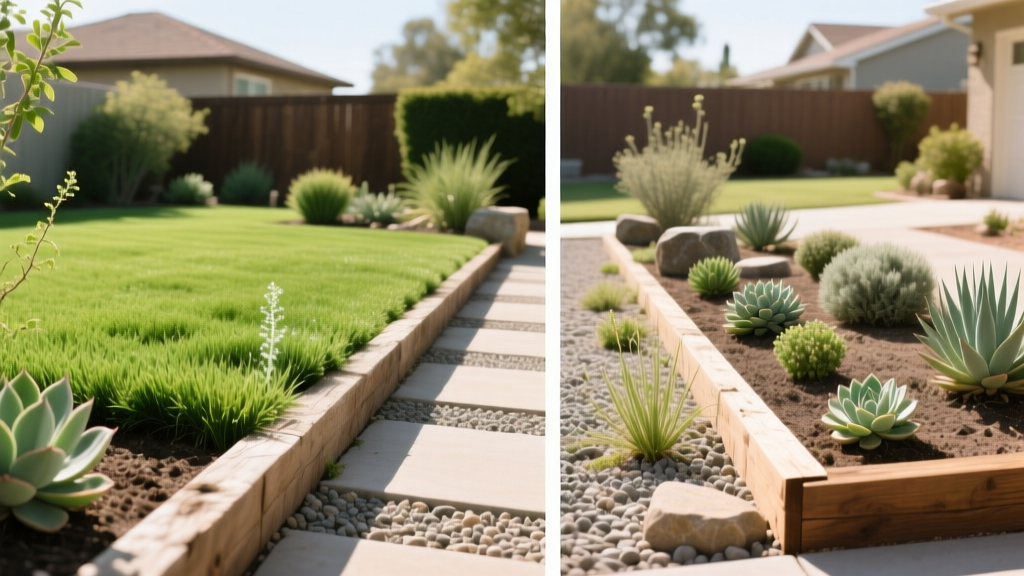
Tenacity vs SpeedZone 2026: Xeriscape Weed Control Guide
Robert HayesPublished
The Xeriscape Weed Challenge in 2026
As municipal water restrictions become increasingly stringent across drought-prone regions in 2026, xeriscaping and low-water landscaping have evolved from alternative choices to essential standards. A core tenet of xeriscaping is minimizing water waste, but invasive weeds like puncturevine, field bindweed, and prostrate spurge are ruthless competitors for limited soil moisture. Eradicating these pests without harming your carefully selected drought-tolerant turf or ornamental beds requires a strategic approach to post-emergent herbicides.
Two of the most prominent chemical controls on the market are Syngenta's Tenacity (mesotrione) and PBI-Gordon's SpeedZone (a four-way blend of 2,4-D, MCPP, dicamba, and carfentrazone). While both are highly effective in traditional turf management, their roles in a xeriscape environment differ drastically. According to the Colorado State University Extension, successful xeriscaping relies on matching plant needs with precise maintenance routines, and herbicide selection is no exception. This comprehensive guide compares Tenacity and SpeedZone specifically through the lens of low-water landscaping, helping you make the right choice for your 2026 lawn care regimen.
Understanding Tenacity (Mesotrione) for Low-Water Lawns
Tenacity is a systemic, selective herbicide that belongs to the HPPD inhibitor class. It works by blocking an enzyme essential for chlorophyll production, causing susceptible weeds to turn stark white before they die. This unique bleaching effect makes it easy to track which weeds are absorbing the chemical.
In a xeriscape context, Tenacity is a double-edged sword. Its primary advantage is its safety on certain cool-season grasses that are sometimes used in transitional or low-water mixes, such as Tall Fescue and Kentucky Bluegrass. Furthermore, Tenacity offers dual-action capabilities, serving as both a post-emergent and a pre-emergent barrier when watered in. However, its most critical limitation for xeriscapers is its severe phytotoxicity to warm-season grasses. If your low-water lawn consists of Bermudagrass or Zoysia, Tenacity will bleach and potentially kill your turf. Additionally, the bleaching process can take two to three weeks, which may be aesthetically displeasing in a meticulously designed xeriscape front yard.
Understanding SpeedZone for Drought-Tolerant Landscapes
SpeedZone is a fast-acting, post-emergent broadleaf herbicide. Its four active ingredients provide a multi-site mode of action that devastates broadleaf weeds through both foliar contact and root uptake. The inclusion of carfentrazone-ethyl gives SpeedZone its signature 'burn-down' effect, often showing visible wilting and necrosis in weeds within hours of application.
For xeriscape enthusiasts, SpeedZone is generally the preferred choice for warm-season, drought-tolerant lawns. It is labeled as safe for Bermudagrass, Zoysia, and Buffalograss when applied correctly. Because it acts quickly, it stops weeds like spurge and bindweed from siphoning precious water from your soil profile almost immediately. The University of California Statewide Integrated Pest Management Program notes that rapid removal of broadleaf weeds is crucial in water-limited environments to preserve soil moisture for desirable plants. However, SpeedZone is strictly a post-emergent tool and offers no pre-emergent residual control, meaning you will need a separate strategy to prevent future weed germination.
Head-to-Head Comparison Chart
| Feature | Tenacity (Mesotrione) | SpeedZone (4-Way Broadleaf) |
|---|---|---|
| Primary Mode of Action | HPPD Inhibitor (Systemic) | Synthetic Auxins & PPO Inhibitor (Contact/Systemic) |
| Visual Results Timeline | 7 to 14 days (Bleaching effect) | 24 to 48 hours (Rapid burn-down) |
| Warm-Season Xeriscape Turf Safety | DANGER: Will kill Bermudagrass & Zoysia | SAFE: Labeled for Bermudagrass, Zoysia, Buffalograss |
| Cool-Season Xeriscape Turf Safety | SAFE: Tall Fescue, KBG | SAFE: Tall Fescue, KBG |
| Pre-Emergent Capability | Yes (Requires watering in) | No (Post-emergent only) |
| Best Target Weeds | Crabgrass, Nimblewill, Dandelion | Spurge, Bindweed, Puncturevine, Clover |
| Approx. Cost per Acre (2026) | $45 - $60 | $30 - $45 |
Turf Compatibility: The Make-or-Break Factor
Warm-Season Xeriscape Grasses
The most common turfgrasses used in xeriscaping are warm-season varieties due to their deep root systems and exceptional drought tolerance. Bermudagrass, Zoysia, and Buffalograss are staples of low-water lawns. If you are managing any of these grasses in 2026, you must avoid Tenacity. Applying mesotrione to warm-season grasses will result in severe bleaching, stunting, and potential turf death. SpeedZone, conversely, is highly effective and safe for these grasses, provided the turf is not currently suffering from severe drought stress. Always ensure your xeriscape lawn has received a deep watering a day or two before applying SpeedZone to maximize herbicide translocation within the weeds.
Cool-Season Xeriscape Alternatives
In regions where cool-season grasses are preferred but water is scarce, turf-type Tall Fescue is the standard due to its deeper rooting compared to traditional bluegrasses. For Tall Fescue xeriscapes, both Tenacity and SpeedZone are safe. Tenacity is particularly valuable here if you are battling grassy weeds like crabgrass or nimblewill, which SpeedZone will not control. SpeedZone remains the superior choice if your primary issue is broadleaf invaders like dandelions or thistles.
Protecting Drought-Tolerant Ornamentals
A true xeriscape integrates hardscaping, gravel, mulch, and drought-resistant ornamentals like Agave, Yucca, Lantana, Russian Sage, and Sedum. When applying post-emergent herbicides in these mixed beds, drift and root-zone uptake are major concerns.
- SpeedZone Volatilization: The ester formulations in some SpeedZone variants can vaporize and drift when temperatures exceed 85°F (29°C). Since xeriscape environments are often in hot, arid climates, you must apply SpeedZone in the early morning or late evening to prevent vapor drift from damaging the foliage of sensitive native shrubs.
- Tenacity Soil Residual: Tenacity has soil activity. If you spray Tenacity near the drip line of shallow-rooted xeriscape ornamentals, the roots may absorb the mesotrione, causing the ornamental plants to turn white and suffer severe stress. Avoid using Tenacity as a spot treatment in gravel or mulch beds containing desirable broadleaf plants.
- Shielded Spraying: Invest in a spray shield or use a low-pressure, coarse-droplet nozzle (like an air-induction nozzle) to minimize physical drift when treating weeds growing close to your agaves or succulents.
Water as a Carrier: Aligning with Xeriscape Principles
Xeriscapers are inherently opposed to wasting water. However, liquid herbicides require water as a carrier to distribute the active ingredient evenly across the leaf surface. To align with low-water principles in 2026, focus on calibration rather than volume reduction. Reducing the water volume too much can lead to concentrated spots that burn the turf or fail to cover the weed foliage adequately.
Instead of wasting water, use a high-quality non-ionic surfactant. A surfactant breaks the surface tension of the water droplets, allowing the herbicide to spread and adhere to the waxy cuticles of drought-hardened weeds. Weeds in xeriscapes often develop thicker, waxier leaves to retain moisture, making them harder to penetrate. Adding a surfactant ensures that every drop of your carrier water is utilized efficiently, maximizing the kill rate of both Tenacity and SpeedZone without requiring excessive gallonage.
Pro Tip for 2026: When spot-treating weeds in gravel or decomposed granite areas of your xeriscape, consider using a handheld foaming herbicide sprayer. The foam acts as a built-in surfactant and drift-reducer, ensuring the chemical stays exactly where you apply it without wasting water or risking runoff into your low-water plant beds.
Environmental and Soil Microbiome Considerations
Low-water landscapes rely heavily on healthy, undisturbed soil microbiomes to break down organic matter and retain what little moisture is available. Repeated, heavy applications of synthetic auxins (like those in SpeedZone) can temporarily disrupt soil microbial activity. Conversely, Tenacity breaks down relatively quickly in the soil via microbial degradation and photodegradation. To maintain the ecological balance of your xeriscape, rotate your herbicide modes of action and integrate cultural controls—such as maintaining a thick layer of organic mulch or using pre-emergent barriers like corn gluten meal in ornamental beds—to reduce the overall chemical load on your soil.
Final Verdict: Which Should You Choose?
The choice between Tenacity and SpeedZone in a xeriscape environment is rarely about which product is universally 'better,' but rather which is chemically compatible with your specific landscape design.
- Choose SpeedZone if: You have a warm-season xeriscape lawn (Bermudagrass, Zoysia, Buffalograss) and are battling broadleaf weeds like spurge, bindweed, or puncturevine. It is fast, cost-effective, and safe for your drought-tolerant turf.
- Choose Tenacity if: You manage a cool-season, low-water lawn (Tall Fescue) and need to eliminate grassy weeds like crabgrass, or if you require a product that offers both pre-emergent and post-emergent control. Never use it on warm-season turf or near the root zones of sensitive ornamentals.
By matching the herbicide to your specific xeriscape plant palette and adhering to precise application techniques, you can eliminate water-stealing weeds and maintain a thriving, sustainable landscape throughout the 2026 season and beyond.