Lawn Care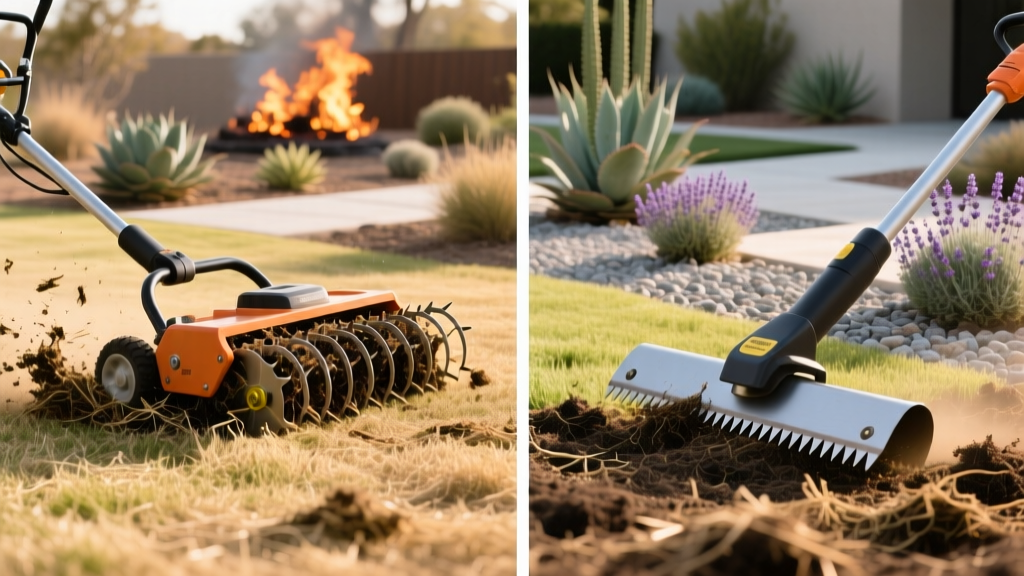
Power Rake vs Dethatcher Blade 2026: Fire-Safe Lawns
Anna KowalskiPublished
The Hidden Wildfire Fuel Lurking in Your Lawn
As we navigate the increasingly unpredictable wildfire seasons of 2026, homeowners in the Wildland-Urban Interface (WUI) are rethinking every aspect of their property's defensible space. While clearing brush and trimming tree canopies are well-known fire mitigation strategies, one critical hazard often goes unnoticed right beneath our feet: lawn thatch. Thatch is the tangled layer of living and dead grass stems, roots, and organic debris that accumulates between the soil surface and the green grass blades. When this layer dries out during the peak summer and autumn months, it transforms into a highly combustible wick capable of carrying ground-level flames directly to your home's siding.
Creating a truly Firewise-certified landscape requires aggressive management of these micro-fuel loads. But when it comes to removing thatch to protect your home, which tool is up to the task? The debate between using a heavy-duty power rake (flail blades) versus a standard dethatcher blade (spring tines) is a common one among landscaping professionals and fire-prevention advocates. In this comprehensive guide, we break down the mechanics, costs, and fire-mitigation efficacy of both tools to help you secure your property in 2026.
Why Thatch is a Critical Fire Hazard
Before comparing tools, it is essential to understand why thatch demands your attention. A healthy lawn can tolerate a thatch layer of about 1/4 to 1/2 inch, which helps retain soil moisture and insulate roots. However, once thatch exceeds 1/2 inch, it becomes a severe liability. Dry thatch is essentially dead, compacted organic matter. During a wind-driven wildfire, airborne embers can travel over a mile and land in your yard. If these embers settle into a thick, dry thatch layer, they can easily ignite a low-burning, smoldering fire that is difficult to extinguish and can silently creep toward your home's foundation or wooden decks.
According to the California Department of Forestry and Fire Protection (CAL FIRE), maintaining lean, clean, and green landscapes is the cornerstone of the 100-foot defensible space mandate. Removing dead organic material from your turf is not just a lawn care chore; it is a vital fire defense mechanism.
Power Rakes vs. Dethatcher Blades: The 2026 Tool Breakdown
Power Rakes (Flail Blades): The Heavy-Duty Fuel Reducer
A power rake, often referred to as a verticutter or flail dethatcher, utilizes a spinning reel equipped with rigid steel flail blades. These blades slice vertically through the thatch layer and penetrate the topsoil, aggressively tearing out compacted organic matter and shallow roots. For properties located in high-risk fire zones where thatch has been neglected and exceeds 3/4 of an inch in depth, a power rake is the undisputed champion of fuel reduction.
In 2026, commercial-grade walk-behind power rakes from brands like Billy Goat and Ryan Lawnaire remain the industry standard for severe thatch extraction. These machines do not merely scratch the surface; they excavate the fuel load. However, this aggressive action means the lawn will look severely stressed immediately after treatment, requiring immediate overseeding and deep watering to recover. Rental costs for a walk-behind power rake typically range from $85 to $120 per day, while purchasing a commercial unit can exceed $3,000.
Dethatcher Blades (Spring Tines): The Maintenance Option
Standard dethatcher blades, which replace your mower's standard cutting blades, feature flexible metal spring tines. As the mower deck spins, these tines sweep across the soil surface, pulling up loose, dead grass and surface-level debris. Dethatcher blades are an excellent, cost-effective solution for annual maintenance in moderate fire-risk areas where the thatch layer is kept below 1/2 inch.
Universal dethatcher blades are widely available for most 2026 riding and push mower models, costing between $30 and $60 per set. While they are gentle on the existing turf and promote quick recovery, they lack the sheer mechanical force required to rip out deeply entrenched, matted thatch. If your lawn has a severe fire-hazard fuel buildup, spring tines will simply glide over the top of the mat, leaving the most dangerous, compacted lower layers intact.
Head-to-Head Comparison Chart: Fire-Resistant Thatch Removal
| Feature | Power Rake (Flail Blades) | Dethatcher (Spring Tines) |
|---|---|---|
| Blade Type | Rigid steel flails / knives | Flexible spring tines |
| Penetration Depth | Deep (cuts into soil) | Shallow (surface level) |
| Best For Thatch Depth | Over 1/2 inch (Severe fuel load) | Under 1/2 inch (Maintenance) |
| Turf Impact | High (requires recovery time) | Low (quick bounce back) |
| 2026 Estimated Cost | $90/day (rental) or $3,000+ | $30 - $60 (mower attachment) |
| Fire-Mitigation Verdict | Essential for WUI homes with neglected lawns | Ideal for annual Zone 1 & 2 maintenance |
Strategic Thatch Removal for Defensible Space Zones
To maximize your fire defense strategy, align your thatch removal efforts with the established defensible space zones outlined by the University of California Agriculture and Natural Resources.
- Zone 0 (0 to 5 feet from home): This is the most critical ember-resistant zone. Thatch must be kept to an absolute minimum (under 1/4 inch). If you are establishing a new fire-safe lawn in this zone, use a power rake to completely strip existing organic buildup before laying down non-combustible mulch or planting low-growing, high-moisture succulents and fire-resistant groundcovers.
- Zone 1 (5 to 30 feet): Focus on lean, clean landscaping. Annual dethatching with spring tines is usually sufficient here to prevent the accumulation of surface fuels, provided you are mowing regularly and maintaining adequate irrigation.
- Zone 2 (30 to 100 feet): In this transitional zone, the goal is to slow the spread of a creeping ground fire. Power raking should be utilized in early spring to remove deep thatch and reduce the overall vertical continuity of fuels, ensuring that a grass fire cannot easily ladder up into nearby shrubs or tree canopies.
Safe Execution and Spark Prevention in 2026
Operating heavy steel machinery over dry, rocky soil presents an ironic but very real danger: spark-induced ignition. When the rigid steel flails of a power rake strike hidden rocks or concrete edging, they can generate hot sparks. In the arid conditions of late summer, these sparks can ignite the very thatch you are trying to remove, or worse, dry brush at the edge of your property.
To mitigate this risk in 2026, follow these operational safety protocols:
- Timing is Everything: Never power rake during peak dry, windy, or high-temperature afternoons. Schedule your thatch removal for early morning when the dew is still present, or lightly irrigate the lawn the evening before to increase the moisture content of the thatch and soil.
- Clear the Debris: Walk the lawn thoroughly before starting the machine. Remove rocks, stones, and hidden metal debris that could strike the blades.
- Spark Arrestors: If you are using a gas-powered commercial power rake, ensure the exhaust system is equipped with a USDA-approved spark arrestor. Many modern 2026 commercial models come with these pre-installed, but it is vital to check the screen for carbon buildup.
- Consider Battery-Powered Alternatives: The commercial battery-powered landscaping sector has exploded. Brands like Greenworks Commercial and Ego now offer heavy-duty, battery-operated dethatchers and aerators that completely eliminate the risk of engine exhaust sparks and hot mufflers near dry grass.
Proper Disposal of Flammable Debris
Removing the thatch is only half the battle. The piles of extracted organic matter are essentially concentrated tinder. Leaving them in bags or piles near your home, garage, or wooden fences completely negates the fire-mitigation benefits of the dethatching process.
Immediately rake the extracted thatch into heavy-duty contractor bags or a designated metal yard waste bin. Do not use plastic tarps to drag the debris across your dry lawn, as the friction and static can be hazardous, and the tarps themselves are petroleum-based. Transport the green waste to your local municipal composting facility or schedule a curbside green-waste pickup. By combining the aggressive fuel-reduction of a power rake with the strategic maintenance of dethatcher blades, you can ensure your lawn remains a lush, green asset rather than a hidden wildfire liability in 2026 and beyond.