Pest Control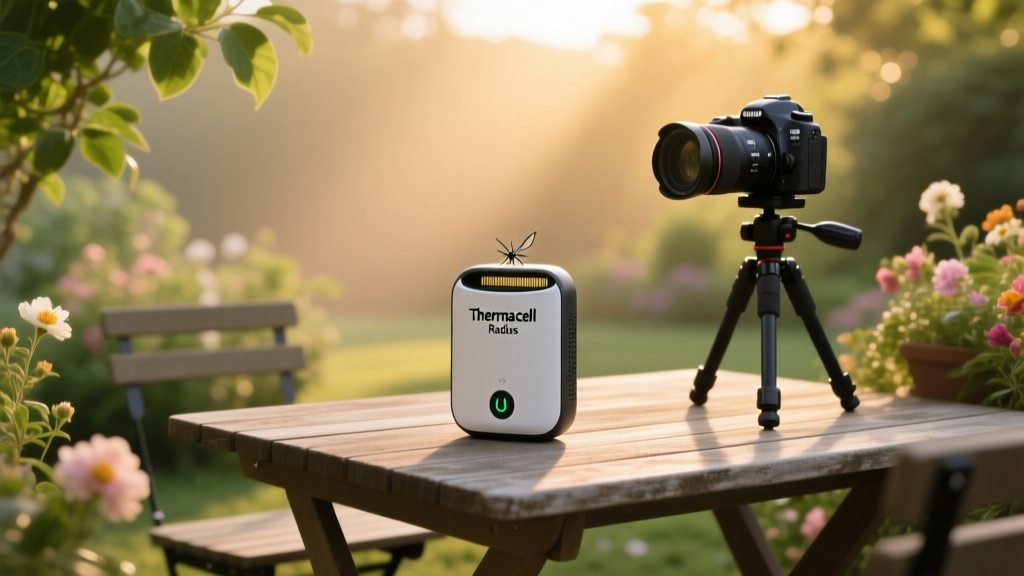
Thermacell Radius Mosquito Yard Treatment for Garden Photos 2026
Anna KowalskiPublished
The Golden Hour Dilemma: Mosquitoes vs. Macro Photography
In the world of garden photography and horticultural documentation, 2026 has brought incredible advancements in macro lenses, drone mapping, and high-resolution time-lapse equipment. However, one ancient adversary remains entirely unchanged: the mosquito. For garden photographers, entomologists, and homeowners practicing Integrated Pest Management (IPM), capturing the intricate details of garden life requires immense patience and stillness. Unfortunately, the best lighting conditions for garden photography—dawn and dusk, universally known as the 'golden hour' and 'blue hour'—coincide precisely with peak mosquito feeding times.
When you are trying to document the delicate emergence of a lacewing, the precise feeding damage of an aphid colony, or the dew-covered petals of a morning bloom, swatting at mosquitoes is more than just a nuisance. It causes camera shake, ruins long-exposure shots, and breaks your concentration. More importantly, traditional mosquito yard treatments and personal repellents can actively interfere with your photography and the very ecosystem you are trying to document. This is where the Thermacell Radius Zone Repeller has become an indispensable tool for outdoor visual documentation in 2026.
Why the Thermacell Radius is a Photographer’s Best Friend in 2026
The Thermacell Radius Zone Mosquito Repeller operates differently than traditional yard sprays or wearable bug bands. It utilizes a heat-activated liquid cartridge to create a 15-foot dome of protection. For a garden photographer, this spatial repellent technology offers three massive advantages over conventional pest control methods.
1. Zero Impact on Camera Gear and Lens Coatings
The most common and effective personal mosquito repellent is DEET. However, DEET is a known plasticizer and solvent. If you have ever handled a camera body, a rubberized lens grip, or a high-end weather-sealed lens with DEET on your fingers, you know the devastating results. DEET will permanently melt rubberized grips, degrade weather-sealing gaskets, and strip the expensive anti-reflective coatings off your macro lenses. By utilizing the Thermacell Radius as a localized yard treatment around your tripod, you eliminate the need to apply DEET to your skin, thereby protecting thousands of dollars of delicate 2026 photography gear from chemical degradation.
2. Scent-Free and Smoke-Free Operation
Traditional mosquito coils and citronella candles produce thick smoke and heavy odors. From a photography standpoint, smoke scatters both natural golden-hour light and artificial flash output, creating a hazy, low-contrast look in your macro images. Furthermore, strong scents and smoke will drive away the very subjects you want to photograph. If you are documenting beneficial pollinators like bees, butterflies, and hoverflies for your IPM records, smoke will cause them to flee the garden bed. According to guidelines on spatial repellents published by the Environmental Protection Agency (EPA), devices like the Thermacell Radius effectively clear an area of biting insects without releasing visible particulate smoke or heavy masking odors, keeping your subjects calm and your lighting pristine.
3. Silent, Distraction-Free Protection
Unlike buzzing fan traps or zappers that can ruin the ambient audio of your garden video documentation, the Thermacell Radius operates in total silence. This is critical for videographers capturing the natural soundscape of the garden alongside their visual pest documentation.
Setting Up Your Thermacell Radius for Yard Documentation
To maximize the 15-foot protection zone while shooting in the garden, strategic placement is key. The Radius is powered by a rechargeable lithium-ion battery (offering up to 12 hours of run time on the latest 2026 models), meaning you are not tethered to a wall outlet in the middle of your yard.
- Wind Direction: Always place the Thermacell Radius slightly upwind from your shooting position. The spatial repellent relies on air currents to carry the active ingredient across your 15-foot zone. If placed downwind, the protective dome will blow away from you and your camera equipment.
- Tripod Proximity: Clip or place the Radius near the base of your tripod. Mosquitoes often hover near the ground and are attracted to the dark, vertical silhouette of a tripod and the photographer standing still beside it.
- Elevation: While the Radius works well on the ground, placing it on a small stool or equipment case at waist height can help the repellent disperse more evenly through dense groundcover or tall ornamental grasses where you might be doing low-angle macro photography.
Documenting Pest Damage Without Becoming the Prey
Effective Integrated Pest Management relies heavily on accurate documentation. Homeowners and landscape professionals must photograph pest damage—such as the skeletonized leaves left by Japanese beetles or the sticky honeydew from aphid infestations—to track population dynamics over time. The University of California Statewide Integrated Pest Management Program emphasizes that monitoring and identifying pests in their natural habitat is the first step toward effective, eco-friendly control. However, standing still in a damp, shaded garden bed to capture high-resolution macro images of these pests makes you a prime target for mosquitoes breeding in nearby soil or water features.
By deploying the Thermacell Radius, you can comfortably spend 20 to 30 minutes in a single garden bed, using focus-stacking techniques and macro rails to document pest life cycles without the constant interruption of bites. Furthermore, the Centers for Disease Control and Prevention (CDC) continually warns about the health risks associated with mosquito-borne illnesses during extended outdoor activities. Protecting yourself during long documentation sessions is not just about comfort; it is a vital health and safety protocol for anyone spending hours in the yard at dawn or dusk.
Thermacell Radius vs. Traditional Yard Sprays: A 2026 Comparison
How does the Thermacell Radius compare to other mosquito yard treatments when your primary goal is garden photography and ecosystem documentation? Below is a comparison chart based on 2026 market data and photographic requirements.
| Treatment Method | Protection Zone | Impact on Camera Gear | Impact on Pollinators & Wildlife | Est. Cost (2026) |
|---|---|---|---|---|
| Thermacell Radius | 15-foot dome | None (Safe for all plastics/glass) | Minimal (Does not repel bees/butterflies) | $85 (Device) + $15 (Refills) |
| DEET Skin Sprays | Personal (3-foot aura) | Severe (Melts grips, ruins coatings) | N/A (Applied to skin) | $10 - $15 per bottle |
| Pyrethroid Yard Sprays | Entire Yard | None (Once dry) | High (Lethal to beneficial insects) | $60 - $120 per treatment |
| Citronella Coils | 5 to 8-foot radius | Smoke scatters light/flash | Moderate (Smoke drives away subjects) | $5 - $10 per box |
As the table illustrates, broad-spectrum Pyrethroid yard sprays are highly detrimental to garden documentation because they indiscriminately kill the beneficial insects (like ladybugs and parasitic wasps) that you want to photograph and encourage in an IPM system. The Thermacell Radius provides the perfect middle ground: localized, highly effective mosquito control that preserves the broader garden ecosystem.
Best Practices for 2026 Garden Photography Sessions
To get the most out of your Thermacell Radius during your next garden documentation session, follow these actionable tips:
- Pre-Heat the Device: Turn the Radius on 10 to 15 minutes before you begin setting up your tripod and camera gear. This allows the 15-foot protection dome to fully establish before you introduce your body heat and carbon dioxide into the zone.
- Monitor the Indicator Light: The 2026 Radius models feature subtle LED indicator lights to show battery and cartridge life. Keep an eye on this during long time-lapse sessions to ensure your protection doesn't silently expire during a 3-hour dusk shoot.
- Eliminate Breeding Sites First: Spatial repellents work best when local mosquito populations are managed. As part of your garden documentation, actively photograph and map out areas of standing water, clogged gutters, or over-irrigated potted plants. Eliminating these breeding grounds reduces the overall pest pressure, allowing the Thermacell Radius to work more efficiently.
- Pair with Protective Clothing: For extreme mosquito pressure in heavily wooded garden areas, pair the Radius with light-colored, loose-fitting clothing. Avoid dark blues and blacks, which are highly attractive to mosquitoes and also cause your camera's light meter to overcompensate if they enter the edge of your frame.
Conclusion
Garden photography and pest documentation require a delicate balance between human intervention and natural observation. In 2026, the Thermacell Radius Zone Repeller stands out as the ultimate mosquito yard treatment for visual artists and IPM practitioners alike. By providing a scent-free, smoke-free, and gear-safe bubble of protection, it allows you to focus entirely on the beauty and biology of your garden. Whether you are capturing the iridescent wings of a beneficial hoverfly or documenting the early signs of a mite infestation, the Radius ensures that the only thing you take home from your golden hour photo session is a portfolio of stunning, high-resolution images.