Gardening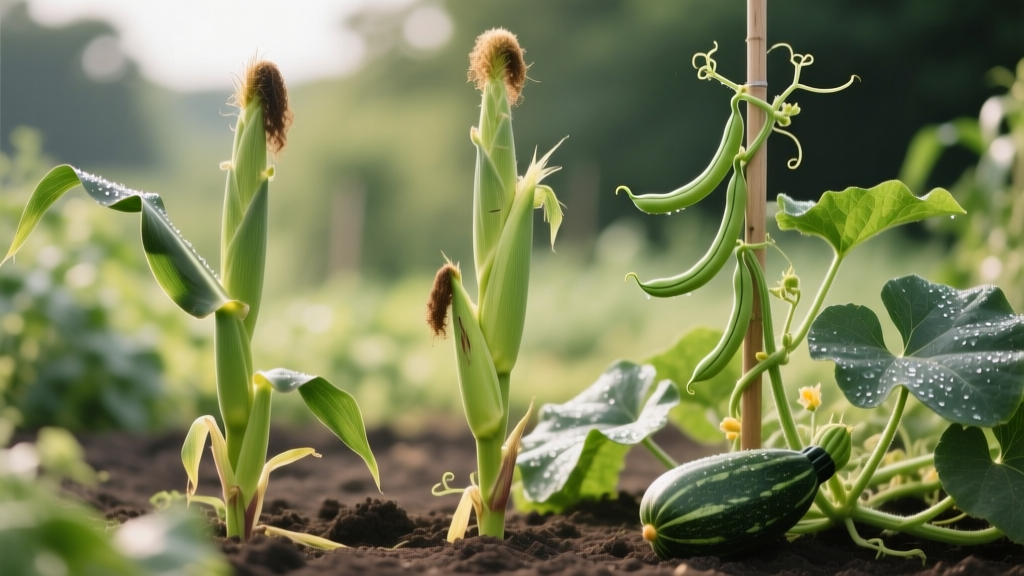
Three Sisters Pruning & Timing Guide 2026: Corn, Beans, Squash
Robert HayesPublished
The Evolution of the Three Sisters Method in 2026
The Three Sisters companion planting method—comprising corn, pole beans, and squash—is a masterpiece of indigenous agricultural engineering. Originating with the Haudenosaunee (Iroquois) and other Native American tribes, this polyculture system creates a symbiotic environment where each plant supports the others. The corn provides a natural trellis for the beans, the beans fix atmospheric nitrogen into the soil to feed the heavy-feeding corn, and the broad leaves of the squash act as a living mulch to retain moisture and suppress weeds. However, as we navigate the 2026 growing season, gardeners are discovering that simply planting these three crops together in a mound is not enough to guarantee a bumper crop. To achieve maximum yields and prevent chaotic overgrowth, precise pruning methods, selective thinning, and strategic timing are absolutely essential. According to agricultural historians and experts at Native Seeds/SEARCH, understanding both the historical context and the modern growth management of these crops is vital for a successful, sustainable harvest in today's shifting climate.
Why Pruning and Growth Management Matter in Polycultures
In a traditional monoculture garden, plants generally have ample space to sprawl and grow without interference. In a Three Sisters mound, space is at an absolute premium. Without strategic pruning and growth management, the vigorous squash vines can easily choke out young corn seedlings before they establish, and the pole beans can become top-heavy, pulling the corn stalks to the ground during late-summer windstorms. Pruning in this specific context is less about shaping woody shrubs and much more about selective thinning, apical pinching, and vine management. The goal is to direct the plant's energy toward fruit and pod production rather than endless, unmanageable vegetative growth. By manipulating the apical dominance and lateral branching of these crops, you maintain the delicate balance of the polyculture, ensuring that all three sisters receive adequate sunlight, airflow, and nutrients throughout the 2026 season.
Corn (Maize): Thinning and Sucker Management
Corn does not require traditional pruning in the way that tomatoes or fruit trees do, but it demands rigorous thinning and sucker management to thrive in a dense polyculture. When planting in 2026, climate shifts and extended mid-summer heatwaves mean that water conservation and root-zone management are paramount. Overcrowded corn competes fiercely for moisture, leading to stunted ears and poor pollination. Once your corn seedlings are 4 to 6 inches tall, you must thin them to one strong stalk every 12 inches within the mound. Do not pull the unwanted seedlings, as this can disturb the shallow roots of the remaining corn; instead, snip them at the soil line with sterilized micro-snips.
Furthermore, monitor the base of the established stalks for "suckers" or tillers. While some heritage and indigenous varieties produce edible tillers that can be harvested later, most modern sweet corn and dent corn varieties will divert crucial energy away from the primary ears if suckers are left intact. Use a sterilized hori-hori knife or sharp bypass pruners to carefully excise basal suckers when they are 2 to 3 inches long. This ensures the main stalk channels all its resources into developing robust, well-filled ears. For more baseline metrics on corn stalk maturation and spacing, the Old Farmer's Almanac provides excellent, up-to-date guidelines for modern home gardeners.
Pole Beans: Apical Pinching and Vine Training
Pole beans are aggressive, fast-growing climbers. Left unchecked, a single bean vine will scale an 8-foot corn stalk, wrap tightly around the tassel, and continue searching for higher ground. This often results in a tangled, heavy mess that blocks sunlight from the corn's lower leaves, impedes wind pollination of the corn silks, and makes harvesting the beans a frustrating chore. The critical pruning technique for pole beans in the Three Sisters system is known as "apical pinching."
Once the primary bean vine reaches the top of the corn stalk—usually around 6 to 8 feet high—use your thumb and forefinger or a pair of precision pruning snips to pinch off the apical meristem (the growing tip). This simple, timely action halts vertical growth and triggers the plant's hormonal response to produce lateral branches. These lateral branches will wrap securely around the corn stalk and the bean vines themselves, creating a thick, stabilizing web. This web not only reinforces the corn against heavy winds but also exponentially increases your pod-bearing nodes, resulting in a much heavier harvest of beans. If you notice secondary vines attempting to bridge the gap to neighboring corn stalks, gently untangle and prune them back to maintain distinct, manageable zones within your garden.
Squash: Strategic Vine Pruning and Airflow Management
Squash is the protective older sister of the trio, shading the soil with massive leaves to retain moisture, cool the root zone, and suppress competitive weeds. However, in the humid, sheltered microclimate of a dense Three Sisters mound, poor airflow can lead to devastating fungal issues like powdery mildew and downy mildew, which are particularly aggressive in the humid spells of the 2026 season. Strategic vine pruning and leaf thinning are your best cultural defenses.
When the primary squash vine reaches 4 to 5 feet in length, pinch the tip to encourage secondary runners. Allow only two or three secondary runners to develop, and prune away any tertiary vines that attempt to sprawl into neighboring mounds or climb the base of the corn stalks. Additionally, perform routine "leaf thinning" by removing older, yellowing leaves near the base of the plant, as well as any foliage showing early signs of fungal spotting. The University of Minnesota Extension emphasizes that improving airflow through selective leaf removal is one of the most effective cultural controls for cucurbit diseases. Always cut squash vines cleanly with sterilized loppers or pruners, and never tear them by hand, as jagged wounds invite bacterial wilt and the dreaded squash vine borer.
2026 Three Sisters Pruning and Maintenance Calendar
Timing is everything when managing a polyculture. Use the following structured calendar to guide your pruning and maintenance tasks throughout the 2026 growing season.
| Timeline | Crop Focus | Growth Stage | Pruning / Management Action |
|---|---|---|---|
| Weeks 2-3 | Corn | Seedling (4-6 inches) | Thin to one stalk per 12 inches using micro-snips. Do not pull. |
| Weeks 3-4 | Squash | Vining (1-2 feet) | Remove cotyledons and lowest leaves to prevent soil-borne splash diseases. |
| Weeks 4-6 | Corn | V12 Stage (Knee-high) | Excise basal suckers/tillers with a sterilized hori-hori knife. |
| Weeks 6-8 | Beans | Climbing (Mid-stalk) | Gently guide vines onto corn stalks; prune ground-crawling runners. |
| Weeks 8-10 | Squash | Primary Vine (4-5 feet) | Pinch primary vine tip. Prune tertiary runners to limit sprawl. |
| Weeks 10-12 | Beans | Topping the Corn | Apical pinch the bean tips to force lateral branching and pod set. |
| Weeks 12-16 | Squash | Fruiting / Flowering | Thin interior leaves for airflow. Remove powdery mildew-infected foliage. |
Tool Selection and Sanitation Protocols for 2026
Executing these pruning methods requires the right tools. For precision work like pinching bean tips and snipping corn seedlings, the 2026 Niwaki Pro Tripod micro-snips are highly recommended for their ergonomic grip and razor-sharp, replaceable blades. For excising corn suckers and managing thick squash vines, a traditional Japanese hori-hori knife or a classic Felco Model 2 bypass pruner remains the gold standard. Avoid anvil pruners, as they tend to crush the fleshy, succulent stems of cucurbits and beans, leaving the plant vulnerable to pathogens.
Equally important is tool sanitation. Because the Three Sisters mound is a dense, interconnected ecosystem, a fungal or bacterial infection introduced via dirty pruners can spread rapidly from the squash to the beans and corn. Keep a small spray bottle of 70% isopropyl alcohol or a 10% bleach solution in your garden apron. Wipe down your blades after every single plant you prune, and always allow the alcohol to evaporate for a few seconds before making the next cut to avoid chemical damage to the plant tissue.
Conclusion
The Three Sisters companion planting method is a beautiful, time-tested system that rewards the attentive gardener with a diverse, abundant harvest. By viewing pruning not as a destructive act, but as a method of guiding energy and maintaining harmony within the mound, you can overcome the natural challenges of polyculture gardening. Stick to the 2026 pruning calendar, manage your corn suckers, pinch those bean vines, and keep your squash canopy open and breathing. With these targeted techniques, your Three Sisters garden will thrive, producing a bountiful yield of sweet corn, crisp beans, and robust squash well into the autumn months.
