Pest Control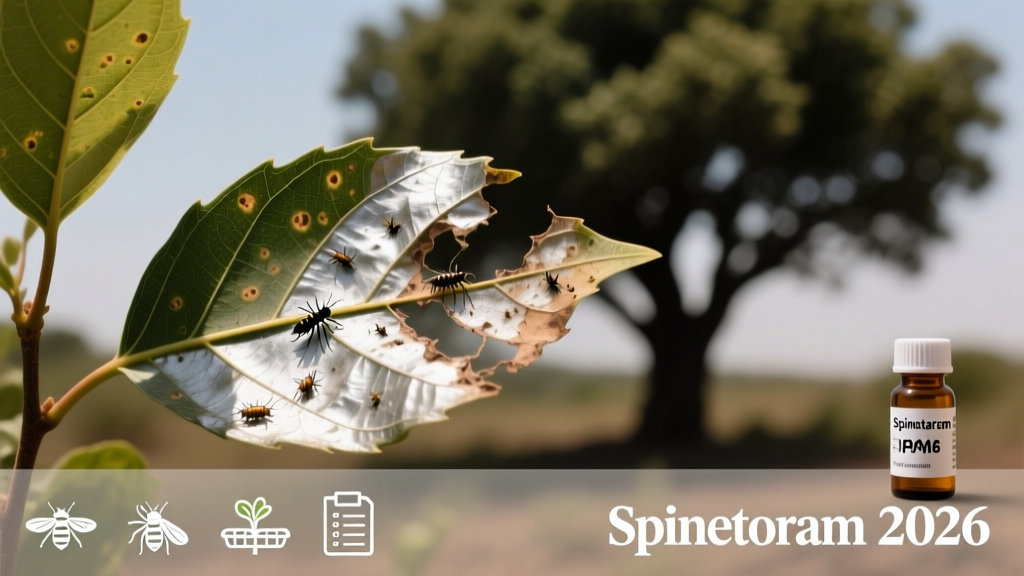
Thrips Damage Identification & Spinetoram Guide 2026
James MillerPublished
Introduction: Beyond Web Worms – The 2026 Thrips Threat
Welcome back to the Tree Web Worm Control and Canopy Pest Management series. As regular readers know, our column typically focuses on the heavy, localized defoliators that plague ornamental trees, such as the fall webworm (Hyphantria cunea) and the eastern tent caterpillar. These pests are notorious for their unsightly silk tents and aggressive leaf-chewing habits. However, the 2026 growing season has introduced a severe, widespread outbreak of a completely different canopy threat: thrips. Unlike the macroscopic caterpillars we usually discuss, thrips operate as stealthy, microscopic vampires that can devastate a tree’s photosynthetic capacity before the untrained eye even notices a problem.
In this 2026 guide, we are pivoting from web-building caterpillars to microscopic rasping insects. We will focus specifically on accurate thrips damage identification and the highly targeted, industry-leading spinetoram treatment protocols that arborists and lawn care professionals are relying on this year to save stressed ornamental trees and shrubs.
Identifying Thrips Damage on Trees and Shrubs
Thrips belong to the order Thysanoptera and are incredibly tiny, slender insects, usually measuring between 1 and 2 millimeters in length. Because of their size, they are rarely seen by homeowners until the damage is already severe. While web worms consume entire leaf margins and create large, conspicuous silk nests, thrips feed by puncturing the outer layer of plant tissue and sucking out the cell contents. This unique feeding mechanism results in highly specific visual symptoms.
Visual Symptoms of Thrips Feeding
- Silvery Stippling and Bronzing: The most common early sign of thrips damage is a silvery, speckled appearance on the upper or lower leaf surfaces. As the 2026 summer heat intensifies, this stippling often turns into a dull, bronzed, or scorched appearance, which is frequently misdiagnosed as drought stress or spider mite damage.
- Black Fecal Specks: Thrips leave behind tiny, varnish-like black droplets of feces on the leaf surface. If you see silvery rasping accompanied by pinpoint black specks, you are almost certainly dealing with thrips, not web worms or caterpillars.
- Leaf Curling and Distortion: Species like the Ficus thrips and Citrus thrips feed heavily on new, tender flush growth. This causes the emerging leaves to curl, fold, or become severely distorted, creating tight pockets where the insects hide and reproduce.
- Early Leaf Drop: Heavy infestations on ornamental pears, viburnums, and privets will cause the tree to prematurely abort its leaves, leading to severe canopy thinning by late July.
The Shake Test: Confirming an Active Infestation
Because thrips hide inside curled leaves, flower buds, and tight leaf axils, visual inspection of the damage is not always enough to confirm an active population. Arborists recommend the "shake test." Hold a piece of white paper or a clipboard beneath a damaged branch and sharply tap or shake the foliage. If thrips are present, you will see tiny, yellowish-brown or black, fast-moving slivers scurrying across the white surface. For a more detailed breakdown of regional thrips species, consult the UC IPM Thrips Guidelines, which remains the gold standard for pest identification.
Why Spinetoram is the Gold Standard in 2026
When managing canopy pests like web worms, broad-spectrum pyrethroids or biologicals like Bacillus thuringiensis (Bt) are often sufficient. Thrips, however, require a different approach. Their thigmotactic behavior (hiding in tight crevices) and rapid reproductive cycles make them highly resilient to contact-only sprays. In 2026, spinetoram has cemented its position as the premier active ingredient for thrips control in ornamental trees and shrubs.
Spinetoram is a semi-synthetic spinosyn, derived from the soil-dwelling bacterium Saccharopolyspora spinosa. It offers a unique combination of rapid knockdown power and excellent translaminar movement. Translaminar activity is critical for thrips control; when applied to the leaf surface, spinetoram penetrates the leaf tissue and creates a reservoir of the active ingredient inside the leaf. When hidden thrips feed on the treated tissue, they ingest a lethal dose, even if the spray didn't directly contact their hiding spot.
Furthermore, according to the IRAC Mode of Action Classification, spinetoram belongs to Group 5 (Nicotinic acetylcholine receptor allosteric activators). This makes it an exceptional rotational partner for resistance management, especially in regions where thrips have developed immunity to older chemistries like organophosphates or neonicotinoids.
Spinetoram Application Guide & Dosage Chart
Proper calibration and timing are essential for maximizing the efficacy of spinetoram while minimizing environmental impact. Commercial arborists typically use spinetoram formulations such as Radiant SC (11.7% active ingredient). Below is the 2026 recommended dosage chart for common ornamental trees and shrubs suffering from thrips outbreaks.
| Tree / Shrub Species | Target Thrips Species | Spinetoram Rate (per 100 gal) | Adjuvant Requirement | Application Timing |
|---|---|---|---|---|
| Ficus spp. (Hedges/Trees) | Ficus Thrips | 5 - 10 fl oz | Non-ionic surfactant | At first sign of leaf folding |
| Citrus spp. (Ornamental) | Citrus Thrips | 6 - 8 fl oz | Horticultural oil (check temp) | During spring flush growth |
| Viburnum & Privet | Greenhouse / Chillie Thrips | 5 - 8 fl oz | Penetrant adjuvant | Early morning, thorough coverage |
| Ornamental Pear & Cherry | Pear Thrips | 6 - 10 fl oz | Spreader-sticker | Post-bloom, before leaf hardening |
Note: Always read the 2026 EPA-approved product label before application. Pricing for commercial spinetoram has stabilized in 2026, averaging around $165 to $180 per pint, making it a cost-effective solution given its low use rates and high efficacy.
Integrating Spinetoram into Your Tree IPM Program
Just as we advocate for Integrated Pest Management (IPM) when dealing with fall web worms—preserving natural predators like parasitic wasps and birds—spinetoram must be used thoughtfully within a broader IPM framework. While spinetoram is highly effective, over-reliance on any single Mode of Action will lead to resistance.
Resistance Management Strategies
To prevent thrips from developing resistance to IRAC Group 5 chemicals, arborists should rotate spinetoram with alternative chemistries. Excellent rotational partners for the 2026 season include:
- Abamectin (IRAC Group 6): Excellent for translaminar control of both thrips and spider mites, which often co-occur during hot, dry summer months.
- Insecticidal Soaps & Horticultural Oils: Best used as contact sprays for early-season, low-population knockdowns or during tree dormancy.
- Azadirachtin: A botanical insect growth regulator that disrupts thrips molting, ideal for sensitive environments or near pollinator habitats.
Protecting Beneficial Insects
One of the greatest advantages of spinetoram over older broad-spectrum pyrethroids is its relative safety for beneficial insects once it has dried. Predatory thrips, lacewings, and predatory mites (such as Neoseiulus cucumeris) are vital for long-term canopy health. Spinetoram is highly toxic to bees and aquatic invertebrates when wet. Therefore, strict adherence to application timing is non-negotiable. Always apply spinetoram in the late evening or early morning when pollinators are not actively foraging, and never spray directly onto blooming ornamental trees or flowering weeds beneath the tree's drip line.
"The key to modern arboriculture is not just eradicating the pest, but preserving the tree's biological defense system. Spinetoram allows us to eliminate thrips while leaving a safe window for beneficial predators to return once the residue dries." — 2026 Urban Forestry Best Practices Report.
Conclusion
While the Tree Web Worm Control series will always have a special place for managing the large, web-spinning caterpillars of late summer, the 2026 thrips outbreak demands our immediate attention. Thrips may be small, but their ability to weaken ornamental trees, stunt flush growth, and cause premature defoliation makes them a top-tier threat to landscape health. By mastering the visual identification of silvery stippling and black fecal specks, and by utilizing the translaminar power of spinetoram at the correct rates, lawn care professionals and arborists can effectively protect their canopies. For further reading on managing landscape pests, be sure to review the Clemson Extension Thrips Factsheet to stay updated on regional pest pressures and local treatment regulations.