Gardening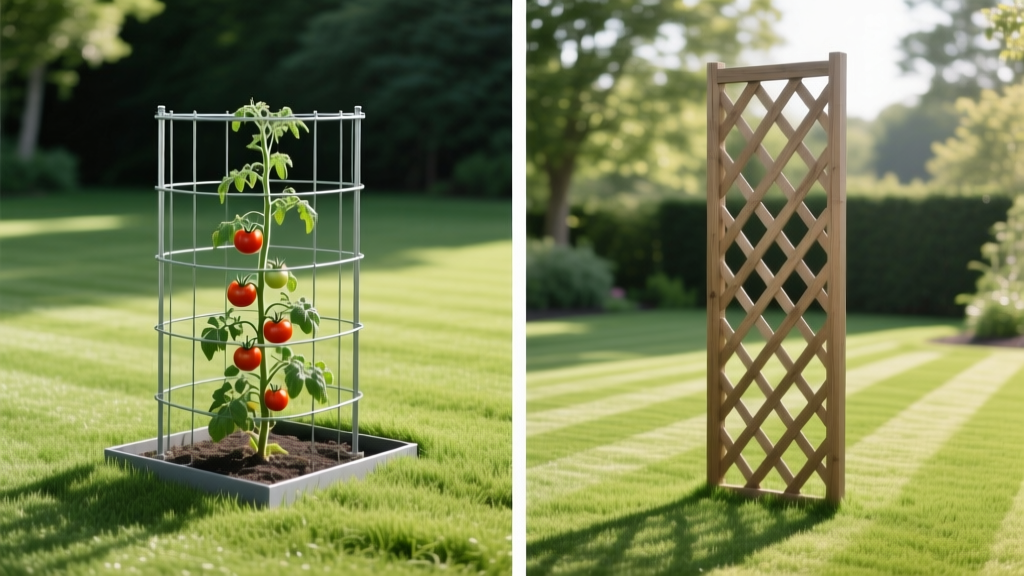
Tomato Cage vs Trellis 2026: Mowing Patterns & Support Comparison
Robert HayesPublished
The Intersection of Pristine Lawns and Productive Gardens
For the modern suburban homesteader in 2026, maintaining a pristine, professionally striped lawn while simultaneously cultivating a high-yield vegetable garden is the ultimate landscaping achievement. However, when integrating indeterminate tomato plants into a mixed lawn-and-garden landscape, the support structure you choose dictates far more than just your harvest quality. The debate between using a tomato cage vs trellis support methods is fundamentally a question of spatial geometry, and that geometry directly impacts your mowing techniques, turning radius, and overall turfgrass health.
As zero-turn mowers and advanced lawn striping kits become more accessible to homeowners, the physical footprint of your garden structures plays a critical role in how you navigate your yard. In this comprehensive 2026 guide, we evaluate tomato cages and trellises strictly through the lens of lawn care, mowing patterns, and turf maintenance, helping you design a garden that supports both massive tomato harvests and flawless lawn stripes.
The Spatial Footprint: Circles vs. Linear Lines
The primary difference between a tomato cage and a trellis system is the geometric footprint they impose on your landscape. This footprint determines your mowing pattern. A tomato cage creates a circular obstacle, while a trellis creates a linear boundary. Understanding how your mower deck interacts with these shapes is essential for avoiding turf scalping, minimizing soil compaction, and maintaining efficient mowing routes.
Tomato Cages: The Circular Obstacle
Standard wire tomato cages, as well as the heavy-duty powder-coated and composite-ring cages popular in 2026, occupy a circular footprint typically ranging from 18 to 24 inches in diameter. When placed in a garden bed bordered by turfgrass, these circular structures force the mower operator to execute constant, tight steering adjustments.
If you are using a zero-turn mower, navigating around a series of tomato cages requires rapid, alternating lever movements. This stop-and-turn motion disrupts the rhythmic, overlapping back-and-forth passes required for professional lawn striping. Furthermore, tight turns around circular cages often lead to 'tire burn' or turf tearing, especially when the grass is damp from morning dew. The front caster wheels of zero-turn mowers can also scrape the soil near the base of the cage if the garden border lacks a defined, deep edge.
Trellis Systems: The Linear Advantage
Trellis systems—whether you are utilizing a traditional Florida weave, an A-frame cattle panel setup, or modern modular composite trellis walls—create a linear footprint. From a lawn mowing perspective, linear structures are vastly superior for maintaining efficient mowing patterns.
A linear trellis allows you to align your mowing passes parallel to the garden bed. You can engage your mower's cruise control, drop the striping kit, and execute long, uninterrupted, straight-line passes right up to the edge of the trellis border. This not only saves time and reduces fuel or battery consumption but also ensures that the turfgrass near the garden edge is cut evenly without the risk of scalping caused by the pivoting movements required around circular cages.
Comparative Data: Cages vs. Trellises for Lawn Integration
To help you decide which support method best suits your landscape design and mowing equipment, we have compiled a comparative analysis based on 2026 landscaping standards and turf management principles.
| Feature | Tomato Cages (Heavy Duty) | Linear Trellis Systems |
|---|---|---|
| Geometric Footprint | Circular (18-24" diameter) | Linear (Variable length, 4-6" depth) |
| Mower Maneuverability | Poor; requires tight pivoting and constant steering adjustments. | Excellent; allows for long, straight, uninterrupted passes. |
| Impact on Striping | Disrupts visual lines; creates curved shadow anomalies. | Enhances striping; parallel lines emphasize garden borders. |
| Turf Scalping Risk | High near the base due to mower deck tilt on tight turns. | Low; mower deck remains level on straight perimeter passes. |
| Edging Requirements | Requires extensive string trimming around each individual cage. | Simple mechanical edging along a single continuous border line. |
| Shade Pattern on Turf | Concentrated circular shade; high risk of localized turf fungal disease. | Diffused linear shade; moves evenly across grass throughout the day. |
| Average 2026 Cost | $25 - $45 per cage | $80 - $150 per 8-foot panel/setup |
Turfgrass Health: Shade Mapping and Airflow
Beyond the physical act of mowing, the support structure you choose impacts the microclimate of the adjacent turfgrass. According to turf management guidelines from the University of Minnesota Extension, consistent sunlight and proper airflow are critical for preventing fungal pathogens like brown patch and dollar spot in residential lawns.
Tomato cages, particularly when fully engulfed by dense indeterminate foliage by mid-summer, cast a dense, circular shadow. This localized shade traps moisture against the grass blades directly beneath and immediately adjacent to the cage. If your mowing pattern forces you to discharge clippings toward the cages, the combination of shade, moisture, and decaying organic matter creates a perfect breeding ground for turf disease.
Conversely, a vertical trellis system casts a linear shadow that migrates smoothly across the lawn as the sun moves from east to west. This transient shade pattern prevents any single patch of grass from remaining in perpetual dampness. Additionally, trellises promote better lateral airflow across the lawn-garden boundary, helping the turf dry faster after morning dew or irrigation cycles.
Edging and Perimeter Mowing Techniques
The choice between cages and trellises also dictates your edging and string-trimming routines. A crisp, defined edge is the hallmark of a well-maintained lawn, but achieving it around garden structures requires specific techniques.
Mowing Around Tomato Cages
When mowing around tomato cages, the best technique is the 'concentric perimeter' approach. Make your first pass around the entire garden bed to establish the border. Then, when approaching individual cages that might slightly overhang the turf, you must rely on a commercial-grade string trimmer. In 2026, using a trimmer with a variable-speed trigger and a guard wheel is essential to prevent 'trunking' or damaging the lower tomato stems while edging the grass. Because cages are individual obstacles, string trimming becomes a tedious, stop-and-start process that doubles the time spent on garden perimeter maintenance.
Mowing Along Trellises
Trellises allow for the 'continuous trench' edging technique. By installing a physical barrier, such as a steel or composite landscape edging strip flush with the soil line beneath the trellis, you can run a mechanical lawn edger or the side of your mower deck along the entire length of the garden in one fluid motion. The Penn State Extension notes that proper pruning and training of tomatoes to a single or double leader on a trellis keeps the lower foliage elevated. This elevation provides vital clearance for mower decks and string trimmers, allowing you to maintain the lawn edge without risking damage to the plant's primary vascular stems.
Soil Compaction and Root Zone Protection
Heavy lawn equipment, particularly gas-powered zero-turn mowers and commercial battery models, exert significant ground pressure. When maneuvering around tomato cages, the repetitive pivoting on the front caster wheels compacts the soil in a circular ring around the plant's root zone. Over the course of a growing season, this compaction restricts water infiltration and oxygen flow to the tomato roots, potentially stunting fruit production despite optimal fertilization.
Linear trellis systems, especially when paired with raised beds or defined hardscape borders, keep the mower's weight entirely on the turf side of the boundary. The linear mowing pattern distributes the mower's weight evenly across the lawn rather than concentrating it in tight, repetitive turning zones near the plant roots. For gardeners prioritizing both soil health and lawn aesthetics, the trellis offers a distinct agronomic advantage.
Conclusion: Designing for the Mower
As you plan your 2026 vegetable garden, looking beyond the harvest and considering the weekly chore of lawn maintenance will save you hours of frustration and protect your turfgrass investment. While heavy-duty tomato cages offer a quick, drop-in solution for container gardening or isolated patio setups, they are the enemy of efficient mowing patterns and pristine lawn striping. Their circular footprint forces erratic steering, increases the risk of turf scalping, and creates localized shade zones that invite lawn disease.
For the dedicated lawn care enthusiast who demands straight lines, efficient mowing routes, and healthy adjacent turf, the linear trellis system is the undisputed champion. By aligning your tomato support structures with your mowing patterns, you create a harmonious landscape where a bountiful harvest and a championship-caliber lawn coexist beautifully.
