Gardening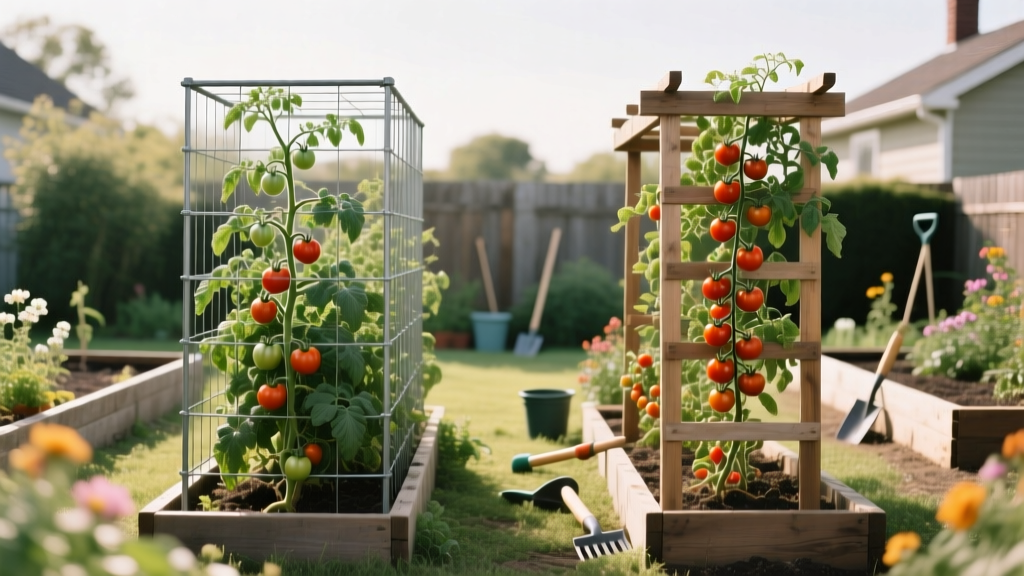
Tomato Cages vs Trellises: 2026 Garden Photo Guide
David ParkPublished
The Intersection of Horticulture and Visual Documentation in 2026
Garden documentation has evolved far beyond simple harvest journals. In 2026, with the advent of 200-megapixel smartphone sensors, AI-driven phenotyping apps, and ultra-compact weather-sealed mirrorless cameras, capturing the complete lifecycle of your Solanum lycopersicum is both a precise science and a captivating art form. However, the way you choose to support your tomato plants fundamentally dictates how you will photograph them. The physical architecture of your garden acts as your studio set, and the choice between tomato cages and trellises is the most critical set design decision you will make this season.
For garden photographers, content creators, and meticulous journalers, the debate of tomato cage vs trellis is not just about airflow and yield; it is about visual geometry, shadow management, and lens accessibility. According to the Royal Horticultural Society, proper support is essential not just for disease prevention, but for fruit presentation and garden aesthetics. Let us explore how these two dominant support methods compare through the lens of a 2026 garden photographer.
Tomato Cages: Embracing the Chaotic Bounty
Tomato cages, particularly heavy-duty powder-coated models or concrete reinforcement wire (remesh) cylinders, offer a distinct visual aesthetic: the wild, abundant, and slightly chaotic look of a traditional cottage garden. From a photography standpoint, cages present unique challenges and rewarding opportunities.
The Macro Photography Advantage
Because cages allow the plant to bush out in a 360-degree sphere, they create hidden micro-environments. For macro photographers using modern probe lenses or smartphone macro attachments, caged tomatoes offer a sense of discovery. You are often shooting through layers of foliage to find a perfectly ripe heirloom tomato nestled deep within the canopy. This creates natural foreground blur (bokeh) that frames the subject beautifully, giving your garden documentation a lush, immersive feel.
The Challenge of Visual Clutter
The primary drawback of cages for wide-angle garden photography is visual clutter. Standard wire cages can create a distracting grid pattern that competes with the subject. Furthermore, on high-resolution 2026 camera sensors, the intersecting wires can cause a moiré effect—a strange, wavy visual artifact that can ruin an otherwise perfect shot. To combat this, editorial garden photographers often opt for minimalist, thick-gauge steel cages with fewer horizontal rings, or they use a telephoto lens (like a 70-200mm) to compress the background and narrow the depth of field, effectively melting the wire grid into a soft, unnoticeable blur.
Trellises: Architectural Elegance and Clean Lines
Trellising systems—ranging from the traditional Florida Weave to rigid cattle panel arches and Hortonova netting—represent the architectural approach to tomato growing. By training indeterminate varieties to a single or double leader, you create a garden that looks organized, deliberate, and highly structured.
Leading Lines and Wide-Angle Compositions
For wide-angle environmental portraits of your garden, trellises are unmatched. The strong vertical lines of a trellis system act as natural leading lines, drawing the viewer’s eye from the foreground soil directly up to the canopy and the sky. If you are using a cattle panel bent into an archway, you create a natural framing device that is perfect for portrait-orientation shots, allowing you to stand beneath the tunnel and shoot upward, capturing the hanging fruit against the backdrop of the sun or sky.
Unobstructed Subject Isolation
Because trellising requires consistent pruning of suckers, the foliage is kept relatively flat against the support plane. As noted by the University of Minnesota Extension, this pruning technique maximizes airflow and sun exposure, but for a photographer, it means there is no wire grid between your lens and the fruit. You have unobstructed access to the tomatoes, making it incredibly easy to capture clean, magazine-style images of the produce without having to shoot through distracting metal barriers.
The 2026 Gear Guide: Lenses and Lighting for Supports
Your choice of support structure should also influence the gear you deploy in the garden. In 2026, computational photography and AI subject-tracking autofocus have changed how we document plant growth, but optical physics still apply.
- For Caged Tomatoes: Rely on telephoto macro lenses (90mm to 105mm equivalent). The compressed focal length allows you to isolate individual fruit clusters through the chaotic foliage and wire grid. Use off-camera flash or a portable LED panel to illuminate the shadows cast by the dense outer canopy.
- For Trellised Tomatoes: Wide-angle lenses (16mm to 35mm equivalent) are your best friend. You can step back and capture the entire row, emphasizing the rhythmic repetition of the vertical plants. Mid-day sun, which is usually harsh, can be managed by the flat plane of the trellis, allowing you to use a polarizing filter to cut glare off the waxy tomato leaves.
Visual Documentation Comparison Chart
To help you decide which support method aligns with your garden photography and documentation goals, refer to the comparison table below.
| Feature | Tomato Cages | Trellis Systems |
|---|---|---|
| Aesthetic Style | Rustic, abundant, wild, cottage-core | Modern, architectural, organized, formal |
| Macro Photography | Excellent for hidden, layered compositions | Excellent for clean, unobstructed subject shots |
| Wide-Angle Shots | Poor; wire grids cause visual clutter and moiré | Excellent; strong vertical leading lines |
| Time-Lapse Suitability | Moderate; lateral growth can obscure the lens | High; predictable vertical growth patterns |
| Shadow Management | Complex, dappled shadows on fruit | Directional, easily managed with reflectors |
| Pruning Visibility | Low; hides missed suckers and yellowing leaves | High; demands meticulous grooming for good photos |
Time-Lapse and AI Phenotyping Documentation
One of the most exciting documentation trends in 2026 is the use of long-term time-lapse photography combined with AI phenotyping to track plant vigor and fruit set. If you are setting up a weather-sealed camera or a dedicated time-lapse rig (like a Brinno TLC200 Pro or a repurposed smartphone on a solar trickle charger), trellises are vastly superior.
Because trellised tomatoes grow predictably upward along a single plane, you can lock your camera on a tripod for 90 days and the plant will remain perfectly within the frame. Caged tomatoes, conversely, grow laterally and unpredictably. A heavy fruit cluster may pull a branch outside your camera's field of view, or the dense foliage may completely obscure the main stem, rendering your time-lapse data visually confusing. As highlighted by the experts at GrowVeg, the physical footprint and growth habit dictated by your support system directly impacts how you monitor and record your garden's progress over time.
"In modern garden documentation, the support structure is not just a tool for the plant; it is the scaffolding for your visual narrative. Choose the structure that best tells the story you want to capture."
Final Thoughts for the 2026 Season
Ultimately, the choice between tomato cages and trellises for your 2026 garden depends on the visual story you want to tell. If your goal is to document the romantic, untamed bounty of nature, focusing on the hidden treasures and lush foliage of a cottage-style garden, heavy-duty cages are your best set design. They force you to look closer, shoot tighter, and embrace the beautiful chaos of the harvest.
However, if your documentation goals lean toward clean, editorial-style imagery, satisfying time-lapse videos, and architectural garden design, trellising is the undisputed champion. The clean lines, unobstructed fruit, and predictable growth habits make trellises a dream for the modern garden photographer. Whichever method you choose, ensure your camera battery is charged, your lenses are clean, and your garden is ready for its close-up.
