Gardening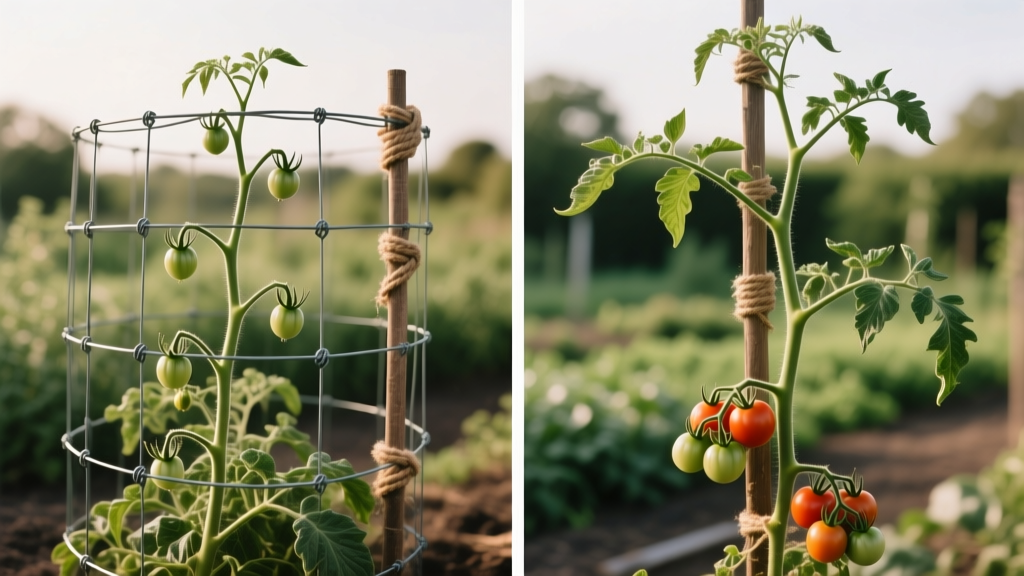
Tomato Cage vs Trellis: 2026 Pruning & Support Guide
James MillerPublished
Tomato Cages vs. Trellises: The 2026 Pruning Connection
As home gardeners prepare for the 2026 growing season, the debate between using tomato cages versus trellises remains a central topic in vegetable gardening. However, this choice is not merely about structural support; it fundamentally dictates your entire pruning strategy, suckering timeline, and ultimate harvest yield. With shifting climate patterns bringing wetter springs and more humid summers to many regions in 2026, proper pruning paired with the right support system is critical for disease prevention and maximizing fruit production.
Whether you are growing compact determinate patio varieties or sprawling indeterminate heirlooms, understanding how your support method influences your pruning schedule will save you hours of labor and prevent devastating fungal infections. In this comprehensive guide, we break down the exact pruning methods, timing, and 2026 product recommendations for both tomato cages and trellises.
Tomato Cages: Minimal Pruning for Determinate Varieties
Traditional conical wire cages have largely been replaced in 2026 by heavy-duty, tall cylindrical cages. Cages are best suited for determinate and semi-determinate tomato varieties, which naturally grow to a fixed height, set their fruit all at once, and then decline. Because these plants are genetically programmed to bush out, aggressive pruning can actually reduce your overall yield.
Recommended 2026 Cage Products
- Titan Tall Heavy-Duty Steel Cages: Retailing around $38 per cage in 2026, these 5.5-foot tall, powder-coated steel cages provide robust support without the risk of collapsing under the weight of a heavy late-summer harvest.
- K-Brands 6-Foot Expandable Cages: Priced at approximately $28, these feature adjustable rings that allow you to customize the support width as the plant's canopy expands.
Cage Pruning Method & Timing
When using a cage, your pruning method should focus on airflow and disease prevention rather than restricting growth. According to Penn State Extension, determinate tomatoes require minimal suckering. Removing too many suckers from a determinate plant removes the very branches that will produce your fruit.
- Weeks 1-3 (Post-Transplant): Do not prune. Allow the plant to establish its root system and fill out the lower rings of the cage.
- Weeks 4-6 (Early Flowering): Perform "lower canopy defoliation." Prune all leaves and small suckers that touch the soil or sit within the bottom 8 to 10 inches of the main stem. This prevents soil-borne pathogens like early blight from splashing onto the foliage during summer rains.
- Weeks 7-10 (Fruit Set): Gently tuck wayward branches inside the cage rings. Only prune suckers that are growing inward toward the center of the plant, as these block airflow and create a humid microclimate ripe for fungal disease.
Trellises: Aggressive Pruning for Indeterminate Vines
Trellises, including string-drop systems, Hortonova netting, and wooden A-frames, are the undisputed champions for indeterminate tomatoes. These varieties grow continuously until killed by frost, easily reaching 8 to 12 feet in length. Trellising requires a strict, disciplined pruning regimen to maintain a single or double leader (main stem), ensuring the plant directs its energy into fruit production rather than excessive vegetative growth.
Recommended 2026 Trellis Systems
- Hortonova Trellis Netting (5x10 ft): A staple for 2026 raised bed gardens, costing around $22. It requires a sturdy conduit or wooden frame but offers excellent multi-plant support.
- Drop-String Overhead Trellis Kits: For serious greenhouse and high-tunnel growers, 2026 kits featuring UV-resistant baling twine and roller hooks retail for about $65 for a 10-plant setup.
Trellis Pruning Method & Timing
Trellising relies on the Single-Stem Pruning Method or the Missouri Pruning Technique. The University of Minnesota Extension emphasizes that indeterminate tomatoes on a trellis must be suckered weekly to prevent the plant from becoming an unmanageable jungle.
- The Single-Stem Method: Identify the main central leader. Every single sucker that emerges from the "V" crotch between the main stem and a leaf branch must be removed. This forces the plant to grow straight up the trellis string or netting.
- The Missouri Pruning Technique: If you miss a sucker and it grows to 4 or 5 inches, do not snap it off at the base, which can create a large wound vulnerable to infection. Instead, pinch off the growing tip of the sucker, leaving the bottom two leaves intact. This provides extra foliage for photosynthesis and fruit shading without creating a new competing leader.
- Weekly Suckering Schedule: Inspect trellised plants every 5 to 7 days. Suckers are easiest to remove when they are 2 to 3 inches long. Simply snap them sideways with your thumb and forefinger. Avoid pruning when the foliage is wet to prevent the spread of tobacco mosaic virus and bacterial spot.
"In 2026, with increased humidity levels in many mid-Atlantic and Midwestern growing zones, trellised indeterminate tomatoes must be pruned to a single leader. A multi-stem trellised plant will trap moisture and inevitably succumb to septoria leaf spot by late August."
2026 Support & Pruning Comparison Chart
| Feature | Tall Tomato Cage | Vertical Trellis / String |
|---|---|---|
| Best Tomato Type | Determinate & Semi-Determinate | Indeterminate |
| Primary Pruning Goal | Airflow & Lower Disease Prevention | Yield Maximization & Single-Stem Control |
| Suckering Frequency | Minimal (Only inward/crowded growth) | Strict Weekly (Remove all crotch suckers) |
| Lower Leaf Defoliation | Up to 10 inches from soil | Up to 12-18 inches from soil |
| 2026 Avg. Cost Per Plant | $28 - $38 (Reusable steel) | $8 - $15 (Netting/string + stakes) |
| End of Season Topping | Not strictly required | Required 30 days before first frost |
End-of-Season Topping: Timing the Final Prune
Regardless of whether you use cages or trellises, the final pruning event of the year is "topping." As the 2026 autumn approaches, your plants will still be producing flowers that will never have time to mature into ripe fruit before the first frost.
When to Top: Count backward 30 to 45 days from your region's historical first frost date. For many northern gardeners, this falls in late July or early August.
How to Top: Using sterilized bypass pruners, cut off the main growing tip of the tomato plant just above the last set of developing fruit. This signals the plant to stop producing vegetative growth and redirects all remaining energy into ripening the existing green tomatoes on the vine.
Disease Management Through Pruning
Pruning is not just about shape; it is your first line of defense against pathogens. In 2026, organic gardeners are heavily relying on strategic defoliation to combat early and late blight. Always remove leaves that show signs of yellowing, spotting, or powdery mildew immediately. Dispose of these pruned materials in the municipal compost or trash—never leave diseased foliage at the base of the plant, and never compost it in your home garden bin where temperatures may not get high enough to kill the spores.
Furthermore, sanitize your pruning shears between every single plant. A quick wipe with a 10% bleach solution or 70% isopropyl alcohol takes only seconds and prevents the mechanical transmission of viruses from an infected heirloom to a healthy hybrid.
Conclusion
Choosing between a tomato cage and a trellis in 2026 is ultimately a decision about how much time you are willing to dedicate to weekly maintenance. If you prefer a low-maintenance garden and are growing bushy determinate varieties, invest in tall, heavy-duty cages and limit your pruning to the lower canopy. If you are chasing massive yields of slicers and cherry tomatoes from indeterminate vines, erect a sturdy trellis and commit to a strict weekly suckering schedule. By aligning your pruning methods with your support structure, you will ensure a healthier, more abundant harvest this season.
