Gardening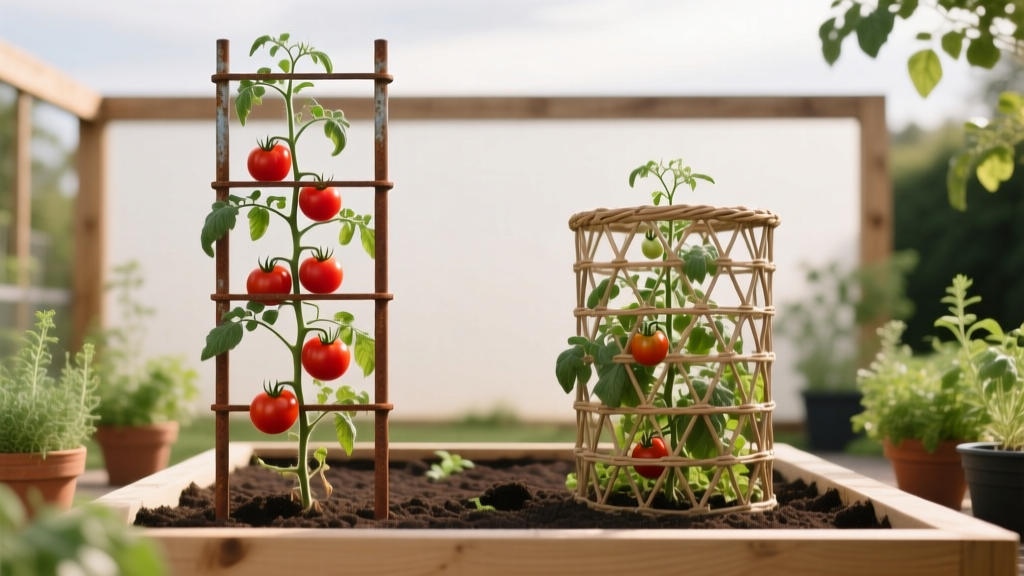
Tomato Cage vs Trellis: Best Raised Bed Support 2026
David ParkPublished
The 2026 Raised Bed Tomato Dilemma: Cage vs. Trellis
Raised bed vegetable gardening continues to dominate home horticulture trends in 2026, offering superior drainage, warmer soil temperatures, and the ability to customize soil profiles for heavy feeders. However, elevated garden beds present a unique structural challenge when it comes to supporting top-heavy, high-yield crops like tomatoes. Unlike traditional in-ground gardens where you can drive a stake two feet into the native earth, raised beds typically offer only 10 to 18 inches of loose, amended soil for anchoring. This fundamental difference in soil depth and elevation means that the age-old debate of tomato cage vs trellis requires a completely different approach when applied to raised bed gardening.
Choosing the right support system is not merely an aesthetic decision; it directly impacts your plant's health, disease resistance, and ultimate yield. According to the University of Minnesota Extension, proper staking and trellising not only save valuable space but significantly reduce fungal diseases by improving air circulation and keeping foliage away from soil-borne pathogens. In this comprehensive 2026 guide, we will break down the pros, cons, and specific raised bed applications for both tomato cages and trellis systems, helping you maximize your harvest this season.
Understanding Tomato Growth Habits: The Foundation of Support
Before investing in metal cages or building elaborate trellises, you must identify the growth habit of your tomato varieties. The Old Farmer's Almanac emphasizes that matching your support method to the plant's genetic growth pattern is the single most important step in tomato cultivation.
- Determinate (Bush) Tomatoes: These varieties grow to a genetically predetermined height (usually 3 to 4 feet), set all their fruit over a short window, and then stop growing. They require less aggressive support and are generally well-suited for heavy-duty cages.
- Indeterminate (Vining) Tomatoes: These plants continue to grow, flower, and produce fruit until killed by frost. As noted by Clemson University's Home & Garden Information Center, indeterminate varieties can easily exceed six to eight feet in height and require continuous, robust vertical support and regular pruning.
If you are planting a mix of cherry tomatoes (mostly indeterminate) and Roma paste tomatoes (mostly determinate) in your raised beds, you will likely need a hybrid approach utilizing both cages and trellises.
Tomato Cages in Raised Beds: The Classic Approach
Tomato cages are cylindrical or conical wire structures designed to surround the plant, allowing it to grow upward while the horizontal rings support the heavy, fruit-laden branches. However, the standard flimsy wire cones sold at big-box hardware stores are practically useless in a raised bed environment. Because raised bed soil is loose and shallow, a standard cage will inevitably tip over once the plant reaches three feet and catches a summer breeze.
The Pros of Using Cages
- 360-Degree Access: Cages allow you to inspect and harvest from all sides of the plant.
- Minimal Training Required: Determinate varieties will naturally fill out the cage with minimal pruning or tying required, saving you time during the busy summer months.
- Foliage Protection: The dense foliage of a caged bush tomato helps shade the fruit, preventing sunscald during the peak heat of late July and August.
The Cons and Raised Bed Solutions
The primary drawback of cages in raised beds is the anchoring issue. To solve this in 2026, gardeners are abandoning cheap conical wire and investing in heavy-duty, square-panel cages. Products like the Gardener's Supply Company Titan Tall Tomato Cages (retailing around $48 for a set of three in 2026) feature thick, powder-coated steel legs that can be pushed deep into the raised bed soil and further secured by packing dense compost around the base. Another popular 2026 trend is using concrete reinforcing wire (remesh) to create custom, heavy-duty cylindrical cages that can be zip-tied to the very edges of the raised bed frame for added lateral stability.
Trellising in Raised Beds: The Vertical Advantage
Trellising involves training the tomato plant to grow upward along a flat plane or a single vertical line. This method is vastly superior for indeterminate varieties and is the preferred technique for commercial growers and serious raised bed enthusiasts who want to maximize their square footage.
Top Trellis Methods for Elevated Beds
- The Florida Weave: This method involves driving sturdy T-posts or wooden stakes at either end of your raised bed tomato row and weaving heavy-duty twine back and forth between the posts as the plants grow. It is highly cost-effective and provides excellent support for long rows of indeterminate tomatoes.
- Cattle Panel Arches: In 2026, galvanized steel cattle panels remain a favorite among raised bed gardeners. By bending a 16-foot panel into an arch between two raised beds, you create a massive, indestructible trellis. The plants are trained up the sides, and the fruit hangs down through the wire grid, making harvesting incredibly easy. At roughly $35 to $40 per panel, it is a long-term investment that withstands high winds.
- Modular Metal Trellis Systems: Brands like Vego Garden and Birdies have popularized modular, powder-coated steel trellises that bolt directly into the lips of galvanized raised beds. This completely bypasses the soil-anchoring problem, transferring the structural load of the heavy tomato vines directly to the rigid metal walls of the raised bed itself.
The Pros of Trellising
- Maximized Airflow: By pruning indeterminate tomatoes to a single or double leader and training them vertically, you open up the plant canopy. This drastically reduces the humidity around the leaves, virtually eliminating early and late blight.
- Space Efficiency: Trellising allows you to plant tomatoes much closer together (often 18 to 24 inches apart) compared to the 3-foot radius required for sprawling caged plants.
- Understory Companion Planting: A vertical trellis frees up the soil surface at the base of the plant, allowing you to intercrop with shade-tolerant companions like basil, lettuce, and marigolds.
The Cons of Trellising
Trellising requires a significant time commitment. You must diligently prune suckers (the shoots that grow in the crotch joint between two branches) and tie the main stem to the trellis every week using soft garden tape or figure-eight knotting with jute twine. If you neglect an indeterminate tomato on a trellis for two weeks, you will be left with an unmanageable jungle of tangled vines.
Head-to-Head Comparison: Cages vs. Trellises
To help you decide which method suits your specific raised bed setup, review the comparison chart below detailing the practical differences between heavy-duty cages and vertical trellis systems for the 2026 growing season.
| Feature | Heavy-Duty Tomato Cages | Vertical Trellis Systems |
|---|---|---|
| Best Suited For | Determinate & Bush Varieties | Indeterminate & Vining Varieties |
| Space Requirement | High (requires 3x3 foot footprint) | Low (requires 1x2 foot footprint) |
| Setup Time | Very Low (place over plant) | Moderate to High (install posts/wire) |
| Weekly Maintenance | Low (minimal pruning) | High (regular pruning and tying) |
| Raised Bed Anchoring | Difficult (relies on shallow soil) | Excellent (can bolt to bed walls) |
| Estimated 2026 Cost | $15 - $25 per plant | $5 - $15 per plant (amortized) |
The Raised Bed Factor: Wind Shear and Soil Dynamics
When evaluating tomato cage vs trellis support methods, you must account for the unique microclimate of a raised bed. Elevated beds are more exposed to wind shear than ground-level plantings. A fully loaded, six-foot-tall tomato plant acts like a sail. If you are using cages, the leverage exerted on the shallow anchor points during a summer thunderstorm can easily uproot the plant or snap the cage legs.
Trellises, specifically those bolted to the sides of the raised bed or secured with deep-driven T-posts at the ends of the bed, distribute this wind load much more effectively. Furthermore, raised bed soil is incredibly rich and loose, promoting explosive top growth. This rapid growth means indeterminate tomatoes in raised beds will outgrow standard cages by mid-July, making vertical trellising the only logical choice for gardeners pushing for maximum yields in fertile, elevated soil environments.
2026 Expert Verdict: Which Should You Choose?
Ultimately, the choice between a tomato cage and a trellis in a raised bed comes down to the varieties you are growing and the amount of time you are willing to spend on garden maintenance.
If you are growing determinate paste tomatoes for a weekend of canning and salsa making, invest in premium, heavy-duty square cages. Ensure you pack the soil tightly around the legs and consider tying the cage to a nearby fence or bed frame for added wind resistance. The minimal maintenance will allow you to enjoy your summer while the bush varieties do the work of supporting themselves.
If you are growing indeterminate cherry, beefsteak, or heirloom tomatoes for continuous fresh eating from July to October, trellising is the undisputed champion for raised beds. By utilizing a modular metal trellis bolted to your bed walls or a cattle panel arch, you solve the shallow soil anchoring problem entirely. You will benefit from superior airflow, reduced disease pressure, higher yields per square foot, and the aesthetic beauty of a meticulously trained vertical garden.
By matching your support strategy to both the plant's genetics and the physical realities of your raised bed infrastructure, you will set the stage for a bountiful, disease-free tomato harvest in 2026 and beyond.
