Gardening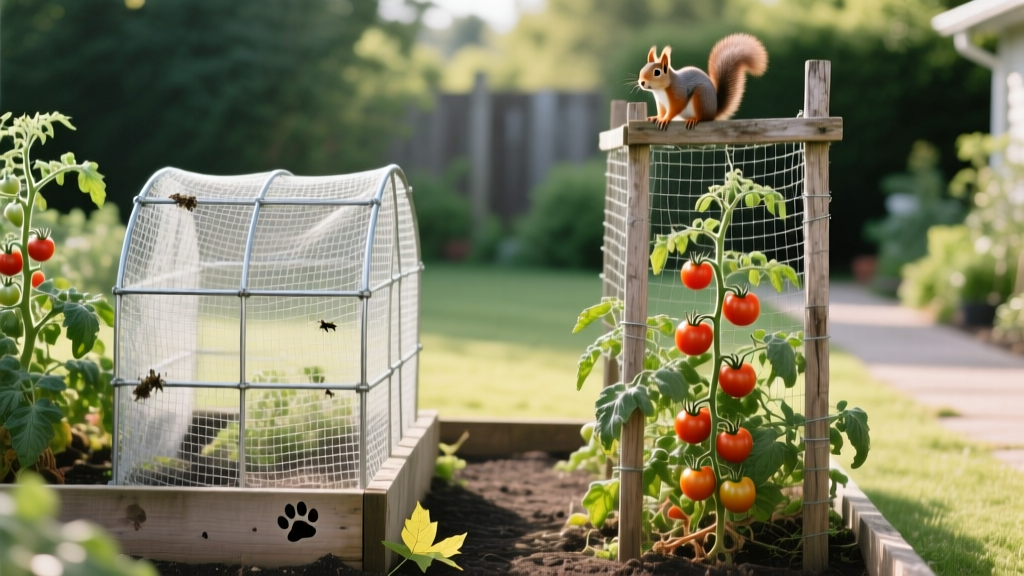
Tomato Cage vs Trellis 2026: Wildlife Defense Guide
Emily WatsonPublished
The 2026 Gardening Reality: Wildlife vs. Your Tomatoes
As we navigate the 2026 gardening season, urban and suburban wildlife populations continue to adapt, making yard animal management a critical component of vegetable gardening. For tomato growers, the debate between using tomato cages versus trellises is no longer just about plant vigor or harvest convenience; it is fundamentally about wildlife defense. Deer, groundhogs, rabbits, raccoons, and birds all view your tomato plants as an all-you-can-eat buffet. The support structure you choose dictates how effectively you can net, fence, and fortify your crop against these hungry intruders.
When evaluating a tomato cage vs trellis support method comparison from a wildlife management perspective, we must look at structural integrity against large mammals, ease of applying exclusion netting for birds and squirrels, and base fortification against burrowing pests. This comprehensive guide breaks down how each support system performs against the most common yard animals in 2026, helping you protect your harvest without resorting to harmful chemicals.
Evaluating Tomato Cages for Wildlife Management
Tomato cages, particularly the heavy-duty square or cylindrical models that have dominated the market in recent years, offer a unique set of advantages and disadvantages when dealing with local fauna. While standard conical wire cages are largely considered obsolete for indeterminate varieties, modern powder-coated square cages provide a rigid framework that can be leveraged for pest control.
The Pros of Cylindrical Defense
The primary wildlife advantage of a cylindrical or square tomato cage is the ease of applying exclusion netting. Because the cage forms a self-contained column, slipping a tubular bird net or a custom-cut piece of UV-treated poly netting over the top is incredibly straightforward. You can secure the bottom of the netting to the cage base using zip ties, creating a complete physical barrier against avian pests and tree squirrels. Furthermore, cages keep the lower fruit clusters elevated. In 2026, with rabbit populations surging in many suburban zones, keeping the lowest tomatoes at least 12 to 18 inches off the soil line prevents rabbits from easily snacking on your lowest-yielding fruit.
The Cons: Raccoons, Rubbing, and Trapped Pests
Despite their convenience, cages have severe vulnerabilities. Deer are notorious for 'antler rubbing' on vertical structures in late summer and early fall. A flimsy cage will instantly collapse under the weight of a rubbing buck, crushing the plant inside. Even heavy-duty cages can be toppled. Raccoons, which possess incredible dexterity, often use the horizontal rungs of tomato cages as a ladder to reach into the canopy, tearing through netting if it is not heavily reinforced. Finally, if a groundhog or chipmunk manages to burrow under the cage and climb inside, the cage effectively becomes a predator-proof dining room for the rodent, making it nearly impossible for natural predators like hawks or foxes to intervene.
Evaluating Trellises for Wildlife Management
Trellising methods, such as the Florida Weave, A-frame wooden trellises, and cattle panel setups, represent a more permanent and robust approach to tomato support. When wildlife pressure is high, trellises generally offer superior defensive capabilities, provided they are installed with animal behavior in mind.
The Pros: Structural Integrity and Base Fortification
A cattle panel trellis secured to steel T-posts is virtually immune to deer rubbing. The sheer weight and rigidity of the setup mean that a buck will move on rather than risk damaging his antlers on unyielding steel. Trellises also create a flat, two-dimensional plane of foliage. This flat profile makes draping large sheets of bird netting over the top and securing the edges to the ground much easier than trying to wrap individual cages. More importantly, trellises leave the base of the plant completely open and accessible. This allows gardeners to easily install an 'L-footer' barrier—a trench lined with hardware cloth that prevents groundhogs and rabbits from burrowing near the root zone.
The Cons: The Browsing Zone Canopy
The main drawback of a tall trellis is that it can inadvertently deliver your fruit directly to browsing deer. Indeterminate tomatoes grown on a 7-foot trellis will produce fruit clusters at the 4-to-6-foot mark, which is the exact browsing height for adult white-tailed deer. If your trellis is not enclosed within a perimeter fence or covered entirely by a draped net, you are essentially presenting the fruit on a silver platter to passing deer.
Head-to-Head Comparison: Cages vs. Trellises
To help you decide which support method aligns with your local wildlife pressures, consult the 2026 comparison matrix below.
| Wildlife Factor | Tomato Cages (Heavy-Duty) | Trellises (Cattle Panel / T-Post) |
|---|---|---|
| Deer Rubbing Resistance | Low to Moderate (May bend or uproot) | High (Steel T-posts hold firm) |
| Burrower Defense (Groundhogs) | Difficult to trench hardware cloth around | Easy to install base L-footer barriers |
| Bird & Squirrel Netting | Easy (Tubular nets slip right over) | Easy (Flat drape over the top panel) |
| Raccoon Climbing | High risk (Horizontal rungs act as ladders) | Moderate risk (Smoother surfaces, fewer rungs) |
| Estimated 2026 Setup Cost | $60 - $90 per 3-pack | $45 - $65 per panel + posts |
Actionable Wildlife Defense Strategies for 2026
Regardless of whether you choose cages or trellises, integrating the following wildlife management techniques will drastically reduce crop loss this season.
Netting Specifications and Application
For bird and squirrel exclusion, standard lightweight netting is no longer sufficient; squirrels in 2026 have been documented chewing through thin polypropylene meshes to reach ripening fruit. Invest in UV-treated, knitted poly netting with a 3/4-inch mesh size. If using a trellis, drape the net over the top bar and bury the edges 3 inches into the soil or pin them down with heavy-duty landscape staples. If using cages, ensure the netting is pulled taut; loose netting can entangle and kill beneficial wildlife like tree frogs and garden snakes.
Base Barriers and Trenching
To stop rabbits and groundhogs, you must secure the perimeter of your garden bed. According to wildlife management guidelines, an L-footer is the most effective deterrent. Dig a 12-inch deep trench around your trellis line or garden bed. Lay 1/2-inch galvanized hardware cloth into the trench, bending the bottom 6 inches outward at a 90-degree angle (forming an 'L' shape that points away from the garden). Backfill the trench. When burrowing animals dig down, they hit the wire mesh and give up, as they rarely know to dig back several inches to bypass the lip.
Strategic Use of Repellents
While physical barriers are your primary defense, olfactory and taste repellents serve as an excellent secondary layer. Capsaicin-based sprays and putrescent egg formulations can be applied to the foliage and the fruit itself. However, be mindful of your support structure: spraying repellents on the metal rungs of a tomato cage is useless, as animals do not chew on the metal. Focus your applications on the plant leaves and the surrounding soil line to create a sensory barrier.
What the Experts Say
Effective wildlife management requires understanding animal behavior and adapting your garden infrastructure accordingly. Experts consistently emphasize that physical exclusion is the only 100% effective method for protecting high-value crops like tomatoes from determined mammals.
According to resources published by Penn State Extension, managing deer damage in residential landscapes requires a multi-faceted approach, noting that while repellents can reduce browsing, physical barriers and fencing remain the most reliable long-term solution for protecting vulnerable garden crops. Furthermore, when dealing with smaller, persistent mammals, the University of Maryland Extension highlights that modifying the garden environment—such as removing hiding spots near the garden and installing hardware cloth barriers at the base of plant supports—is crucial for deterring rabbits and groundhogs from establishing territory near your vegetables.
Additionally, the University of Minnesota Extension advises that garden layouts should be designed with wildlife exclusion in mind from day one, recommending that tall support structures like trellises be positioned in a way that allows for easy installation of temporary electric fencing or perimeter netting without obstructing garden pathways.
Final Verdict: Which Support Wins for Wildlife Defense?
If your primary adversaries are birds, squirrels, and rabbits, and you are growing determinate or semi-determinate tomato varieties, heavy-duty tomato cages offer a convenient, easily netted solution that keeps fruit out of the immediate strike zone of ground-level foragers.
However, if you are battling deer, raccoons, and groundhogs, or if you are growing massive indeterminate heirlooms, the cattle panel trellis is the undisputed champion of wildlife defense in 2026. Its structural integrity prevents deer from destroying your setup via antler rubbing, its flat profile makes large-scale netting a breeze, and its open base allows for the installation of critical hardware cloth burrow-barriers. By matching your support method to the specific wildlife pressures in your zip code, you can ensure a bountiful, unblemished tomato harvest this year.
