Pest Control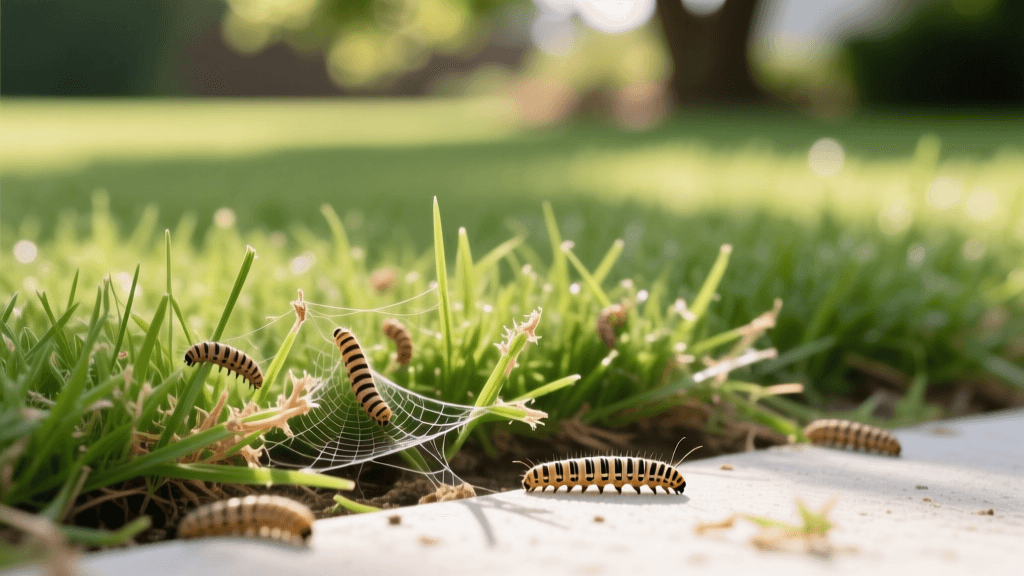
How to Identify and Treat Lawn Armyworm Infestations
The Fall Armyworm Threat: A Looming Lawn Disaster
Fall armyworms (Spodoptera frugiperda) are among the most destructive pests that can invade your turfgrass. Despite their name, these caterpillars do not actually march in organized military formations; however, their sheer numbers and insatiable appetites can decimate a healthy, vibrant lawn in a matter of 48 hours. For homeowners and turf managers alike, an armyworm outbreak is a race against time. According to Texas A&M Agrilife Extension, fall armyworms are particularly devastating in the late summer and early fall, often migrating from southern regions to lay eggs in lush, irrigated lawns.
Understanding the lifecycle of the armyworm is crucial for effective Integrated Pest Management (IPM). The adult stage is a grayish-brown moth with a wingspan of about 1.5 inches. These moths are strong fliers and can travel hundreds of miles on wind currents. Once a female moth finds a suitable lawn, she can lay up to 1,000 eggs in clusters on grass blades, fence posts, or nearby structures. These eggs hatch in just two to three days, releasing tiny larvae that immediately begin feeding. The larvae go through six developmental stages, known as instars. Crucially, the final two instars are responsible for consuming over 80 percent of the total foliage they will eat in their lifetime. This is why a lawn can look perfectly fine on Monday and completely scalped by Thursday.
Step 1: Confirm the Presence of Armyworms
Before you apply any treatments, you must positively identify the pest. Armyworm damage is frequently mistaken for drought stress, heat damage, or fungal diseases. The earliest visual sign of an infestation is "window-paning," where young larvae chew through the green tissue of the grass blade but leave the transparent lower epidermis intact. As the caterpillars grow, they consume entire blades, leaving behind jagged, chewed edges and small, greenish-brown cylindrical droppings called frass. If you notice flocks of birds, such as starlings or grackles, aggressively probing your lawn, this is a strong secondary indicator of a caterpillar or grub presence.
The Soap Flush Test
To confirm an active armyworm infestation, perform a simple soap flush test. This method forces the caterpillars out of the thatch layer and onto the surface where they can be easily counted.
- Mix 2 ounces of lemon-scented liquid dish soap into 2 gallons of water.
- Pour the mixture evenly over a 1-square-yard section of the lawn, focusing on the margins between healthy green grass and damaged brown patches.
- Wait for 3 to 5 minutes. The soapy water irritates the caterpillars' skin, forcing them to the surface.
- Count the number of armyworms that emerge. If you see 3 or more caterpillars per square yard, treatment is economically and ecologically justified.
The North Carolina State University Extension recommends treating when populations reach this threshold to prevent severe turf loss while avoiding unnecessary chemical applications.
Step 2: Select Your Weapon (Treatment Comparison)
Once you have confirmed an infestation, you must choose the appropriate control method. Your choice will depend on the size of the larvae, your budget, and your preference for organic versus synthetic solutions. Below is a comparison chart of the most effective active ingredients used in turfgrass management.
| Active Ingredient | Trade Name Examples | Type | Target Stage | Est. Cost per 1k sq ft | Re-entry Interval |
|---|---|---|---|---|---|
| Bacillus thuringiensis (Bt) | Dipel, Thuricide | Organic | Early Instars (Small) | $0.15 - $0.25 | 4 Hours |
| Spinosad | Conserve, Captain Jack's | Organic | Early to Mid Instars | $0.30 - $0.45 | 4 Hours |
| Bifenthrin | Talstar P, Menace | Synthetic Pyrethroid | All Instars | $0.05 - $0.10 | 12 - 24 Hours |
| Carbaryl | Sevin | Synthetic Carbamate | All Instars | $0.10 - $0.15 | 12 - 24 Hours |
| Chlorantraniliprole | Acelepryn | Synthetic Anthranilic | All Instars (Preventative) | $0.40 - $0.60 | 4 Hours |
Organic vs. Synthetic Approaches
If you catch the infestation early and the caterpillars are small (less than half an inch), organic options like Bacillus thuringiensis var. kurstaki (Bt) are highly effective. The Environmental Protection Agency (EPA) notes that Bt is a naturally occurring soil bacterium that produces proteins toxic only to specific caterpillars, making it incredibly safe for beneficial insects, pets, and humans. However, Bt degrades rapidly in sunlight and must be ingested by the larvae to work, meaning it is virtually useless against large, mature armyworms.
For severe outbreaks with large caterpillars, synthetic pyrethroids like Bifenthrin are the industry standard. Bifenthrin provides a rapid "knockdown" effect, killing the larvae on contact and leaving a residual barrier that continues to protect the turf for several weeks. While highly effective, pyrethroids are broad-spectrum and can harm beneficial pollinators if applied carelessly. Always apply liquid pyrethroids when bees are not actively foraging, such as in the late evening.
Step 3: Application Timing and Techniques
Timing your application correctly is just as important as choosing the right product. Armyworms are primarily nocturnal feeders. During the heat of the day, they retreat deep into the thatch layer and soil cracks to avoid the sun and desiccation. If you spray at noon, the chemical will dry on the grass blades, and the caterpillars will not ingest it or come into contact with it until the residue has significantly degraded.
The Optimal Application Window
The best time to apply liquid treatments is in the late afternoon or early evening, just before the sun sets. This ensures the spray residue is fresh and potent when the armyworms emerge to feed at night. Furthermore, avoid applying treatments if heavy rain is forecasted within the next 12 hours, as the product will wash off the foliage before it can take effect.
Mixing and Spraying Protocol
For liquid concentrates like Bifenthrin or Spinosad, accurate calibration is essential to prevent turf burn and environmental runoff. Follow these steps for a standard 2-gallon pump sprayer:
- Calculate the Area: Measure the square footage of the damaged lawn area. Assume a standard 2-gallon sprayer covers roughly 1,000 to 1,500 square feet when walking at a normal pace.
- Mix the Solution: For Bifenthrin (typically a 7.9% concentration), the standard curative rate is 0.5 to 1.0 fluid ounces per 1,000 square feet. Add the measured chemical to your sprayer first, then fill it halfway with water, agitate, and top off with water.
- Spray Technique: Use a fan-nozzle tip to ensure even coverage. Walk at a steady pace, overlapping your spray pattern slightly to avoid missing strips. The goal is to coat the grass blades thoroughly without causing the liquid to run off into the soil.
- Post-Application Rules: Do not mow your lawn for at least 48 hours after a liquid application to allow the caterpillars time to consume the treated foliage. Similarly, delay irrigation for 24 to 48 hours to keep the active ingredient on the grass blades where the pests feed.
Step 4: Post-Treatment Lawn Recovery
Once the armyworms have been eradicated, your lawn will likely look terrible. The grass may be brown, ragged, and scalped down to the stems. Do not panic; turfgrass is remarkably resilient, and the root system is usually completely unharmed because armyworms only consume the above-ground foliage.
To accelerate recovery, focus on promoting rapid vegetative growth. Wait until the brown, chewed grass begins to push out new green shoots from the base. Once new growth is visible, apply a balanced, quick-release fertilizer such as a 10-10-10 or 16-4-8 NPK blend at a rate of 5 pounds per 1,000 square feet. Water the lawn deeply and infrequently—about 1 inch of water per week, delivered in one or two morning sessions. Deep watering encourages the roots to recover and supports the energy demands of new blade production. Avoid applying pre-emergent herbicides or broadleaf weed killers during this recovery phase, as the turf is already under significant physiological stress.
Step 5: Long-Term Prevention and IPM Strategies
While you cannot stop the moths from migrating into your region, you can make your lawn less attractive for egg-laying and more resilient to future outbreaks. Adult moths prefer to lay their eggs in lush, heavily fertilized, and frequently irrigated lawns. By adjusting your cultural practices, you can reduce your lawn's susceptibility.
- Manage Irrigation: Avoid watering your lawn late in the evening. Wet foliage overnight creates an ideal microclimate for egg survival and fungal pathogens. Water early in the morning instead.
- Mow at the Proper Height: Keep your turf at the recommended height for your specific grass species. Scalping the lawn stresses the grass and exposes the soil, but letting it grow too tall provides a humid, protected canopy for young larvae.
- Monitor with Pheromone Traps: You can purchase fall armyworm pheromone traps to monitor adult moth activity in your area. While traps will not control a population, they serve as an early warning system. If you see a sudden spike in moth catches, begin inspecting your lawn daily for frass and window-paning.
- Encourage Beneficial Insects: Ground beetles, parasitic wasps, and tachinid flies are natural predators of armyworms. Minimize the use of broad-spectrum insecticides early in the season to preserve these beneficial populations, allowing them to naturally suppress early pest arrivals.
By combining vigilant monitoring, precise identification via the soap flush test, and targeted, well-timed applications, you can successfully defend your turf against the fall armyworm invasion and maintain a pristine, healthy landscape year-round.