
Landscaping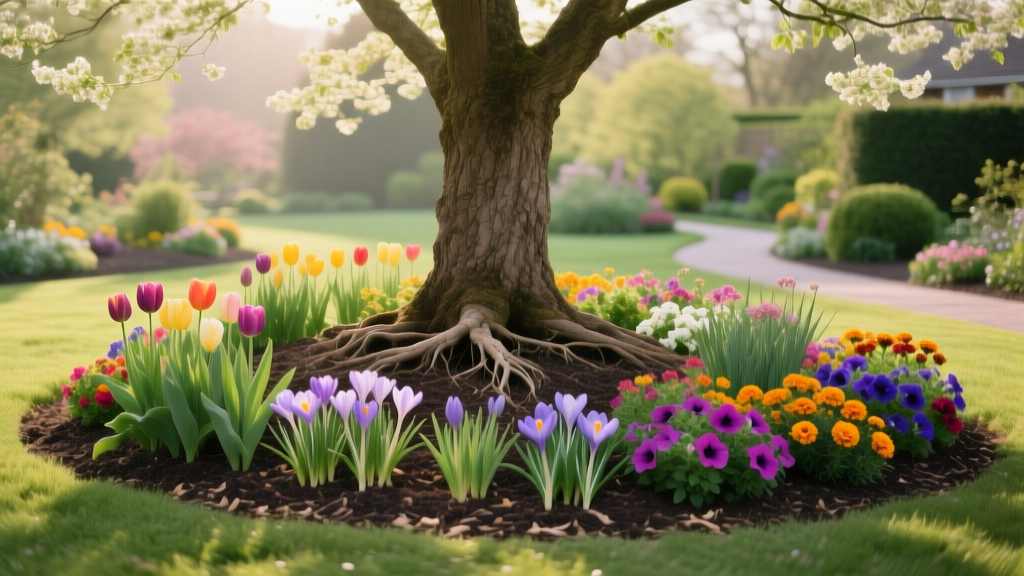
Tree Bed Rotation: Spring Bulbs To Summer Annuals 2026
James MillerPublished
Introduction to Understory Planting and Seasonal Rotation
Landscaping around the base of a newly planted or established tree presents a unique set of challenges that test both your horticultural knowledge and your design sensibilities. In 2026, the shift toward sustainable, soil-health-focused landscaping has completely changed how we approach the "tree ring" or understory bed. Gone are the days of aggressively tilling the soil and planting deep-rooted perennials that compete with and damage delicate tree roots. Instead, modern arboriculture champions a dynamic, seasonal rotation strategy: utilizing spring bulbs to capture early-season sunlight before the canopy fills in, followed by a careful, low-impact transition to shade-tolerant summer annuals. This guide will walk you through the precise methodology of executing a seasonal flower bed rotation from spring bulbs to summer annuals around your trees, ensuring both your floral displays and your tree's structural root health thrive in 2026.
Understanding the Critical Root Zone (CRZ)
Before you plant a single bulb or annual, you must understand the anatomy of the tree base. The Critical Root Zone (CRZ) is typically defined as the area under the tree's canopy and extending slightly beyond the drip line. According to the University of Minnesota Extension, the vast majority of a tree's fine, water-absorbing feeder roots are located in the top 12 to 18 inches of soil. When homeowners use rototillers or deep spades to prepare beds for summer flowers, they inadvertently sever these vital lifelines. This root damage can stunt tree growth, invite fungal pathogens, and severely compromise the tree's stability. Therefore, the 2026 standard for understory planting relies on "minimal-disturbance" techniques. You are not preparing a traditional garden bed; you are creating a shallow, living mulch layer that coexists with the tree's root system.
Selecting and Planting Spring Bulbs for Tree Bases
Spring bulbs are the perfect candidates for the first half of the rotation. Because deciduous trees are bare-branched in early spring, the tree base receives ample sunlight. By the time the tree leafs out and casts deep shade, the bulbs have already completed their primary photosynthetic cycle. When selecting bulbs, opt for early to mid-spring bloomers that naturalize well and do not require deep planting. The University of Maryland Extension recommends species that can handle the slightly compacted, dry soil often found near tree trunks.
Top choices include Narcissus 'Tête-à-Tête' (daffodils), Galanthus nivalis (snowdrops), and Crocus tommasinianus. Avoid large, late-blooming tulips that require deep 8-inch planting holes, as digging this deep near the trunk will almost certainly damage major structural roots. Instead, plant your bulbs at a shallow depth of 3 to 4 inches in the outer two-thirds of the drip line, avoiding the immediate 3-foot radius around the trunk. Use a narrow hand trowel or a specialized bulb planter to extract small, precise cores of soil, minimizing collateral root damage. For visual impact, plant in sweeping drifts rather than rigid circles, and choose deer-resistant varieties if your tree is located near a woodland edge.
The Transition: From Dormant Bulbs to Summer Annuals
The transition period, usually occurring between late May and mid-June depending on your hardiness zone, is the most critical phase of the rotation. As the tree canopy closes, the spring bulbs will begin to yellow and enter dormancy. In a traditional garden, you might dig up the bulbs or cut back the foliage aggressively. In a tree bed, however, your primary goal is to avoid soil disruption.
Step 1: Foliage Management. Allow the bulb foliage to yellow as much as possible to ensure the bulbs store enough energy for the following year. Once the foliage is mostly brown, gently snip it off at the soil line with sterilized bypass pruners. Do not pull the leaves, as this can dislodge the shallowly planted bulbs and tear adjacent feeder roots.
Step 2: Top-Dressing. Instead of tilling, apply a 1-inch layer of high-quality, screened organic compost directly over the bed. This provides a nutrient-rich, loose medium for your summer annuals to establish their shallow roots without requiring you to dig into the tree's root zone.
Step 3: Strategic Pocket Planting. When installing your summer annuals, use a small hori-hori knife or a narrow trowel to dig individual, small pockets just large enough to accommodate the root ball of the annual. If you encounter a thick tree root, do not cut it. Simply backfill the hole and move the planting location a few inches to the left or right. Think of it as planting between the roots rather than through them.
2026 Summer Annuals Chart for Shaded Tree Beds
Once the canopy is fully leafed out, the understory environment changes drastically. Temperatures drop, sunlight becomes dappled or fully shaded, and the tree's roots aggressively compete for available moisture. You must select summer annuals that are shade-tolerant, have shallow root systems, and can thrive with consistent, localized watering. Below is a comparison of the top-performing summer annuals for tree bed rotations in 2026.
| Plant Variety | Shade Tolerance | Water Needs | Root Depth | Best Use Case |
|---|---|---|---|---|
| Dragon Wing Begonia | High (Part to Full Shade) | Moderate | Very Shallow | Spilling over bed edges, continuous color |
| SunPatiens (Compact) | Medium (Dappled Shade) | High | Shallow | Bright color pops in lighter shade areas |
| Wizard Coleus | High (Full Shade) | Moderate | Shallow | Foliage contrast, filling large gaps |
| Caladium (Heart to Heart) | High (Full Shade) | High | Moderate | Tropical texture, low-light brilliance |
These varieties have been selectively bred for vigor in low-light conditions and will not attempt to send deep taproots that compete with the tree. They provide lush, vibrant coverage that masks the fading foliage of the spring bulbs beneath the soil.
Watering and Mulching for Dual Health
Watering an understory bed requires a delicate balance. Summer annuals like Impatiens and Caladiums are thirsty plants that require consistently moist soil. However, overwatering the base of a tree can lead to waterlogged soils, oxygen deprivation for the tree roots, and fatal fungal diseases like Phytophthora root rot. In 2026, smart landscaping relies on precision moisture management.
To solve this, abandon overhead sprinklers. Overhead watering wets the tree trunk and lower branches, creating a breeding ground for bark-borne pathogens. Instead, install a temporary, low-volume drip irrigation system woven through the annuals. Drip emitters deliver water directly to the base of the annuals, keeping the immediate tree trunk dry and allowing you to control the exact moisture levels of the shallow annual roots without saturating the deeper tree root zone. Utilizing a digital soil moisture meter to check the 6-inch depth is highly recommended to ensure the tree roots are not sitting in anaerobic conditions.
After planting, apply a 2-inch layer of coarse, aged hardwood mulch over the exposed soil. Keep the mulch at least 4 inches away from the actual trunk of the tree to prevent "volcano mulching," which traps moisture against the bark and invites rot and rodent damage. The mulch will retain moisture for the annuals, suppress weeds, and slowly break down to feed the soil microbiome.
End-of-Season Wrap-Up and Continuous Care
As autumn approaches and the first frost threatens, the summer annuals will die back. Remove the spent annual plants by snipping them at the soil line, leaving their shallow roots in the ground to decompose and add organic matter to the soil. You can then gently top-dress the bed once more and plant your next round of spring bulbs, completing the sustainable, low-impact cycle. By respecting the tree's root architecture and utilizing a strategic seasonal rotation, you can enjoy a vibrant, continuously blooming landscape that enhances both your property's curb appeal and the long-term health of your trees for years to come.

