Tree Care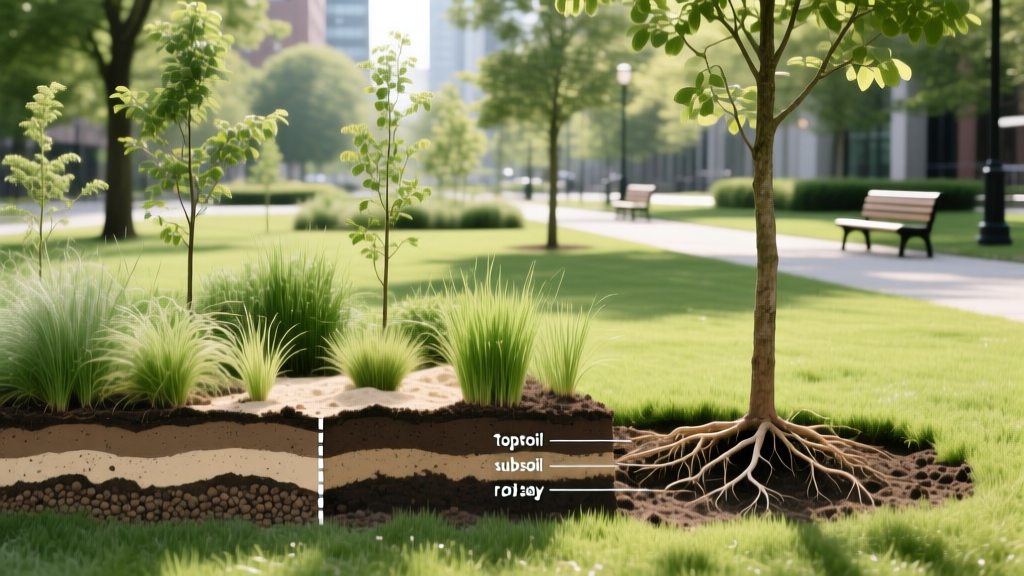
Planting Trees in Turf: Soil Types and Grass Competition
Lisa ThompsonPublished
The Landscape Dilemma: Trees vs. Turfgrass
When designing a lush, vibrant landscape, homeowners often envision towering shade trees surrounded by a pristine, carpet-like lawn. However, beneath the surface, a silent battle for resources is waging. Trees and turfgrass are naturally incompatible in many environments. Turfgrass thrives in full sun, requires frequent shallow watering, and develops a dense, shallow root mat. Trees, conversely, require deep, infrequent watering, ample soil oxygen, and expansive root zones to anchor themselves and draw up nutrients. When you combine the wrong soil type with an aggressive grass species, your newly planted trees can easily become stunted, stressed, or susceptible to disease.
Understanding the intersection of soil types, grass matching, and tree planting is critical for long-term landscape success. By aligning your soil management and turf selection with the biological needs of your trees, you can create a harmonious landscape where both elements thrive without starving the other.
Understanding Soil Types for Tree and Turf Coexistence
Soil texture dictates water retention, drainage, and oxygen availability—the three pillars of root health. Before planting a tree in an existing lawn, you must identify your soil type. A simple ribbon test or a professional soil test ($15 to $30 through a local university extension office) will reveal your soil's composition and pH levels.
| Soil Type | Water Retention | Impact on Turfgrass | Impact on Tree Roots |
|---|---|---|---|
| Clay | High (Poor Drainage) | Prone to compaction and fungal diseases; shallow roots. | Suffocates deep roots; restricts oxygen; high risk of root rot. |
| Sandy | Low (Fast Drainage) | Requires frequent irrigation; leaches nutrients quickly. | Encourages deep rooting but requires heavy mulching to retain moisture. |
| Loam | Moderate (Ideal) | Supports deep, drought-tolerant turf roots. | Provides optimal balance of oxygen, water, and nutrient retention. |
If you are planting a tree in heavy clay soil, the existing turfgrass may be surviving on frequent, shallow watering, which encourages the tree's roots to grow upward toward the surface to compete for water. This leads to 'girdling roots' and surface heaving. To combat this, you must alter your irrigation strategy and consider planting tree species adapted to heavy soils, such as the Bald Cypress or Swamp White Oak, while matching them with clay-tolerant grasses like Tall Fescue.
Grass Matching: Selecting Turf That Won't Strangle Your Trees
Not all grasses are created equal. Some turf species are highly aggressive and allelopathic, meaning they release chemicals that inhibit the growth of competing plants, including tree saplings. Furthermore, as your tree matures, its canopy will cast shade, altering the microclimate of the soil below.
Shade-Tolerant Grasses for Maturing Canopies
Planting a sun-loving, aggressive grass like Bermuda or Kentucky Bluegrass under a growing tree is a recipe for failure. As the tree's canopy expands, the grass will thin out, leaving bare soil prone to erosion. Instead, match your grass to the anticipated shade levels:
- Fine Fescues (Creeping Red, Chewings): Excellent for cool climates and deep shade. They require less nitrogen and water, reducing the need for frequent shallow irrigation that harms tree roots.
- St. Augustinegrass (Palmetto or Seville cultivars): Ideal for warm, coastal climates. It handles moderate shade well and has a less aggressive root system compared to Bermuda.
- Zeon Zoysia: A premium warm-season grass that offers superior shade tolerance and requires less frequent mowing, minimizing soil compaction from heavy equipment around the tree's drip line.
Actionable Planting Guide: Integrating Trees into Existing Lawns
When introducing a new tree into an established lawn, proper excavation and soil handling are paramount. The most common mistake homeowners make is treating the tree planting hole like a potted plant, heavily amending the backfill soil with rich compost. According to Colorado State University Extension, heavily amending the backfill soil creates a 'bathtub effect.' Water will pool in the loose, amended soil rather than draining into the surrounding native lawn soil, leading to root rot and poor establishment.
Step 1: Turf Removal and Excavation
Never plant a tree directly into the middle of a grass patch without removing the sod. The dense turf mat will compete for water and fertilizer. Remove a minimum 3-foot radius of sod around the planting site. Dig the hole two to three times as wide as the root ball, but no deeper. The root flare (where the trunk widens at the base) must sit slightly above the surrounding grade to prevent water from pooling against the bark.
Step 2: Backfilling with Native Soil
Use the native soil you just dug out to backfill the hole. Break up large clods and remove any rocks or construction debris. If your soil is severely compacted clay, you can mix in up to 20% organic compost by volume, but no more. The goal is to encourage the tree's roots to push out into the native soil profile, anchoring the tree and establishing a self-sustaining network.
Step 3: The Mulch Ring Defense
Mulch is the ultimate buffer zone between trees and turf. It eliminates grass competition, retains soil moisture, and regulates temperature. However, improper mulching can kill a tree. The Morton Arboretum emphasizes the 'donut method' over the 'volcano method.' Apply 3 to 4 inches of organic hardwood mulch in a wide ring, but keep it at least 3 inches away from the tree trunk. Piling mulch against the trunk traps moisture, inviting fungal pathogens and rodent damage.
Reconciling Water Needs: Irrigation Strategies
The most significant conflict between trees and turf is water. Lawns generally require 1 to 1.5 inches of water per week, applied in short, frequent bursts to keep the top 4 inches of soil moist. Trees, however, require deep, infrequent soaking to encourage roots to grow downward. A mature tree may need 10 gallons of water per inch of trunk caliper, applied slowly over several hours.
If you use a standard sprinkler system designed for turf, your trees are likely being underwatered at the root zone while the surface soil remains saturated, promoting turf fungus. To solve this:
- Install Drip Irrigation: Run a dedicated drip line or soaker hose in a spiral pattern beneath the tree's mulch ring, connecting it to a separate irrigation zone that runs for 2-3 hours once a week.
- Deep Root Watering: During drought periods, use a root feeder or soil probe to inject water 8 to 12 inches below the surface, bypassing the turf root zone entirely.
Expert Insight: 'The competition between turf and trees is one of the most common causes of decline in urban landscapes. Turfgrass is a heavy feeder and aggressive water consumer. Creating a physical mulch barrier and separating irrigation zones are the two most effective steps a homeowner can take to ensure long-term tree vitality,' notes turf and woody plant specialists at Penn State Extension.
Fertilization: Feeding the Soil, Not Just the Grass
Standard lawn fertilizers are high in nitrogen to promote rapid, green blade growth. Excessive nitrogen applied to the surface can burn shallow tree roots and stimulate weak, sappy tree growth that is highly susceptible to aphids and borers. Furthermore, broadleaf herbicides (like 2,4-D) used to kill dandelions in the lawn can be absorbed by tree roots, causing severe leaf curl, defoliation, and long-term decline.
To manage this, transition your lawn care to a slow-release, organic fertilizer program. Core aeration of the lawn in the fall helps relieve soil compaction caused by mowing equipment, allowing oxygen to reach both turf and tree roots. When treating the lawn for weeds, opt for spot-treatments rather than broadcast spraying, and always check the herbicide label for warnings regarding use near the drip lines of desirable trees.
Conclusion: A Balanced Ecosystem
Integrating trees into a turf-dominated landscape requires a shift in perspective. You are not just planting a tree; you are managing a complex soil ecosystem. By testing your soil, selecting shade-tolerant and non-aggressive grass species, avoiding backfill amendments, and establishing dedicated deep-watering zones, you eliminate the competition below ground. The result is a resilient landscape where your turf remains lush and your trees grow tall, healthy, and deeply anchored for generations to come.