Tree Care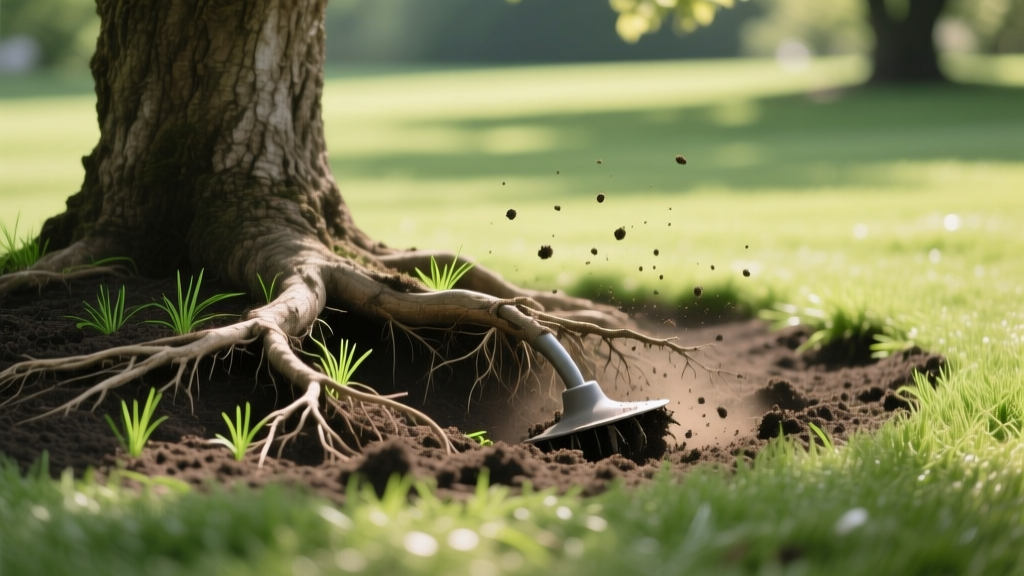
Tree Root Zone Aeration and Overseeding Under Mature Trees
Lisa ThompsonPublished
The Microclimate Challenge: Turf vs. Tree Roots
Maintaining a lush, green lawn beneath the sprawling canopy of a mature tree is one of the most common dilemmas in residential landscaping. Homeowners often view the area under a tree as simply another section of the yard that requires standard lawn care practices. However, the intersection of tree care and turf management is a delicate biological balancing act. The environment beneath a mature tree is characterized by heavy shade, intense competition for water and nutrients, and, most critically, severe soil compaction. When you combine the foot traffic of a family, the repetitive rolling of heavy lawn mowers, and the natural settling of soil over decades, the earth beneath a tree's canopy can become as hard as concrete. This compaction chokes off oxygen to the tree's root system while simultaneously creating an impenetrable barrier for new grass seed trying to establish itself.
Understanding the Critical Root Zone (CRZ)
To successfully aerate and overseed under a tree, you must first understand where the tree actually feeds. A common misconception is that a tree's root system mirrors its canopy in depth, with massive taproots plunging dozens of feet into the earth. In reality, the vast majority of a tree's fine, water-absorbing feeder roots reside in the top 6 to 12 inches of the soil profile. These roots extend outward well beyond the drip line (the outer edge of the tree's canopy), forming what arborists call the Critical Root Zone (CRZ). Because these vital roots are so close to the surface, they are highly susceptible to damage from mechanical landscaping equipment, grade changes, and soil compaction. Any aeration or overseeding technique you employ must prioritize the protection of these shallow feeder roots while still alleviating soil density and providing a seedbed for turfgrass.
Why Traditional Core Aeration Harms Mature Trees
When homeowners notice their lawn thinning out under a tree, their first instinct is often to rent a standard mechanical core aerator. These heavy, gas-powered machines pull solid plugs of soil, typically 3 to 4 inches deep and 0.5 inches wide, to relieve compaction. While this is excellent for an open, sunny lawn, it can be devastating to a mature tree. According to the University of Minnesota Extension, mechanical compaction and the physical severing of roots drastically reduce a tree's ability to uptake water and essential minerals. A standard core aerator acts like a cookie cutter, indiscriminately slicing through the delicate mycorrhizal fungi networks and fine feeder roots that keep the tree alive. Furthermore, the heavy weight of the aerator machine itself exacerbates the very soil compaction you are trying to fix, crushing soil pores and further restricting gas exchange in the root zone.
Safe Soil Aeration Techniques for Tree Health
To relieve soil compaction without harming the tree, you must abandon heavy mechanical plug aerators in favor of specialized, low-impact techniques designed specifically for arboriculture and sensitive turf zones.
Pneumatic Air Spading
The gold standard for aerating compacted soil around mature trees is the use of a pneumatic air excavation tool, commonly known by the brand name AirSpade. This tool uses a supersonic stream of compressed air to fracture and excavate compacted soil without tearing, cutting, or damaging flexible tree roots. An arborist can use an AirSpade to perform 'radial trenching' or 'root collar excavations,' safely blowing away compacted clay and replacing it with a porous mixture of compost, expanded shale, and coarse sand. While highly effective, this is a professional service. Expect to pay between $800 and $1,500 per tree depending on the size of the canopy and the severity of the compaction. The result is immediate oxygenation of the root zone and a vastly improved environment for both the tree and any shade-tolerant grass you wish to establish.
Manual Radial Trenching and Hand-Forking
For the DIY homeowner on a budget, manual aeration is the safest alternative. Using a standard garden pitchfork or a specialized manual soil probe, you can gently pierce the soil to a depth of 4 to 6 inches. Instead of a grid pattern, use a radial pattern: start about 3 feet away from the trunk and work your way outward toward the drip line, spacing your holes about 12 to 18 inches apart. Wiggle the fork gently to crack the soil without levering and tearing the roots. Afterward, sweep a coarse topdressing of compost and sand into the holes to keep them open and promote drainage.
Selecting the Right Grass Seed for Shaded Root Zones
Once the soil is safely aerated, the next step is overseeding. You cannot use standard sun-loving Kentucky Bluegrass or Perennial Ryegrass under a mature tree; they will simply fail due to lack of photosynthesis and intense root competition. Research from Iowa State University Extension indicates that fine fescues are the most reliable, shade-tolerant cool-season grasses available for challenging environments. Fine fescues require less water, thrive in lower light conditions, and have narrow blades that create a soft, attractive texture.
| Grass Variety | Shade Tolerance | Drought Resistance | Root Competition Resilience |
|---|---|---|---|
| Creeping Red Fescue | Excellent | Moderate | High |
| Chewings Fescue | Excellent | Moderate | High |
| Hard Fescue | Good | Excellent | Moderate |
| Rough Bluegrass (Poa trivialis) | Excellent | Low | Low |
When purchasing seed, look for a high-quality 'Dense Shade Mix' where the primary ingredients are Creeping Red Fescue and Chewings Fescue. Avoid cheap mixes loaded with filler or annual ryegrass, which will die off by mid-summer.
Step-by-Step Aeration and Overseeding Protocol
- Canopy Pruning: Before touching the soil, hire a certified arborist to raise the tree's canopy. Removing the lower branches to a height of 8 to 10 feet allows crucial morning sunlight to penetrate the turf zone and improves air circulation, reducing fungal diseases.
- Debris Removal: Rake the area thoroughly. Remove all fallen leaves, twigs, and dead thatch. Tree leaves contain juglone and tannins (especially from oaks and walnuts) which can inhibit grass seed germination if left to mat over the soil.
- Safe Aeration: Perform the manual hand-forking technique described above, focusing on the area from 3 feet away from the trunk out to the drip line. Never aerate the immediate base of the trunk, as this invites crown rot and pathogen entry.
- Topdressing: Apply a very thin layer (no more than 1/4 inch) of screened organic compost over the aerated area. This provides a nutrient-rich seedbed for the fescue. Warning: Never pile compost or soil against the tree's root flare, as this will suffocate the trunk and lead to fatal girdling roots.
- Overseeding: Spread your fine fescue seed mix at a rate of 5 to 6 pounds per 1,000 square feet. Use a broadcast spreader for even coverage, and lightly drag a leaf rake over the area to ensure seed-to-soil contact.
- Initial Watering: Water the area lightly 2 to 3 times a day for the first 14 to 21 days. The goal is to keep the top inch of soil consistently moist to encourage germination without creating standing water that could rot the tree's shallow roots.
Balancing Water and Nutrient Needs
Once the new fescue grass is established, you must transition your watering schedule to accommodate the tree. Turfgrass prefers frequent, shallow watering, but trees require deep, infrequent soaking to encourage their roots to grow downward rather than competing with the grass at the surface. Switch to watering deeply once or twice a week, applying about 1 inch of water per session. This ensures the moisture penetrates past the turf root zone and reaches the tree's deeper anchor roots. When fertilizing, use a slow-release, organic granular fertilizer (such as Milorganite or a compost-based blend). High-nitrogen synthetic fertilizers can cause rapid, weak top growth in the tree and increase the tree's susceptibility to pests like aphids and borers, while simultaneously burning the delicate new grass blades.
When to Abandon Turf and Embrace Mulch
Despite your best efforts with air spading and premium shade-tolerant seeds, some environments are simply too hostile for turfgrass. If the canopy is exceptionally dense, or if the tree is a species known for aggressive surface roots (such as Silver Maples, Norway Maples, or large Beeches), the grass will inevitably fail. In these cases, the most ecologically sound decision is to cease overseeding and transition the area to a mulch bed. Apply a 2 to 3-inch layer of natural wood chips or shredded bark from the trunk out to the drip line, keeping the mulch at least 3 inches away from the trunk itself. This mimics the natural forest floor, eliminates the need for dangerous mowing near the trunk, retains soil moisture, and slowly breaks down to feed the tree's mycorrhizal network, ensuring the long-term health and structural stability of your most valuable landscape asset.