Tree Care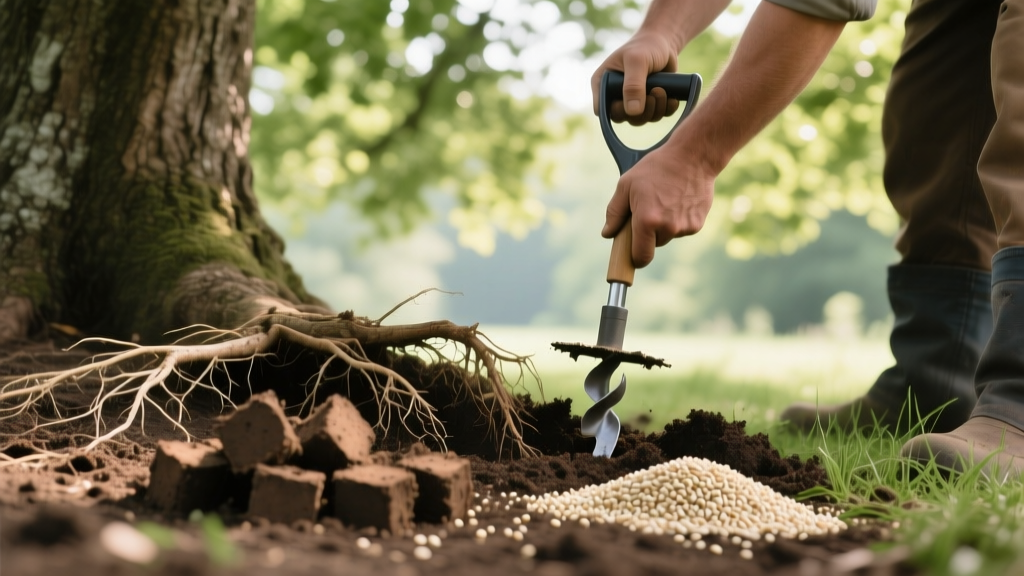
Tree Root Aeration and Canopy Overseeding Care Guide
Mike RodriguezPublished
The Hidden Battle Beneath the Canopy
Homeowners often desire the aesthetic appeal of a lush, green lawn extending seamlessly beneath the sprawling branches of a mature oak, maple, or elm. However, the reality of growing turfgrass directly under a tree canopy involves a complex subterranean battle for resources. Both trees and turfgrasses require sunlight, water, oxygen, and essential soil nutrients. When these two distinct plant systems are forced to coexist in the same confined space, competition is fierce. Over time, the soil beneath a tree canopy becomes severely compacted due to foot traffic, mowing equipment, and the natural settling of earth. This compaction creates a hostile environment that suffocates shallow grass roots and restricts the vital gas exchange required by the tree's fine, fibrous absorbing roots.
According to tree care experts and resources provided by The Morton Arboretum, soil compaction is one of the leading causes of urban and suburban tree decline. When the soil pores are crushed, oxygen cannot reach the root zone, and water pools on the surface rather than penetrating deeply. To restore balance and achieve a healthy dual-ecosystem, homeowners must employ specialized aeration and overseeding techniques that prioritize the health of the tree's root system while successfully establishing shade-tolerant turf.
Why Traditional Core Aeration is Dangerous for Trees
In open lawn areas, mechanical core aeration is the gold standard for relieving soil compaction. Aeration machines use heavy, hollow tines to extract plugs of soil, creating channels for air, water, and nutrients. However, applying this same technique beneath a tree's drip line can be disastrous. The majority of a tree's fine, water-absorbing roots are located in the top six to twelve inches of soil. Driving mechanical steel tines into this zone severs these critical roots, creating open wounds that invite destructive pathogens such as Armillaria root rot and Phytophthora. Furthermore, the heavy weight of the aeration machinery exacerbates the very soil compaction you are trying to relieve. Therefore, traditional plug aeration must be strictly avoided within the critical root zone of any mature tree.
Safe Soil Aeration Techniques for Tree Zones
To alleviate compaction without harming the tree, arborists and landscape professionals utilize specialized, non-invasive aeration methods. These techniques gently fracture the soil or improve its structure chemically and biologically.
AirSpade and Pneumatic Excavation
The AirSpade is a professional-grade tool that uses a supersonic stream of compressed air to excavate and fracture compacted soil. Because the air stream moves faster than the speed of sound, it easily breaks apart dense clay and compacted earth, but it safely deflects when it encounters flexible, organic tree roots. Arborists use the AirSpade to perform root collar excavations and radial trenching, creating deep channels that are subsequently backfilled with organic compost. This method provides immediate, dramatic relief from compaction and promotes rapid root regeneration.
Radial Trenching
For those without access to pneumatic tools, radial trenching is a highly effective manual alternative. This involves using a narrow trenching shovel or an air knife to dig shallow, narrow trenches (about two to four inches wide and six to eight inches deep) radiating outward from the tree trunk like the spokes of a wheel. These trenches should begin a few feet away from the trunk to avoid damaging major structural roots and extend out to the drip line. The excavated soil is replaced with a high-quality, coarse organic compost, which maintains soil porosity and provides a slow-release nutrient source for both the tree and the overlying turf.
Liquid Aeration and Soil Conditioners
For mild compaction, liquid aeration offers a non-mechanical solution. These products typically contain surfactants, humic acids, fulvic acids, and beneficial soil microbes. When applied with a hose-end sprayer, the surfactants reduce the surface tension of water, allowing it to penetrate deeply into compacted clay soils. The humic substances help bind microscopic soil particles into larger aggregates, naturally creating pore space over time. While not as immediately effective as physical excavation, liquid aeration is entirely safe for roots and can be applied multiple times per season.
Aeration Method Comparison Chart
| Method | Root Safety | Cost Estimate | Best Use Case |
|---|---|---|---|
| Mechanical Core Aeration | Low (High Risk) | $50 - $100 | Open lawn areas only; never under drip line |
| AirSpade Excavation | Very High | $150 - $350 per tree | Severe compaction; professional arborist required |
| Radial Trenching | High | $50 - $150 (DIY) | Moderate compaction; labor-intensive manual process |
| Liquid Aeration | Very High | $40 - $80 per bottle | Mild compaction; routine seasonal maintenance |
Selecting the Right Grass for the Drip Line
Overseeding under a tree canopy requires abandoning traditional, sun-loving turfgrasses like Kentucky Bluegrass or perennial ryegrass. These species will quickly thin out and die in the dense shade, leading to bare soil and further compaction. According to turfgrass guidelines from the University of Minnesota Extension, fine fescues are the superior choice for shaded tree zones. Fine fescues (including creeping red fescue, chewings fescue, and hard fescue) possess narrow leaf blades, require significantly less nitrogen, and exhibit remarkable shade and drought tolerance. For extremely dense shade where fine fescues struggle, rough bluegrass (Poa trivialis) can be used, though it may go dormant during the heat of summer.
Step-by-Step Overseeding and Aeration Protocol
Executing a dual-care plan requires precise timing and gentle handling of the soil ecosystem. Early fall is the ideal window, as soil temperatures are warm enough for seed germination, and the tree's water demands begin to decrease.
- Step 1: Soil Testing and Assessment. Begin by conducting a soil test to determine pH and nutrient levels. Trees generally prefer a slightly acidic pH (6.0 to 6.5), which aligns well with fine fescues. Adjust pH with pelletized limestone or sulfur if necessary.
- Step 2: Gentle Debris Removal. Rake the area beneath the canopy to remove fallen leaves, twigs, and dead thatch. Use a flexible leaf rake rather than a stiff thatching rake to avoid tearing the tree's surface roots.
- Step 3: Execute Safe Aeration. Apply liquid aeration evenly across the drip line, or hire an arborist to perform AirSpade radial trenching. If using the manual radial trenching method, ensure trenches are spaced at least 12 inches apart.
- Step 4: Topdress with Organic Matter. Apply a very thin layer (no more than 1/4 inch) of screened, high-quality organic compost over the entire area. Do not use heavy topsoil or sand, as this will suffocate both tree roots and grass seed. The compost will work its way into the aeration channels.
- Step 5: Sow the Shade-Tolerant Seed. Broadcast a fine fescue blend at a rate of 5 to 6 pounds per 1,000 square feet. Use a hand-crank spreader for even distribution. Lightly drag a leaf rake upside down over the seed to ensure soil-to-seed contact without burying the seed too deeply.
- Step 6: Precision Watering. This is the most challenging phase. Grass seed requires the top inch of soil to remain constantly moist for 14 to 21 days, requiring light watering two to three times a day. However, trees prefer deep, infrequent watering. To balance this, water the seed lightly in the early morning and late afternoon, but ensure you are also providing one deep, prolonged soaking session once a week to encourage the tree's roots to grow downward rather than competing at the surface.
Long-Term Maintenance and Mulching Alternatives
Once the new grass is established, adjust your mowing height. Turfgrass under a tree canopy should be mowed higher than the rest of the lawn, ideally at 3.5 to 4 inches. This taller grass blade helps shade the soil, retain moisture, and outcompete weeds. Avoid heavy nitrogen fertilizers, which promote rapid, weak grass growth and can burn shallow tree roots.
Ultimately, homeowners must recognize that in areas of extremely dense shade, turfgrass may simply not be a viable long-term solution. As noted by the International Society of Arboriculture via Trees Are Good, replacing struggling turf with a wide ring of organic wood chip mulch is often the best decision for tree health. A mulch ring extending to the drip line eliminates the competition for water, prevents soil compaction from mowers, and mimics the natural forest floor environment where trees thrive. If you choose to maintain grass, commit to the gentle aeration and shade-specific overseeding techniques outlined above to ensure both your tree and your turf remain vibrant and healthy.