Tree Care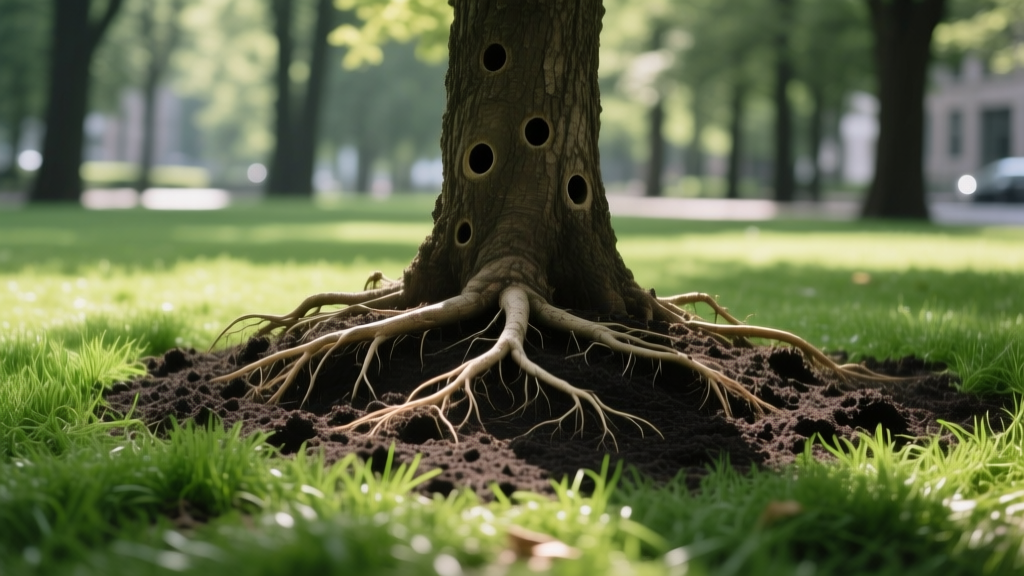
Tree Root Aeration And Overseeding Under The Canopy
Anna KowalskiPublished
The Hidden Conflict: Tree Roots vs. Compacted Turf Soils
When homeowners think of lawn aeration and overseeding, they typically picture vast, sun-drenched expanses of Kentucky Bluegrass. However, one of the most complex and overlooked areas of landscape management is the ground directly beneath mature trees. The intersection of tree care and turf management presents a unique set of challenges. Trees and turfgrasses are constantly competing for water, nutrients, and oxygen, and the soil environment beneath a tree canopy is often vastly different from the rest of the lawn.
The Critical Root Zone (CRZ) of a tree generally extends from the trunk outward to the drip line (the outer edge of the canopy) and often well beyond it. In urban and suburban landscapes, this zone is subjected to severe compaction from foot traffic, mowing equipment, and construction activities. According to the Arbor Day Foundation, soil compaction is one of the leading causes of urban tree decline, as it crushes the macropores in the soil, effectively suffocating the fine, fibrous roots that trees rely on for water and nutrient uptake.
Why Standard Lawn Aeration Fails Trees
Many well-meaning homeowners attempt to solve this issue by running a standard lawn core aerator over the tree's root zone. While this is beneficial for the turf, it is largely ineffective—and potentially harmful—for the tree. Standard core aerators only penetrate the soil to a depth of 3 to 4 inches. The majority of a tree's absorbing roots reside in the top 6 to 18 inches of soil. Furthermore, the heavy tines of mechanical core aerators can sever superficial tree roots, creating open wounds that invite fungal pathogens and decay organisms.
To truly improve tree health while maintaining an attractive understory, arborists and turf managers must employ specialized tree root zone aeration techniques combined with strategic, shade-tolerant overseeding.
Advanced Tree Root Zone Aeration Techniques
Experts at Penn State Extension recommend specialized aeration methods that alleviate deep soil compaction without severing major structural roots. Below are the three most effective techniques for the Critical Root Zone:
1. Vertical Mulching
Vertical mulching involves using a 2-inch to 3-inch auger to drill holes 12 to 18 inches deep into the soil. These holes are spaced in a grid pattern (usually 2 to 3 feet apart) starting about 3 feet away from the trunk and extending out to the drip line. The holes are then filled with a porous mixture of compost, pine bark fines, and coarse sand. This creates permanent columns of oxygen and organic matter that encourage deep root growth and improve soil drainage without the widespread root severing caused by tilling.
2. Radial Trenching
Radial trenching is ideal for severely compacted soils or areas with poor drainage. Using an air spade or narrow trenching shovel, narrow trenches (2 to 4 inches wide and 12 to 18 inches deep) are dug radiating outward from the trunk like spokes on a wheel. The trenches begin 4 feet away from the trunk to protect the root flare and extend to the drip line. They are backfilled with a high-quality topsoil and compost blend. This method dramatically increases the soil's water-holding capacity and oxygen exchange rate.
3. Air Spading (Pneumatic Excavation)
Air spading uses highly compressed air to fracture and blow away compacted soil without cutting or tearing tree roots. This is the gold standard for root collar excavations (removing soil buried against the trunk) and for fracturing heavily compacted clay layers within the CRZ. Once the soil is fractured, organic amendments are worked into the top few inches, and the area is prepped for overseeding or mulching.
| Aeration Method | Target Depth | Root Damage Risk | Estimated Cost | Best Application |
|---|---|---|---|---|
| Core Aeration (Standard) | 3 - 4 inches | Moderate | $15 - $25 per 1,000 sq ft | Outer turf areas beyond the drip line |
| Vertical Mulching | 12 - 18 inches | Low | $300 - $600 per tree | Compacted soils within the Critical Root Zone |
| Radial Trenching | 12 - 24 inches | Low to Moderate | $500 - $1,000 per tree | Severe compaction, poor drainage zones |
| Air Spading (Pneumatic) | Variable (6 - 36 in) | Extremely Low | $150 - $250 per hour | Root collar excavations, severe soil fracturing |
Overseeding Under the Canopy: Navigating Shade and Competition
Once the soil has been properly aerated and amended, the next challenge is establishing a healthy ground cover. The microclimate beneath a mature tree is incredibly harsh. The canopy intercepts up to 40% of rainfall, leaving the soil below surprisingly dry even after a storm. Furthermore, dense shade limits the photosynthetic capabilities of turfgrasses.
Attempting to grow Kentucky Bluegrass or Perennial Ryegrass under a mature tree is an exercise in futility. These species require full sun and will quickly thin out, leaving bare, muddy patches. Instead, you must select shade-tolerant, low-input grass varieties.
The Best Seed Varieties for Tree Lawns
- Creeping Red Fescue: Excellent shade tolerance and a fine texture that blends well with existing lawns. It requires less nitrogen than traditional turfgrasses.
- Chewings Fescue: Features a bunch-type growth habit that tolerates dry, shaded soils exceptionally well. It is highly resistant to the allelopathic chemicals released by certain trees like Black Walnut.
- Hard Fescue: The most drought-tolerant of the fine fescues, making it ideal for the dry, rain-shadowed areas directly beneath dense canopies.
Seeding Rate: For fine fescue blends under a tree canopy, apply seed at a rate of 5 to 8 pounds per 1,000 square feet. Because fine fescues are slower to germinate and establish, a slightly higher seeding rate helps crowd out opportunistic weeds.
Step-by-Step Canopy Overseeding Guide
- Prune for Light and Airflow: Before seeding, hire a certified arborist to raise the tree canopy by selectively pruning lower limbs. Removing branches up to 8 feet from the ground allows dappled sunlight to reach the soil and improves air circulation, which reduces fungal disease pressure on the new grass.
- Gentle Soil Preparation: Do not use a mechanical rototiller under the canopy, as this will destroy the newly aerated soil structure and sever roots. Instead, use a flexible leaf rake to gently scuff the top 1/4 inch of soil or compost layer.
- Sow the Seed: Broadcast the fine fescue blend evenly using a drop spreader to ensure precise application without wasting seed on hardscapes or garden beds.
- Top-Dress and Roll: Apply a very thin layer (1/8 inch) of screened compost over the seed to retain moisture. Use a lightweight lawn roller to ensure strict seed-to-soil contact.
- Strategic Watering: Tree roots will aggressively compete for water. You must water the newly seeded area lightly 2 to 3 times a day for the first 21 days. Once established, transition to deep, infrequent watering, but monitor the tree's root collar to ensure you are not causing wood rot by over-saturating the base of the trunk.
Pro Tip: Never pile soil, compost, or mulch against the tree trunk during overseeding or aeration projects. Buried root collars are highly susceptible to fungal pathogens, girdling roots, and bark decay. Always maintain a 3-inch gap between any ground cover amendment and the physical trunk of the tree.
When to Stop Overseeding: The Mulch Alternative
Despite your best efforts with advanced aeration and premium shade-tolerant seeds, there are times when turfgrass simply will not thrive beneath a mature tree. If the canopy is exceptionally dense, or if the tree is a shallow-rooted species like a Norway Maple or Silver Birch, the competition for water is too fierce. In these cases, the International Society of Arboriculture (ISA) strongly recommends abandoning turfgrass entirely in favor of a proper mulch ring.
Transitioning from turf to mulch eliminates the need for mowing near the trunk (preventing devastating 'lawnmower blight' and string-trimmer damage to the bark). To execute this, remove the failing turf using a manual sod cutter or by smothering it with cardboard. Apply a 2 to 3-inch layer of organic wood chips or shredded bark, extending out to the drip line. This mimics the tree's natural forest floor environment, retaining soil moisture, moderating soil temperature, and slowly feeding the root system as the mulch decomposes.
Conclusion
Managing the intersection of tree roots and turfgrass requires a departure from standard lawn care practices. By utilizing deep aeration techniques like vertical mulching and radial trenching, and by selecting the correct fine fescue seed varieties, you can relieve soil compaction and cultivate a lush, healthy landscape that supports both your trees and your turf. When turf fails, transitioning to a wide, organic mulch ring remains the ultimate best practice for long-term tree vitality.